

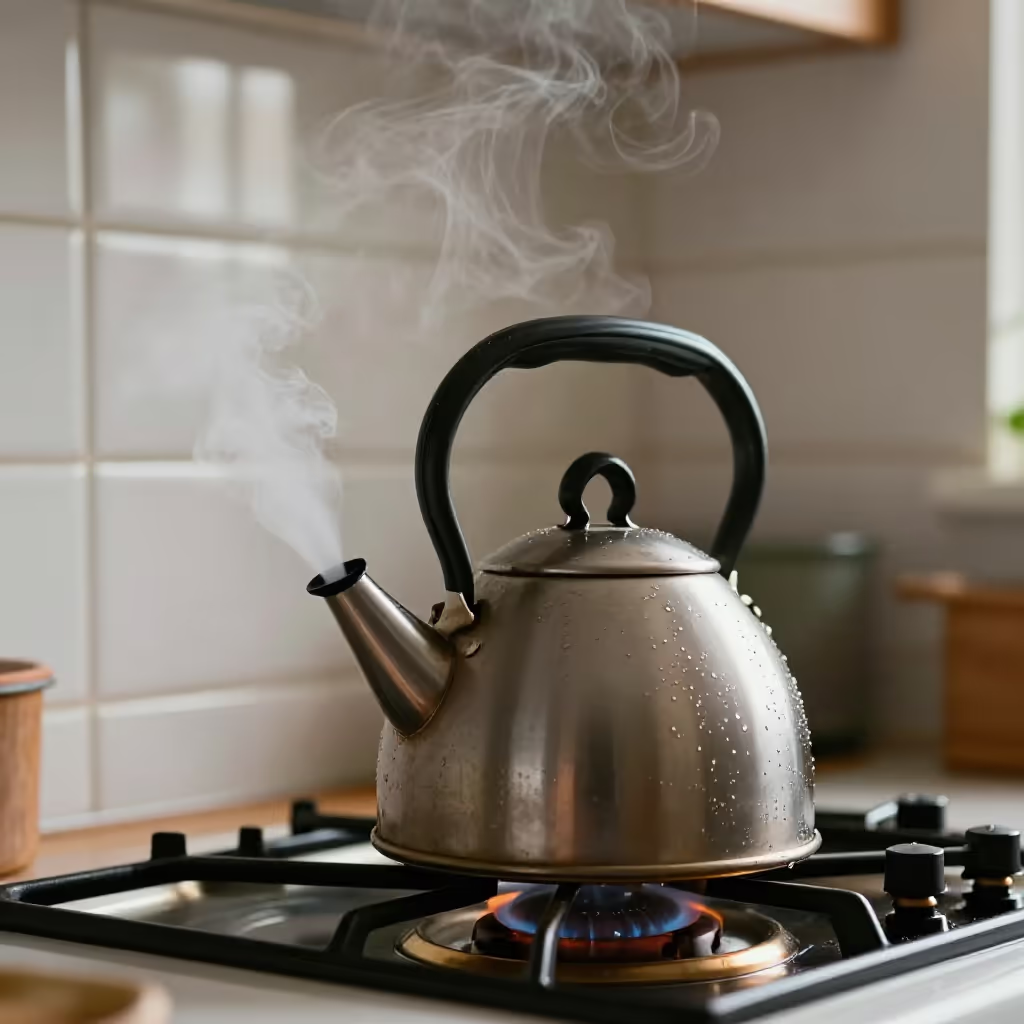
dampfen
to steam
To give off steam or vapor that forms when a liquid, usually water, is heated.
EXAMPLE
Der heiße Tee dampfte in der Tasse.
The hot tea was steaming in the cup.
to steam / to vape
Loading your saved state.
to steam
To give off steam or vapor that forms when a liquid, usually water, is heated.
Der heiße Tee dampfte in der Tasse.
The hot tea was steaming in the cup.

to vape
Colloquial term for smoking an e-cigarette.
Er hat mit dem Rauchen aufgehört und dampft jetzt nur noch.
He quit smoking and now only vapes.

to steam
To cook food using hot steam. This method is considered especially gentle.
Ich dampfe das Gemüse immer, damit die Vitamine erhalten bleiben.
I always steam the vegetables so that the vitamins are preserved.

to fume
Colloquial term for being very angry or furious.
Nach der ungerechten Entscheidung hat der Trainer vor Wut gedampft.
After the unfair decision, the coach was fuming with anger.
The verb 'dampfen' (to steam) is derived directly from the noun 'der Dampf' (steam). It describes the action of giving off steam or treating something with steam.
Im Winter dampft der Atem in der kalten Luft.
In winter, your breath steams in the cold air.
In the meaning 'to cook food', 'dampfen' (to steam) is used with an accusative object. In the other meanings, the verb usually stands without an object to describe a state.
Ich dampfe den Brokkoli nur kurz, damit er knackig bleibt.
I steam the broccoli only briefly so that it stays crisp.
The use of 'dampfen' (to vape) for smoking an e-cigarette is a modern, colloquial meaning. In formal contexts, you would be more likely to paraphrase it.
Immer mehr junge Leute dampfen statt zu rauchen.
More and more young people vape instead of smoking.
When someone is very angry, the colloquial expression 'vor Wut dampfen' (to fume with anger) is used. Here the verb is used in a figurative sense.
Als er die Rechnung sah, hat er innerlich vor Wut gedampft.
When he saw the bill, he was inwardly fuming with anger.
to cook / to boil
Both verbs can figuratively express intense anger. “Kochen” is usually used in the fixed expression “vor Wut kochen,” while “dampfen” uses a colloquial steam metaphor. Both forms are possible; “kochen” sounds more fixed, while “dampfen” is more casual and vivid.

Als er die Nachricht hörte, dampfte er vor Wut.
When he heard the news, he fumed with rage.
Als er die Nachricht hörte, kochte er vor Wut.
When he heard the news, he boiled with rage.