


dahin
there
Indicates movement to a particular, often distant or not precisely specified place.
EXAMPLE
Der Weg führt uns direkt dahin, zum Gipfel des Berges.
The path leads us directly there, to the summit of the mountain.
there / gone
Loading your saved state.
there
Indicates movement to a particular, often distant or not precisely specified place.
Der Weg führt uns direkt dahin, zum Gipfel des Berges.
The path leads us directly there, to the summit of the mountain.

gone
Expresses that something is past, lost, or over.
All meine Hoffnungen auf einen schnellen Sieg waren dahin.
All my hopes for a quick victory were gone.

until then
Indicates a point in time in the future by which something should happen or apply; until that time.
Die Präsentation ist erst nächsten Freitag, aber bis dahin gibt es noch viel zu tun.
The presentation isn't until next Friday, but until then there is still a lot to do.
along / away
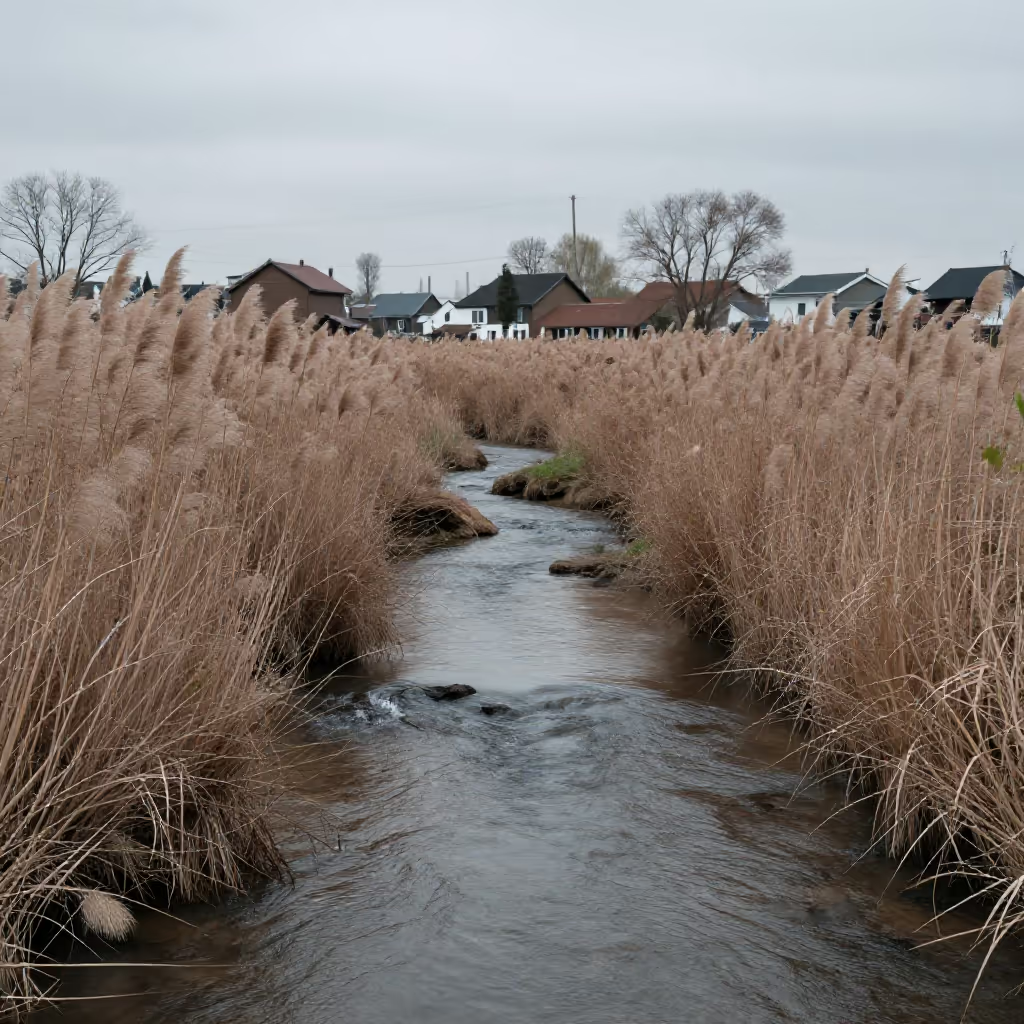
Describes slow, often aimless or uneventful movement or existence. It is often combined with verbs like plätschern (to babble), leben (to live), or siechen (to waste away).
Nach seiner Pensionierung lebte er einfach so vor sich dahin.
After his retirement, he simply lived away like that.
The word is made up of 'da' (there, at that place) and 'hin' (movement in a direction). So it literally describes movement toward a place.
Der Bus fährt bis zum Marktplatz, aber wir müssen noch weiter dahin.
The bus goes as far as the market square, but we have to go farther there.
In the meaning of 'lost' or 'over', 'dahin' (gone) is always combined with the verb 'sein' (to be). The structure is: [Something] ist/war dahin.
Nach dem Streit war die gute Stimmung dahin.
After the argument, the good mood was gone.
The combination 'bis dahin' (until then) is a fixed time expression and means 'until that point in time'. It can stand at the beginning of a sentence or in the middle of a sentence.
Wir sehen uns nächste Woche. Bis dahin wünsche ich dir alles Gute!
We'll see each other next week. Until then, I wish you all the best!
To describe an aimless, slow action, 'dahin' is often combined with verbs like 'leben' (to live), 'plätschern' (to babble), 'dösen' (to doze), or 'siechen' (to waste away). It often appears in the expression 'vor sich hin...'.
Der alte Mann saß auf der Bank und döste vor sich dahin.
The old man sat on the bench and dozed away.
there / toward
Both words can express movement away from the reference point toward a destination. Hin mainly indicates the direction, while dahin also refers to a particular place, often one that is already known or far away. Use dahin when the destination should be emphasized; otherwise, hin is often enough.

Wir fahren morgen dahin, wo unsere Freunde schon warten.
We’re going to where our friends are already waiting tomorrow.
Wir fahren morgen hin und bleiben dort bis Sonntag.
We’re going there tomorrow and will stay there until Sunday.