


hin
there
Expresses movement away from the speaker toward a specific destination. It is the opposite of 'her' (toward here).
EXAMPLE
Geh du schon mal hin, ich komme gleich nach.
You go there ahead of me; I’ll come along in a moment.
there / toward
Loading your saved state.
there
Expresses movement away from the speaker toward a specific destination. It is the opposite of 'her' (toward here).
Geh du schon mal hin, ich komme gleich nach.
You go there ahead of me; I’ll come along in a moment.

back and forth
Describes a movement that alternates in one direction and then back in the opposite direction.
Er lief nervös im Zimmer hin und her.
He walked nervously back and forth in the room.
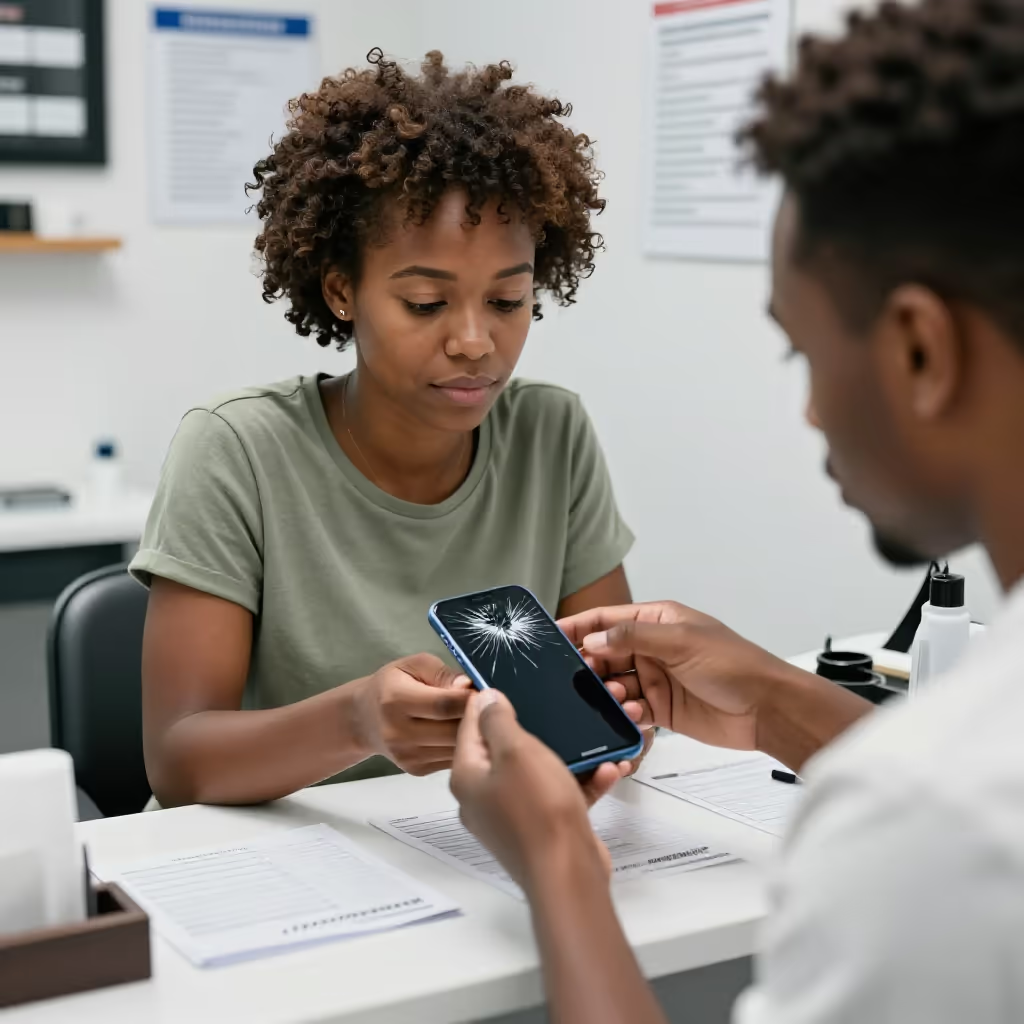
done for
Colloquial for “broken,” “lost,” or “over.”
Nach dem Sturz war mein Handy leider hin.
After the fall, my phone was unfortunately done for.
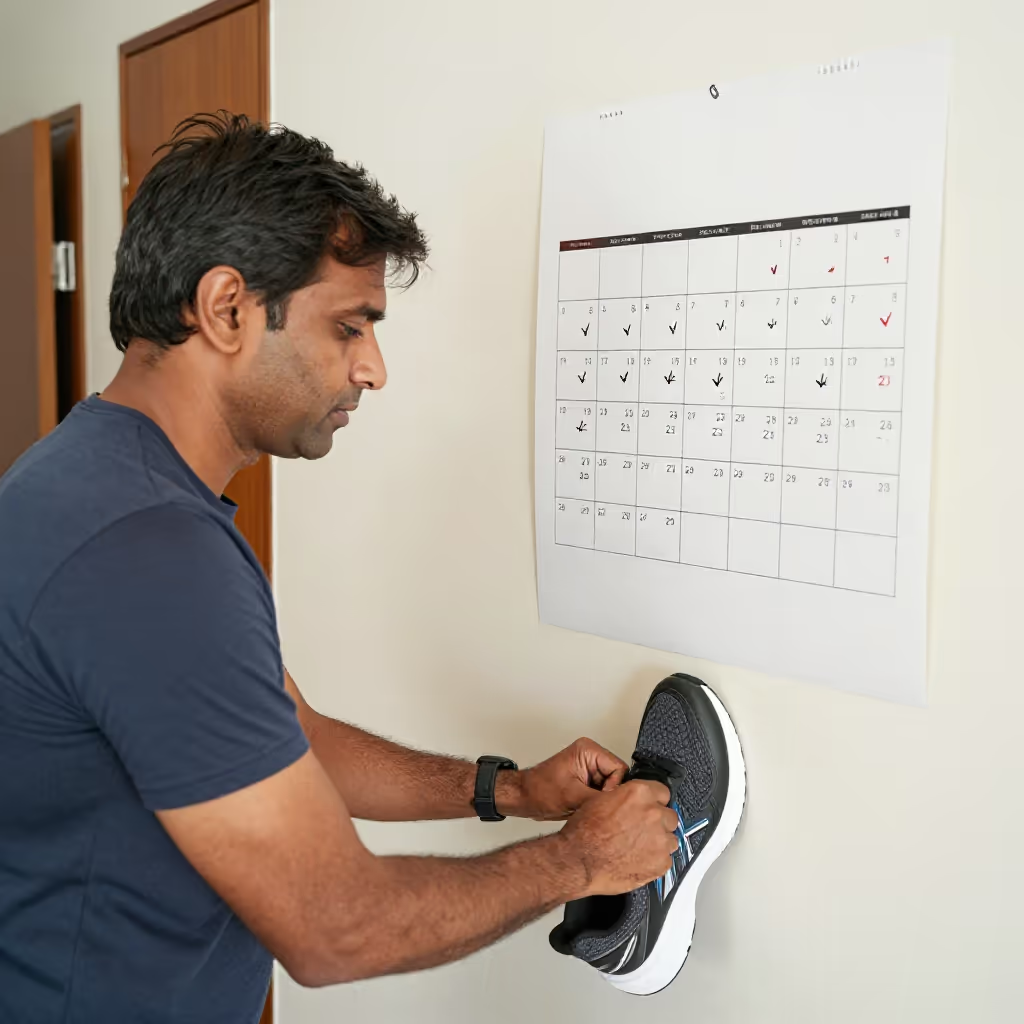
now and then
Means “sometimes” or “occasionally.”
Hin und wieder gönne ich mir ein Stück Schokolade.
Now and then I treat myself to a piece of chocolate.

all the way to
Used to mark the endpoint of a range or list and to emphasize the scope.
Die Auswahl reicht von einfachen T-Shirts bis hin zu eleganten Abendkleidern.
The selection ranges from simple T-shirts all the way to elegant evening dresses.

crazy about
A colloquial expression for being very enthusiastic about or fascinated by someone or something.
Seit dem Konzert ist sie ganz hin von dem Sänger.
Ever since the concert, she has been completely crazy about the singer.
The core function of 'hin' is to indicate movement that leads away from the speaker. It describes the direction toward a destination.
Die Kinder laufen zum Spielplatz hin.
The children run toward the playground.
'Hin' is a very productive separable prefix for many verbs of movement. Examples include 'hingehen' (to go there), 'hinfahren' (to drive/go there), 'hinlegen' (to put down), or 'hinsehen' (to look there/closely).
Ich muss später noch zur Post hingehen.
I still have to go to the post office later.
When 'hin' is used as a prefix, it stands at the end of the main clause. In subordinate clauses and infinitive constructions, it remains attached to the verb.
Er legte das Buch auf den Tisch hin.
He put the book down on the table.
The combination 'hin und her' describes repeated movement in two opposite directions. It is often used with verbs like 'laufen' (to walk/run), 'fahren' (to drive/go), or 'pendeln' (to commute/shuttle).
Der Tiger im Zoo lief unruhig in seinem Käfig hin und her.
The tiger in the zoo paced restlessly back and forth in its cage.
In colloquial language, 'hin' often means “broken” or “spoiled.” This usage is very common but should be avoided in formal texts.
Ich habe mein Glas fallen lassen, jetzt ist es hin.
I dropped my glass; now it’s done for.
The expression 'hin und wieder' is a fixed phrase and means “sometimes” or “occasionally.” It can stand in different positions in the sentence.
Wir gehen hin und wieder zusammen ins Kino.
We go to the movies together now and then.
The structure 'von ... bis hin zu ...' is used to describe a wide range or variety. Here, 'hin' emphasizes the endpoint of the list.
Das Festival bietet alles, von lokaler Musik bis hin zu internationalen Stars.
The festival offers everything from local music all the way to international stars.
The expression 'hin sein von jemandem/etwas' is colloquial and expresses strong enthusiasm or fascination. It is always used with the preposition 'von' and the dative.
Meine kleine Schwester ist total hin von diesem neuen Popsänger.
My little sister is totally crazy about this new pop singer.
here / ago
Hin and her describe movement between a starting point and a destination. Hin indicates movement away from the speaker or reference point, while her indicates movement toward it. So consider the viewpoint from which the movement is being described; the same route can be described differently depending on the perspective.

Geh bitte zum Bahnhof hin und warte dort auf mich.
Please go to the train station and wait there for me.
Komm bitte vom Bahnhof her direkt zu mir.
Please come straight to me from the train station.