

damalig
former / then
Referring to a specific point in the past; existing or valid at that time.
EXAMPLE
Mein damaliger Chef war sehr streng, aber fair.
My former boss was very strict, but fair.
former
Loading your saved state.
former / then
Referring to a specific point in the past; existing or valid at that time.
Mein damaliger Chef war sehr streng, aber fair.
My former boss was very strict, but fair.
'Damalig' (former/then) is derived directly from the adverb 'damals' (back then), which means 'at that time.' If you know 'damals', you can easily work out the meaning of 'damalig'.
Ich besuchte damals oft meine Großeltern. Mein damaliger Schulweg war sehr kurz.
Back then, I often visited my grandparents. My school route at the time was very short.
The adjective 'damalig' (former/then) is used almost exclusively before a noun (attributive use). Using it after the noun as part of the predicate is uncommon and sounds unnatural.
Die damalige Regierung hatte mit großen Problemen zu kämpfen.
The government at the time had to deal with major problems.
The word 'damalig' (former/then) always needs a clear time reference in the past that has already been mentioned in the conversation or text. It refers to a situation at a specific, already known point in time.
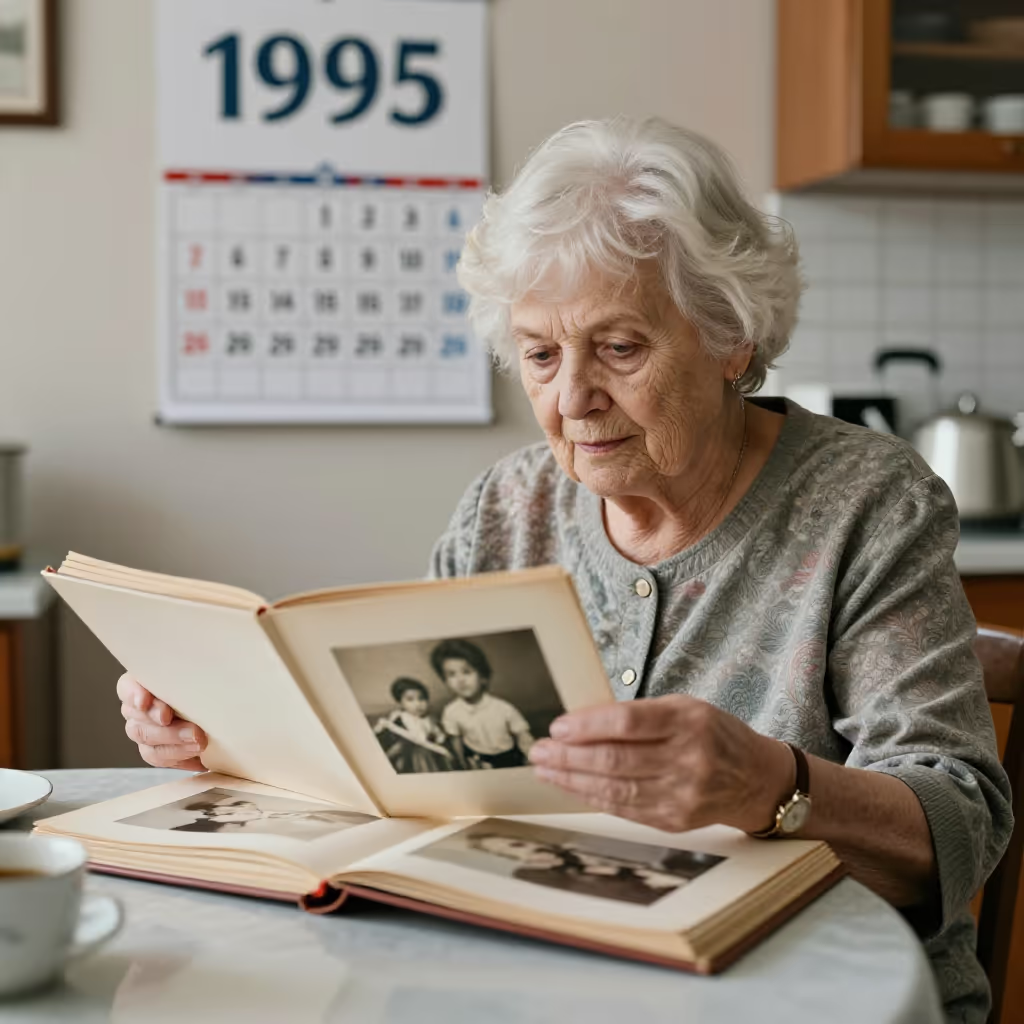
Als ich 1995 studierte, war das Leben anders. Meine damaligen Freunde sehe ich heute noch.
When I was studying in 1995, life was different. I still see my friends from that time today.
back then
„Damals“ and „damalig“ both refer to the same specific time in the past, but they have different roles in a sentence. „Damals“ gives the time of an event, while „damalig“ describes a noun from that time. Use „damals“ for the action and „damalig“ for a person or thing.

Mein damaliger Chef arbeitete ebenfalls in diesem Büro.
My boss at the time also worked in that office.
Damals arbeitete ich noch in einem kleinen Büro.
Back then, I was still working in a small office.