


die Damentoilette
women's restroom
A restroom or toilet facility for women.
EXAMPLE
Die Damentoilette befindet sich im ersten Stock neben dem Aufzug.
The women's restroom is on the first floor next to the elevator.
women's restroom / women's attire
die Damentoilette, die Damentoiletten
Loading your saved state.
women's restroom
A restroom or toilet facility for women.
Die Damentoilette befindet sich im ersten Stock neben dem Aufzug.
The women's restroom is on the first floor next to the elevator.
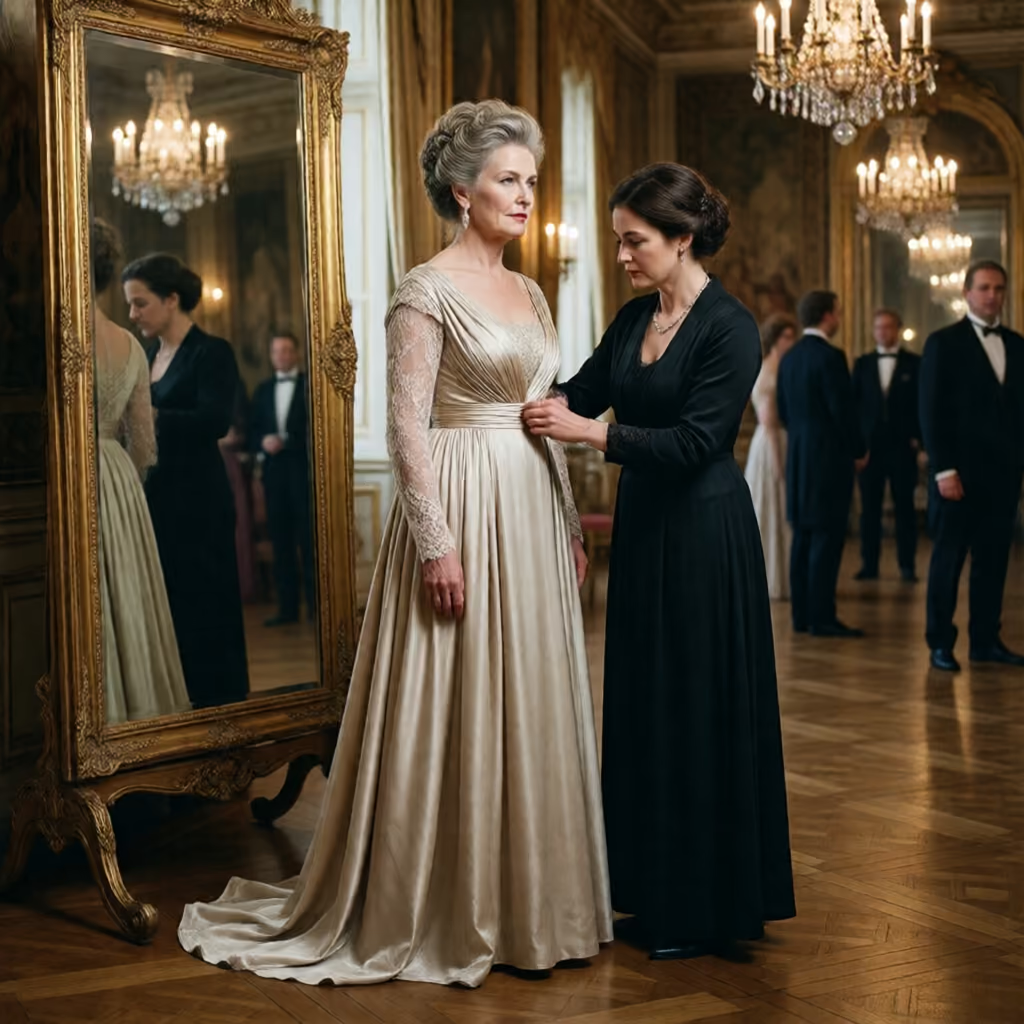
women's attire
An outdated term for a woman's clothing, especially an elegant dress for a formal occasion.
Beim Ball waren prächtige Damentoiletten aus Seide und Spitze zu bewundern.
At the ball, magnificent women's dresses made of silk and lace were on display.
| gender | feminine die |
|---|---|
| plural | die Damentoiletten |
| genitive | der Damentoilette |
| singular | plural | |
|---|---|---|
| nominative | die Damentoilette | die Damentoiletten |
| accusative | die Damentoilette | die Damentoiletten |
| dative | der Damentoilette | den Damentoiletten |
| genitive | der Damentoilette | der Damentoiletten |
The article changes with the case; it is shown in colour.
The word is made up of „Damen“ (ladies) and „Toilette“ (toilet / attire). The first component indicates a connection to women; you can only tell which meaning the whole word has from the context.
Im Restaurant fragte sie nach der Damentoilette.
At the restaurant, she asked for the women's restroom.
Der historische Roman beschreibt die kostbare Damentoilette der Gräfin.
The historical novel describes the countess's precious attire.
For going there, „auf die Damentoilette“ (to the women's restroom) with the accusative is customary. When referring to being there, „auf der Damentoilette“ (in the women's restroom) is used with the dative.
Ich gehe kurz auf die Damentoilette.
I'm just going to the women's restroom.
Sie hat ihren Schal auf der Damentoilette vergessen.
She forgot her scarf in the women's restroom.
In older texts about balls or fashion, fabric names such as „Seide“ (silk) and „Samt“ (velvet), as well as descriptions of jewelry and colors, indicate the clothing meaning. This is especially clear in phrases such as „eine Damentoilette aus Seide“ (an outfit made of silk).
Die Zeitschrift von 1890 zeigte eine Damentoilette aus dunkelblauem Samt.
The 1890 magazine showed an outfit made of dark blue velvet.