


daran
about it / in it
Refers to a previously mentioned thing, situation, or idea (corresponds to 'an das' or 'an diese Sache').
Er hat mir einen Plan vorgeschlagen, aber ich glaube nicht daran.
He suggested a plan to me, but I don’t believe in it.

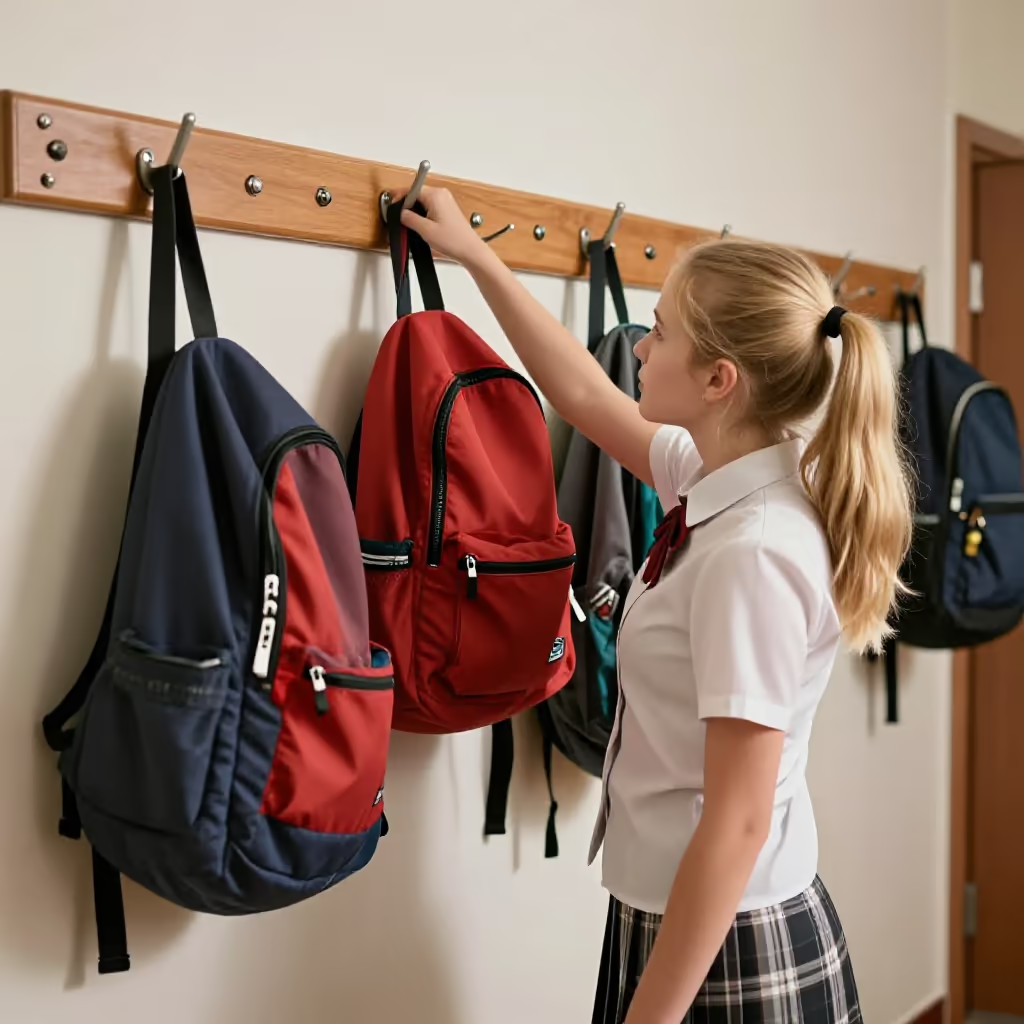
on it / about it
Loading your saved state.
about it / in it
Refers to a previously mentioned thing, situation, or idea (corresponds to 'an das' or 'an diese Sache').
Er hat mir einen Plan vorgeschlagen, aber ich glaube nicht daran.
He suggested a plan to me, but I don’t believe in it.
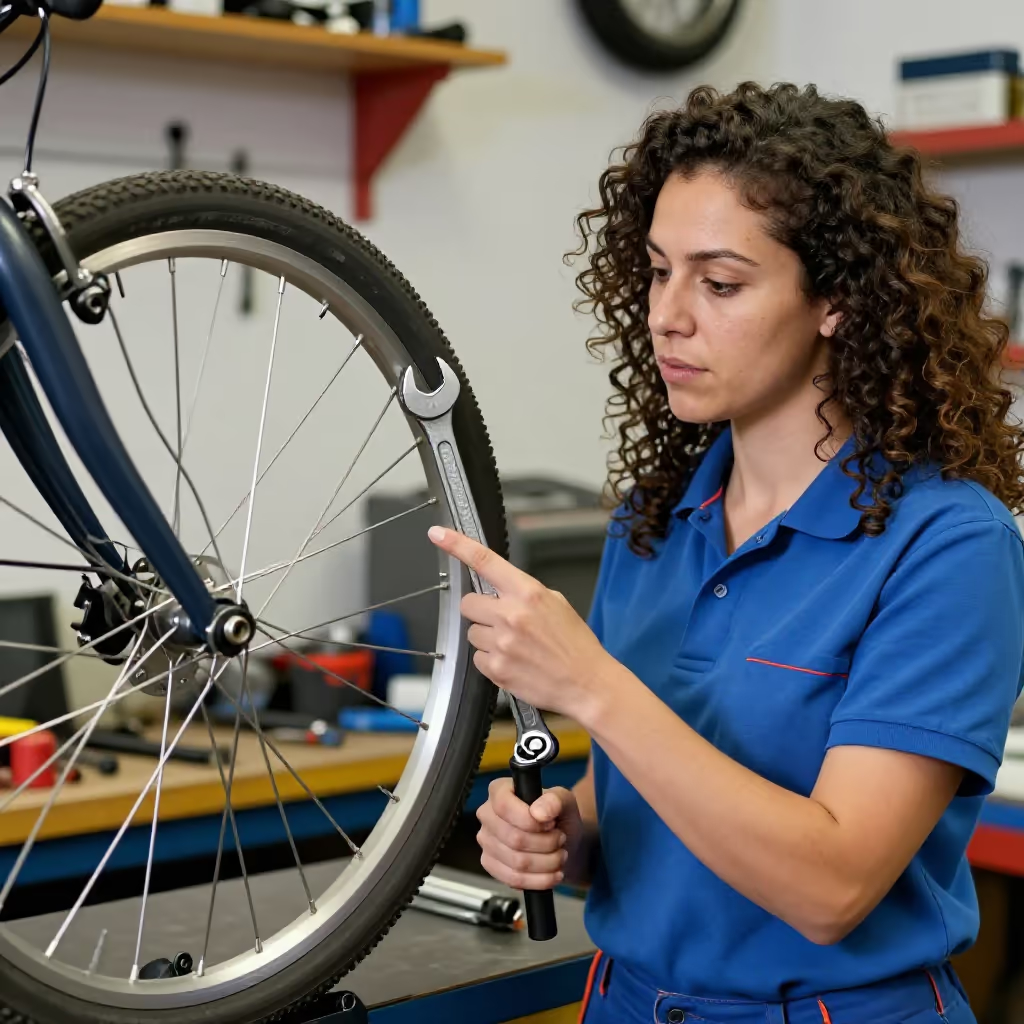
'Daran' is a pronominal adverb and is made up of 'da(r)' and the preposition 'an'. It replaces the combination 'an + thing' and refers to something that was mentioned before.
Das ist ein guter Vorschlag. Ich werde daran denken.
That is a good suggestion. I will think about it.
Use 'daran' only for things, ideas, or situations. If you are referring to a person, you must use the preposition 'an' with a personal pronoun.
Ich denke oft an den Urlaub. (Sache → an den Urlaub)
I often think about the vacation. (thing → an den Urlaub)
'Daran' is used with verbs or adjectives that have the fixed preposition 'an'. Typical examples are: 'sich erinnern an' (to remember), 'denken an' (to think of/about), 'glauben an' (to believe in), 'arbeiten an' (to work on), or 'interessiert sein an' (to be interested in).
Erinnerst du dich an unser Gespräch? Ja, ich erinnere mich daran.
Do you remember our conversation? Yes, I remember it.
The expression 'Es liegt daran, dass ...' (It is because ...) is a very common way to give a reason for something. The subordinate clause with 'dass' explains the cause.
Warum kommst du zu spät? – Es liegt daran, dass mein Bus ausgefallen ist.
Why are you late? – It’s because my bus was canceled.
so that / with it
'damit' and 'daran' both often refer to something that has already been mentioned. The difference depends on the preposition. 'damit' stands for 'mit dieser Sache' (with this thing). You use it when something is a means or when a verb requires 'mit'. 'daran' stands for 'an dieser Sache' (about/on this thing) or 'an dieser Stelle' (at/on this place). It fits with verbs like 'denken an' (to think of/about) or 'arbeiten an' (to work on), and also with a position on something. The words are confused because they are built in a similar way. The key question is: Is it 'mit etwas' (with something) or 'an etwas' (about/on something)?

Die Familie denkt noch oft daran, wie schön der Urlaub war.
The family still often thinks about how nice the vacation was.
Morgen bringe ich das Werkzeug mit, damit ihr den Schrank reparieren könnt.
Tomorrow I’ll bring the tools so you can repair the cabinet.