


drauf
on it
Colloquial short form of 'darauf' (on it); refers to a position on something.
EXAMPLE
Stell die Tasse nicht auf den Tisch, der Deckel ist noch drauf.
Don't put the cup on the table; the lid is still on it.
on it / feeling / high
Loading your saved state.
on it
Colloquial short form of 'darauf' (on it); refers to a position on something.
Stell die Tasse nicht auf den Tisch, der Deckel ist noch drauf.
Don't put the cup on the table; the lid is still on it.

feeling
Colloquial for a person's mood or state.
Er ist heute richtig gut drauf und macht nur Witze.
He is in a really good mood today and is only making jokes.
to be good
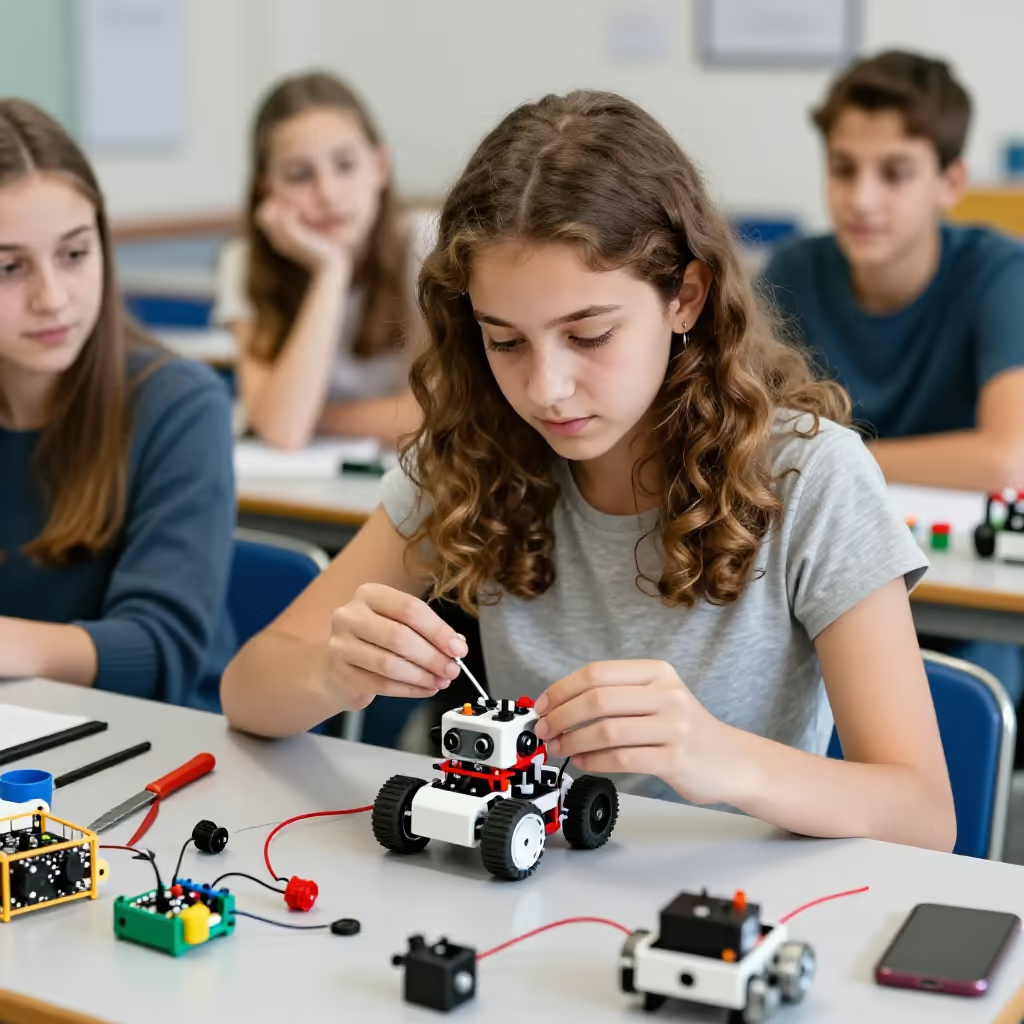
A colloquial expression meaning that someone is very capable, smart, or talented.
In Sachen Computer-Reparatur hat mein Bruder echt was drauf.
When it comes to computer repair, my brother is really good.

the day after
Colloquial for the following day.
Wir waren am Samstag feiern und den Tag drauf haben wir nur geschlafen.
We went partying on Saturday, and the day after we only slept.
high
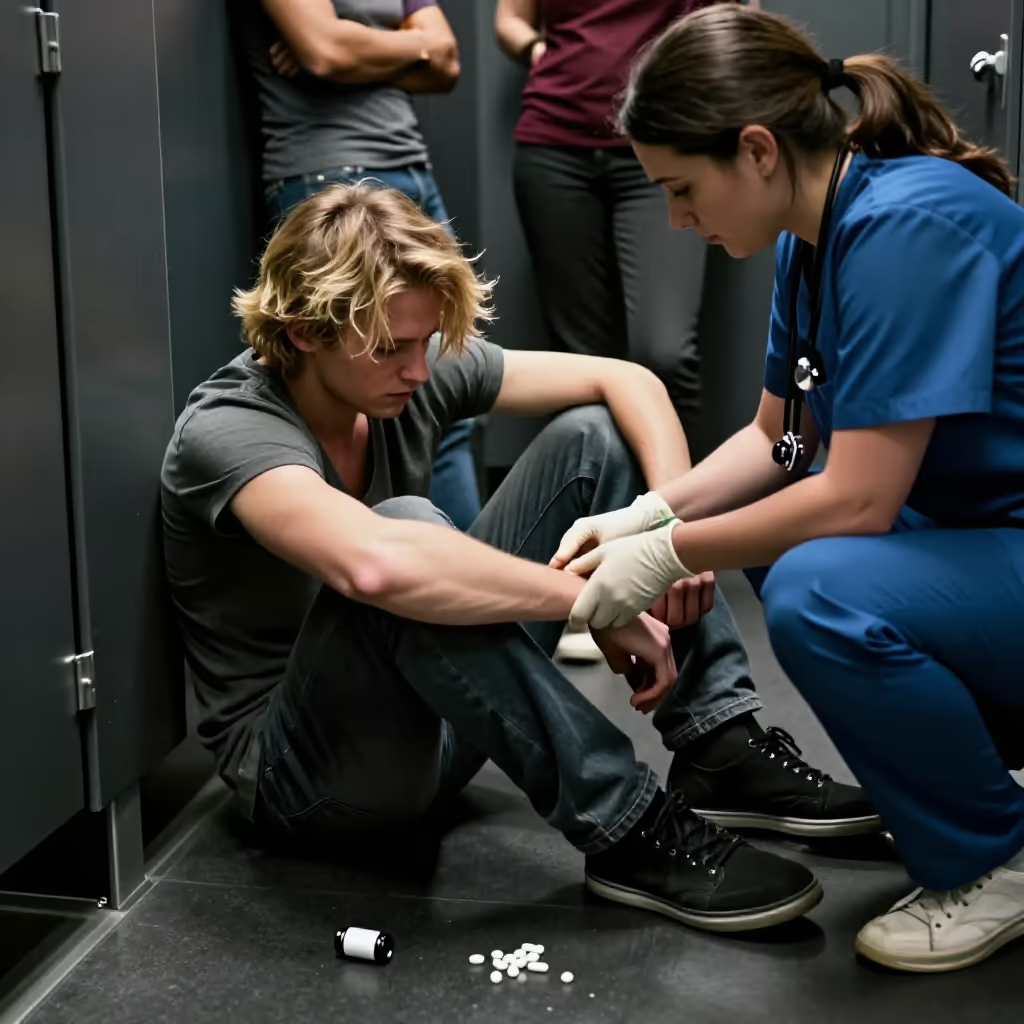
Colloquial for the state of being under the influence of drugs.
Er war auf der Party total drauf und nicht ansprechbar.
He was totally high at the party and couldn't be talked to.
'Drauf' is a word from spoken language. In formal situations or in written texts such as emails to strangers or essays, you should avoid it.
Leg das Buch einfach oben drauf.
Just put the book on top.
'Drauf' is the colloquial short form of the pronominal adverb 'darauf' (on it). It refers to a thing or a surface that was mentioned before.
Hier ist der Tisch. Stell die Vase bitte drauf.
Here is the table. Please put the vase on it.
A person's mood is described with the fixed expression '[adverb] drauf sein' (to be in a [adverb] mood/state). Typical adverbs are 'gut' (good), 'schlecht' (bad), or 'komisch' (strange).
Warum bist du heute so schlecht drauf?
Why are you in such a bad mood today?
The expression 'etwas drauf haben' means that someone is very talented or competent. The verb in this expression is always 'haben' (to have).
Sie hat in Mathematik wirklich was drauf.
She is really good at math.
The phrase 'den Tag drauf' is a fixed expression and means 'am folgenden Tag' (on the following day). It is used as a time expression in the sentence.
Am Freitag war die Party, und den Tag drauf war ich total müde.
The party was on Friday, and the day after I was totally tired.
In this meaning, 'drauf sein' is a slang expression. It is used to describe that someone is under the influence of drugs.
Man konnte sich nicht mit ihm unterhalten, er war völlig drauf.
You couldn't have a conversation with him; he was completely high.
about it / above it
In the spatial sense, both words can describe a position above something. Darüber refers to a specific reference object and means above it, while drauf is the colloquial short form of „darauf“ and describes a position on something. Therefore, darüber is the right choice for a position above something.
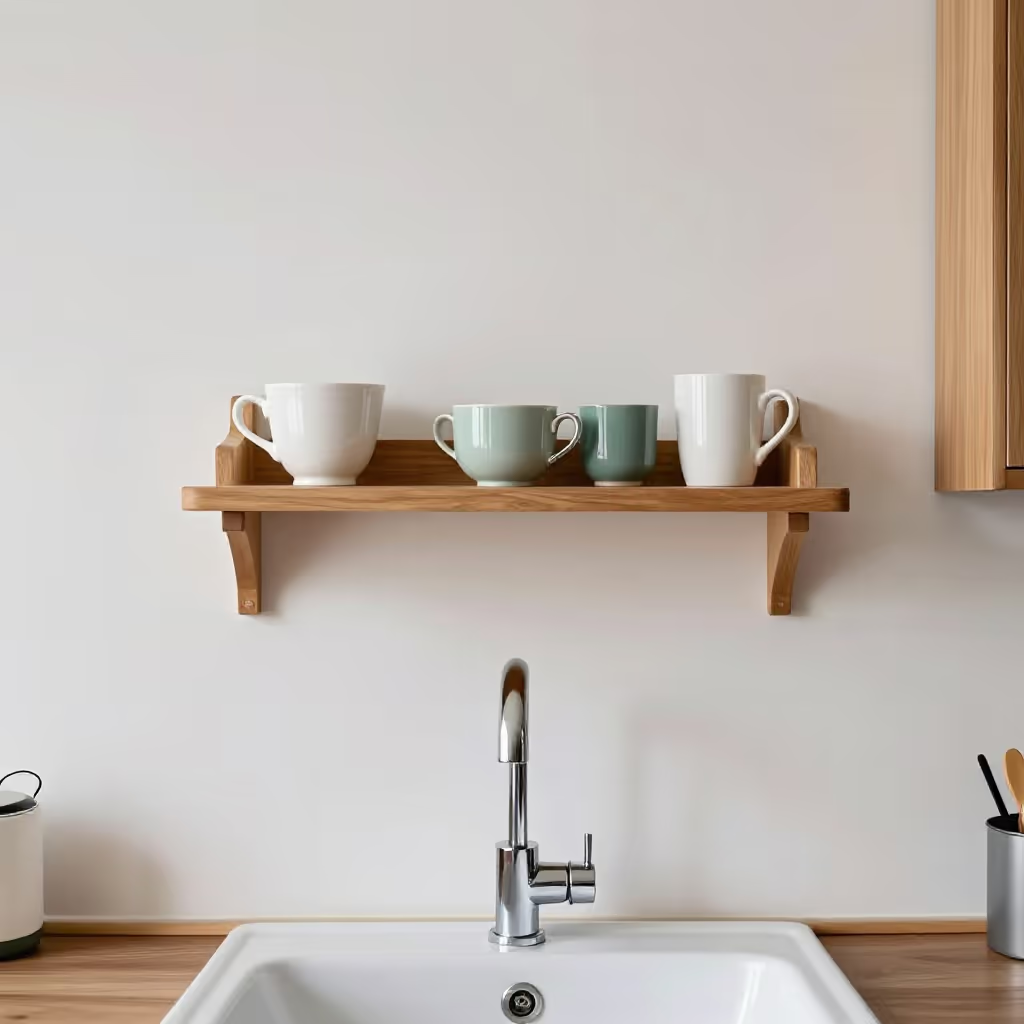
Auf dem Tisch liegt ein Buch, und die Brille liegt drauf.
There is a book on the table, and the glasses are on it.
Die Lampe hängt über dem Tisch, und das Regal darüber ist leer.
The lamp hangs above the table, and the shelf above it is empty.