

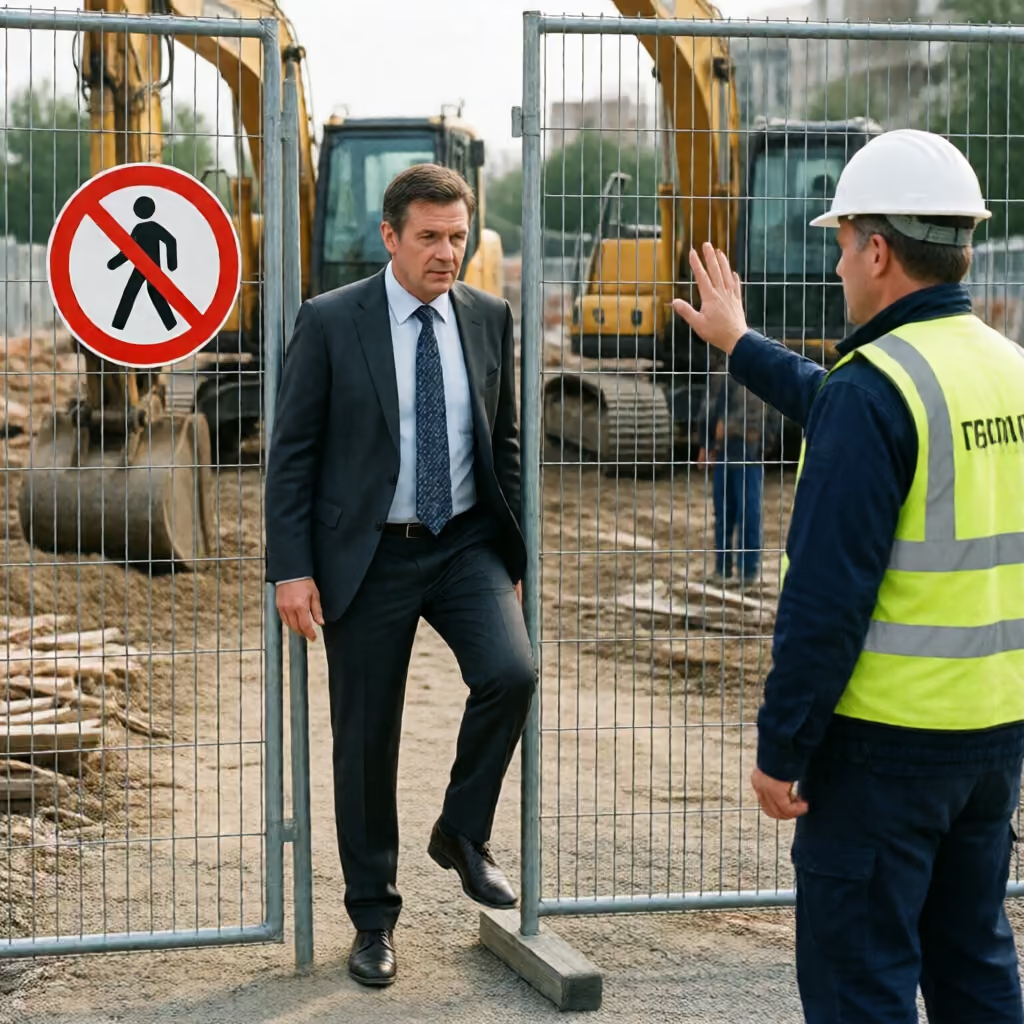
das Betreten
entering
Going into a room or walking onto a surface or area.
EXAMPLE
Das Betreten der Baustelle ist für Unbefugte verboten.
Entering the construction site is prohibited for unauthorized persons.
entering
das Betreten
Loading your saved state.
entering
Going into a room or walking onto a surface or area.
Das Betreten der Baustelle ist für Unbefugte verboten.
Entering the construction site is prohibited for unauthorized persons.
| gender | neuter das |
|---|---|
| genitive | des Betretens |
| singular | plural | |
|---|---|---|
| nominative | das Betreten | – |
| accusative | das Betreten | – |
| dative | dem Betreten | – |
| genitive | des Betretens | – |
The article changes with the case; it is shown in colour.
'Das Betreten' (entering) is the nominalized infinitive of the verb 'betreten' (to enter). As a noun, it refers to the action and is therefore capitalized; it is often followed by a genitive attribute indicating the place or area.
Das Betreten des Museums ist während der Renovierung nicht möglich.
Entering the museum is not possible during the renovation.
After 'das Betreten' (entering), the place entered often appears in the genitive. The pattern is: 'das Betreten' + genitive, for example when referring to an area, building, or room.
Das Betreten des Naturschutzgebiets ist nur mit einer Genehmigung erlaubt.
Entering the nature reserve is permitted only with a permit.
'Betreten verboten' (No entry) is a fixed, shortened form used on signs and in official notices. 'Das Betreten … ist verboten' (Entering … is prohibited) is the complete sentence form with the place specified.
Am Eingang steht: „Betreten verboten!“
The sign at the entrance says: 'No entry!'