

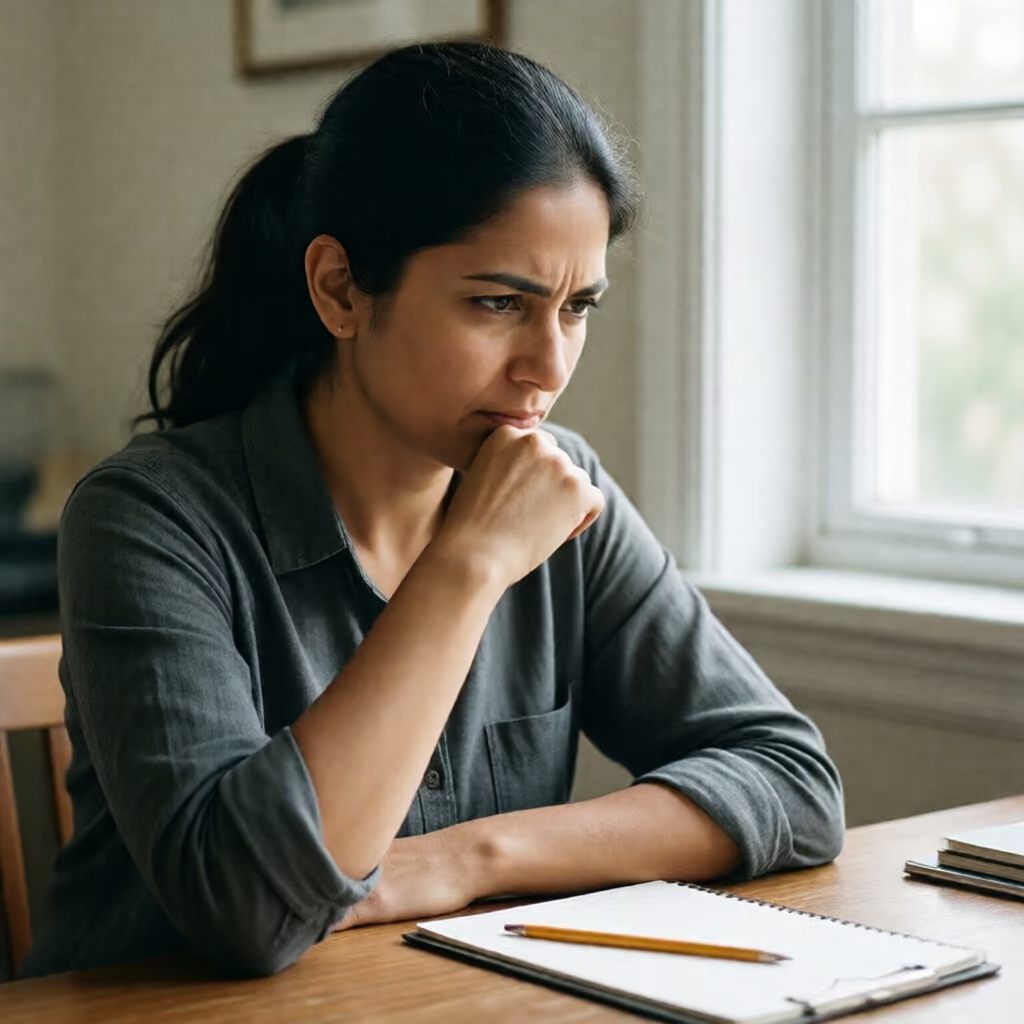
das Denken
thinking
The mental activity in which a person reflects on something, recognizes connections, and arrives at an opinion or solution.
EXAMPLE
Das Denken hilft uns, schwierige Probleme zu lösen.
Thinking helps us solve difficult problems.
thinking
das Denken
Loading your saved state.
thinking
The mental activity in which a person reflects on something, recognizes connections, and arrives at an opinion or solution.
Das Denken hilft uns, schwierige Probleme zu lösen.
Thinking helps us solve difficult problems.

thinking
A person's ability or capacity to consciously reflect and grasp mental connections.
Nach dem Unfall war das Denken des Patienten zunächst stark eingeschränkt.
After the accident, the patient's thinking was initially severely impaired.

thinking
A person's way of judging the world, other people, or particular questions; their way of thinking.
Das Denken der jungen Generation hat sich in den letzten Jahrzehnten verändert.
The thinking of the younger generation has changed over the past few decades.
| gender | neuter das |
|---|---|
| genitive | des Denkens |
| singular | plural | |
|---|---|---|
| nominative | das Denken | – |
| accusative | das Denken | – |
| dative | dem Denken | – |
| genitive | des Denkens | – |
The article changes with the case; it is shown in colour.
'Das Denken' (thinking) is a nominalized infinitive of the verb 'denken' (to think). As a noun, it refers to a mental activity or ability and is therefore capitalized.
Beim Denken läuft er gern im Zimmer auf und ab.
When thinking, he likes to pace up and down the room.
Common expressions for the mental activity include 'logisches Denken' (logical thinking), 'kritisches Denken' (critical thinking), and 'kreatives Denken' (creative thinking). 'Zum Denken anregen' (to stimulate thought) also describes something that prompts intensive reflection.
Die Aufgabe verlangt logisches Denken und viel Geduld.
The task requires logical thinking and a lot of patience.
When 'das Denken' (thinking) refers to a mental ability, it is often accompanied by information about its quality or impairment. Typical collocations include 'klares Denken' (clear thinking), 'selbstständiges Denken' (independent thinking), and 'eingeschränktes Denken' (impaired thinking).
Wegen der starken Schmerzen war klares Denken kaum möglich.
Because of the severe pain, clear thinking was hardly possible.
When referring to a person's way of judging things, 'das Denken' (thinking) is often used with a possessive determiner or a group of people. You can also say that experiences or social changes shape someone's thinking.
Die Reise hat sein Denken über andere Kulturen nachhaltig geprägt.
The trip had a lasting impact on his thinking about other cultures.