


das Radikal
radical
A group of atoms or a single atom with at least one unpaired electron, making it particularly reactive.
EXAMPLE
Bei der Reaktion entsteht ein freies Radikal.
A free radical is formed during the reaction.
radical
das Radikal, die Radikale
Loading your saved state.
radical
A group of atoms or a single atom with at least one unpaired electron, making it particularly reactive.
Bei der Reaktion entsteht ein freies Radikal.
A free radical is formed during the reaction.
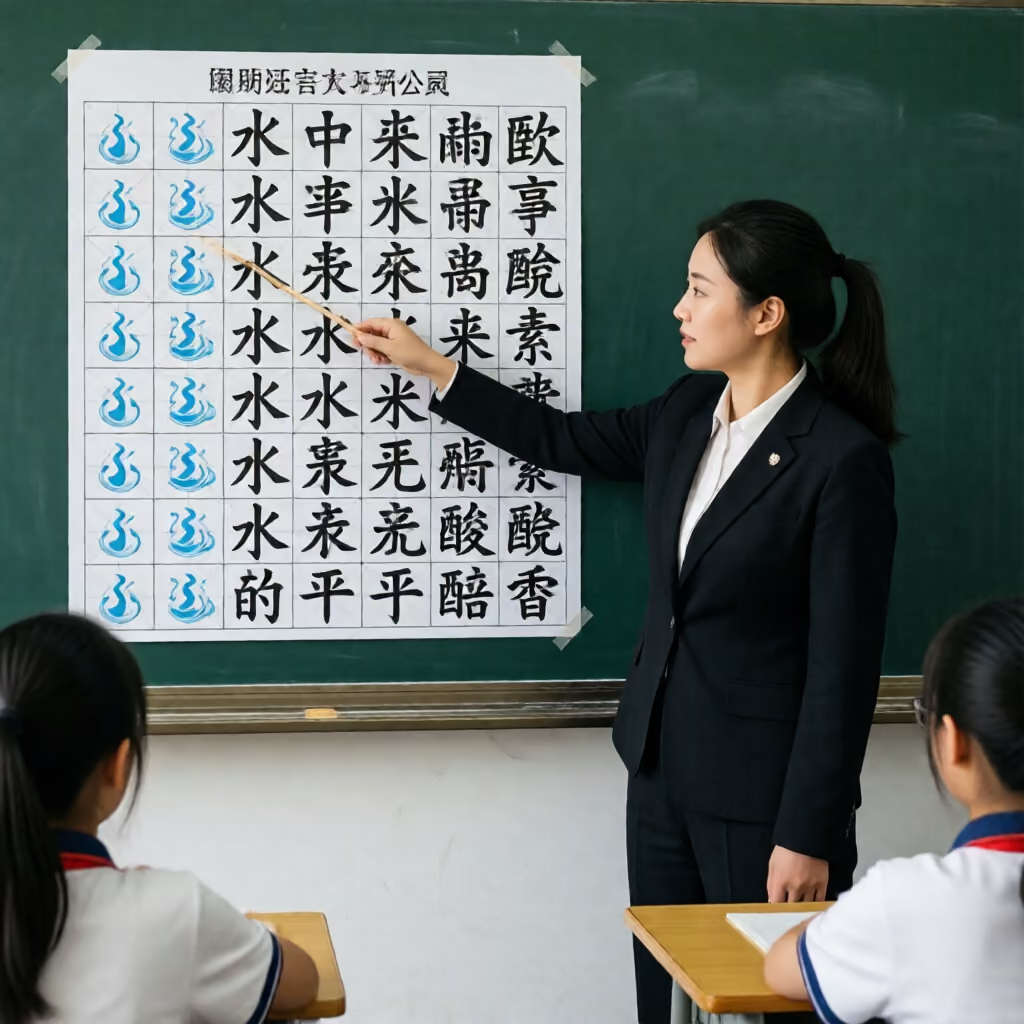
radical
A basic component of Chinese writing that appears in many characters and often provides clues to their semantic category.
Der Lehrer erklärte, aus welchem Radikal das chinesische Schriftzeichen besteht.
The teacher explained which radical the Chinese character contains.
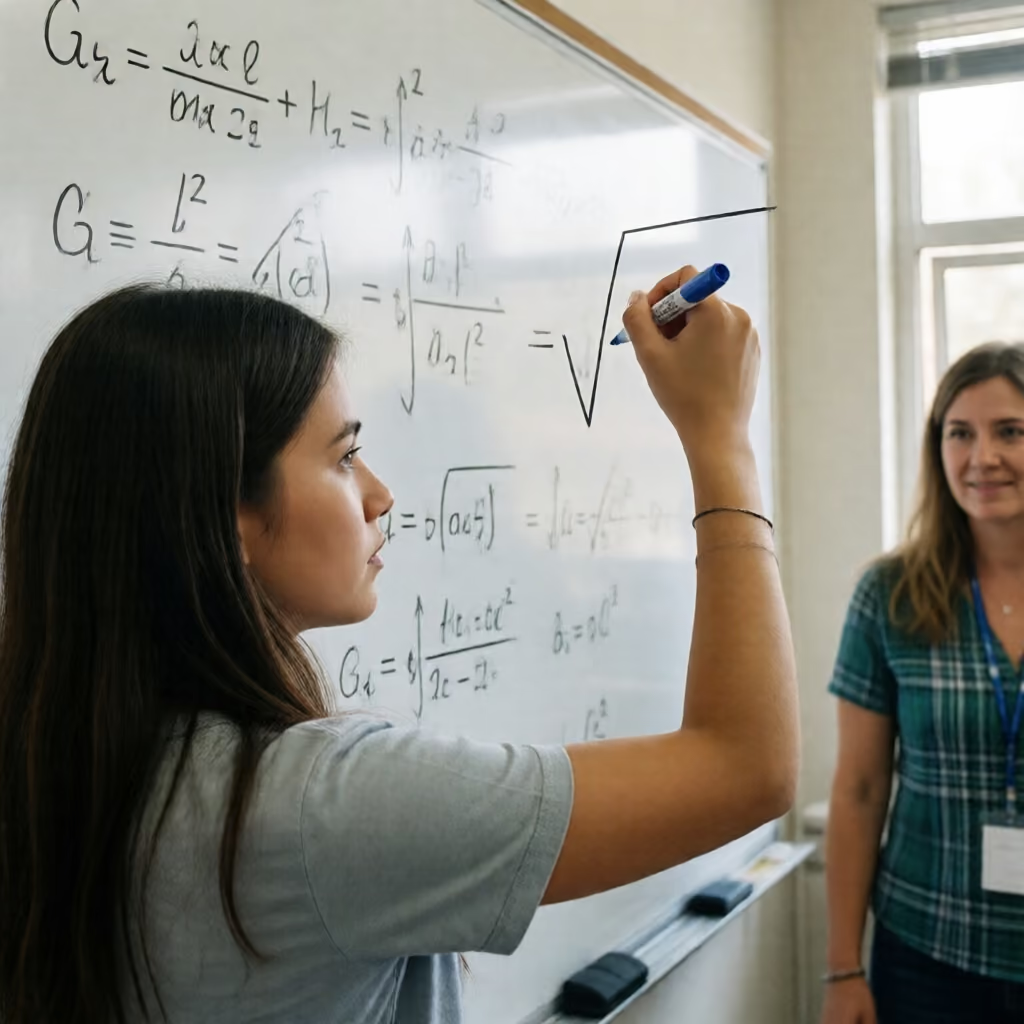
radical
In mathematics, an expression containing a root symbol, or the expression represented by a root.
Die Lösungen einer quadratischen Gleichung lassen sich als Radikale schreiben.
The solutions of a quadratic equation can be written as radicals.
| gender | neuter das |
|---|---|
| plural | die Radikale |
| genitive | des Radikals |
| singular | plural | |
|---|---|---|
| nominative | das Radikal | die Radikale |
| accusative | das Radikal | die Radikale |
| dative | dem Radikal | den Radikalen |
| genitive | des Radikals | der Radikale |
The article changes with the case; it is shown in colour.
The meaning of 'Radikal' (radical) can usually be identified from the subject area: in chemistry texts, it refers to reactive particles; in discussions of Chinese characters, to a component of a character; and in mathematical texts, to an expression involving a root.
Die Chemiker untersuchen, wie ein Radikal mit anderen Molekülen reagiert.
The chemists are investigating how a radical reacts with other molecules.
Das Radikal hilft den Schülern, das chinesische Schriftzeichen zu analysieren.
The radical helps the students analyze the Chinese character.
Das Radikal in dieser mathematischen Formel ist ein Ausdruck mit einem Wurzelzeichen.
The radical in this mathematical formula is an expression containing a root symbol.
In chemistry, 'Radikal' (radical) often appears in combinations such as 'freies Radikal' (free radical), 'reaktives Radikal' (reactive radical), and 'freie Radikale bilden' (to form free radicals). This meaning occurs primarily in specialized texts.
Antioxidantien können freie Radikale im Körper abfangen.
Antioxidants can neutralize free radicals in the body.
In texts about Chinese writing, 'Radikal' (radical) is often used with verbs such as 'enthalten' (to contain), 'erkennen' (to recognize), or 'erklären' (to explain). This usage concerns the internal structure of a Chinese character.
In diesem chinesischen Schriftzeichen kann man ein häufiges Radikal erkennen.
A common radical can be recognized in this Chinese character.
In mathematics, 'Radikal' (radical) is a technical term used in algebra. A typical expression is 'durch Radikale auflösbar' (solvable by radicals), used for equations whose solutions can be expressed using roots; in school mathematics, however, the simpler term 'Wurzel' (root) is usually used.
Allgemeine Gleichungen fünften Grades sind nicht durch Radikale auflösbar.
General fifth-degree equations are not solvable by radicals.