

das Ungeheuer
monster
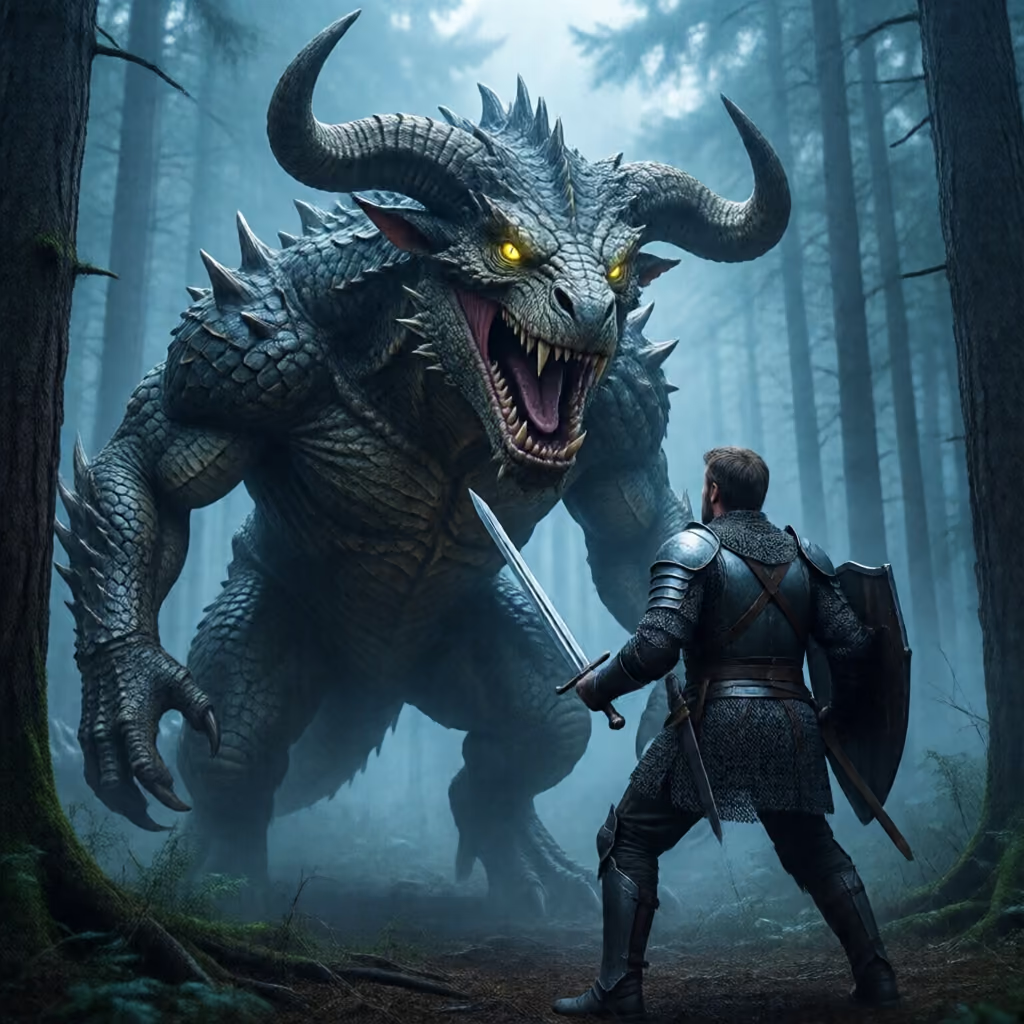
A large, frightening creature from a legend, fairy tale, or fantasy story.
EXAMPLE
Der Held kämpfte im dunklen Wald gegen ein gefährliches Ungeheuer.
The hero fought a dangerous monster in the dark forest.
monster
das Ungeheuer, die Ungeheuer
Loading your saved state.
monster
A large, frightening creature from a legend, fairy tale, or fantasy story.
Der Held kämpfte im dunklen Wald gegen ein gefährliches Ungeheuer.
The hero fought a dangerous monster in the dark forest.

monster
An especially cruel or despicable person; a brute.
Wer wehrlose Tiere quält, ist für mich ein Ungeheuer.
Anyone who abuses helpless animals is a monster in my eyes.

monster
Something that is frightening or almost unimaginable because of its size, impact, or unusual nature.
Die Bürokratie ist zu einem Ungeheuer geworden.
Bureaucracy has become a monster.
| gender | neuter das |
|---|---|
| plural | die Ungeheuer |
| genitive | des Ungeheuers |
| singular | plural | |
|---|---|---|
| nominative | das Ungeheuer | die Ungeheuer |
| accusative | das Ungeheuer | die Ungeheuer |
| dative | dem Ungeheuer | den Ungeheuern |
| genitive | des Ungeheuers | der Ungeheuer |
The article changes with the case; it is shown in colour.
In adventure and fantasy stories, typical expressions include „einem Ungeheuer begegnen“ (to encounter a monster), „gegen ein Ungeheuer kämpfen“ (to fight a monster), and „ein Ungeheuer besiegen“ (to defeat a monster). Pay attention to the dative with „begegnen“ (to encounter) and the accusative after „gegen“ (against) and with „besiegen“ (to defeat).
Auf ihrer Reise begegnet die Prinzessin einem schrecklichen Ungeheuer.
On their journey, the princess encounters a terrifying monster.
Die Dorfbewohner kämpfen gemeinsam gegen ein Ungeheuer.
The villagers fight a monster together.
Am Ende besiegt die Heldin das Ungeheuer.
In the end, the heroine defeats the monster.
When referring to a person, „Ungeheuer“ (monster) expresses very strong moral condemnation. As a direct form of address, the word is a serious insult and can be very hurtful.
Du bist ein Ungeheuer, wenn dir das Leid dieser Menschen völlig egal ist!
You are a monster if you do not care at all about these people's suffering!
When referring to large machines or structures, „Ungeheuer“ (monster) is sometimes used figuratively, especially in vivid narratives and descriptions. Details such as „aus Stahl“ (made of steel) or „aus Beton“ (made of concrete) help make it clear that no living creature is meant.
Der neue Bagger ragte wie ein Ungeheuer aus Stahl über den Arbeitern auf.
The new excavator towered over the workers like a monster made of steel.