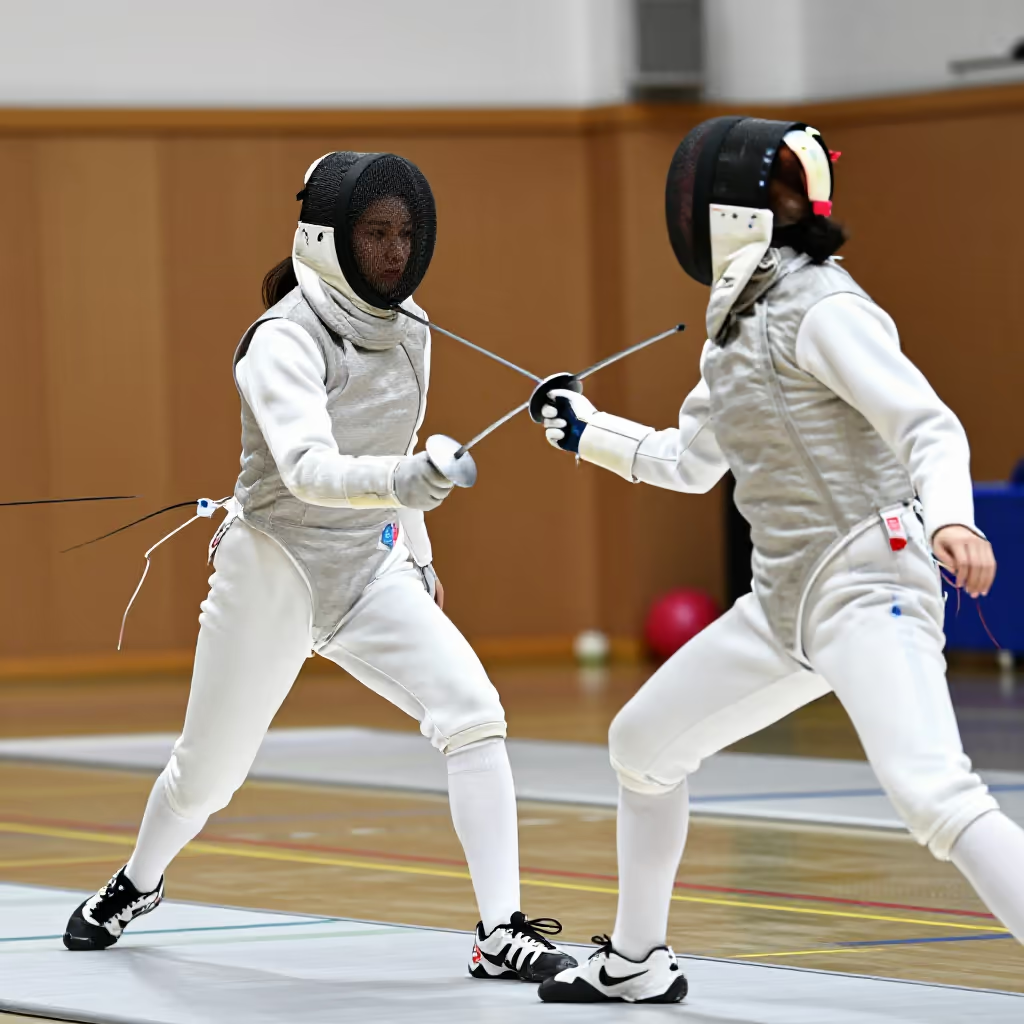
A historical thrusting weapon with a long, narrow blade, which today is used mainly as one of the three weapons in sport fencing.
example
Im Finale des Fechtturniers trat sie mit dem Degen an.
In the final of the fencing tournament, she competed with the épée.
Usage tips
Register and style
Using "Degen" (old hand) for a person is outdated and is rarely used today. It expresses respect for a very experienced man, often with a slightly ironic or admiring undertone.
EXAMPLE
Der Chefarzt ist ein alter Degen, der schon alles gesehen hat.
The chief physician is an old hand who has seen everything.
Sport fencing context
In modern sport fencing, the épée is one of the three weapons or disciplines. Unlike the other weapons, every hit anywhere on the body counts here.
EXAMPLE
Sie hat bei den Olympischen Spielen die Goldmedaille im Degen gewonnen.
She won the gold medal in épée at the Olympic Games.
Typical expression
In the figurative meaning for a person, the phrase "ein Degen seines Fachs" (an old hand in his field) is often used. It expresses that someone is a recognized expert in their field.
EXAMPLE
Als Historiker war der Professor ein Degen seines Fachs.
As a historian, the professor was an old hand in his field.
Compare with
near_synonym · confusable
Degen vs Schwert
sword
'das Schwert' and 'der Degen' are both long weapons with a blade. 'Schwert' is the more general term for a historical cutting and thrusting weapon. A 'Degen' is more specific: it has a long, narrow blade and is especially associated with fencing. Learners may confuse the words because both can look similar in old stories or in sport. If you are speaking generally about an old weapon, 'Schwert' often fits. In fencing or for a narrow thrusting weapon, 'Degen' is more precise.
Degen
Beim Training lernt Sofia, den Degen ruhig und genau zu führen.
During training, Sofia learns to handle the épée calmly and precisely.
Schwert
Der Ritter zog sein Schwert, als er das Tor bewachen sollte.
The knight drew his sword when he was supposed to guard the gate.