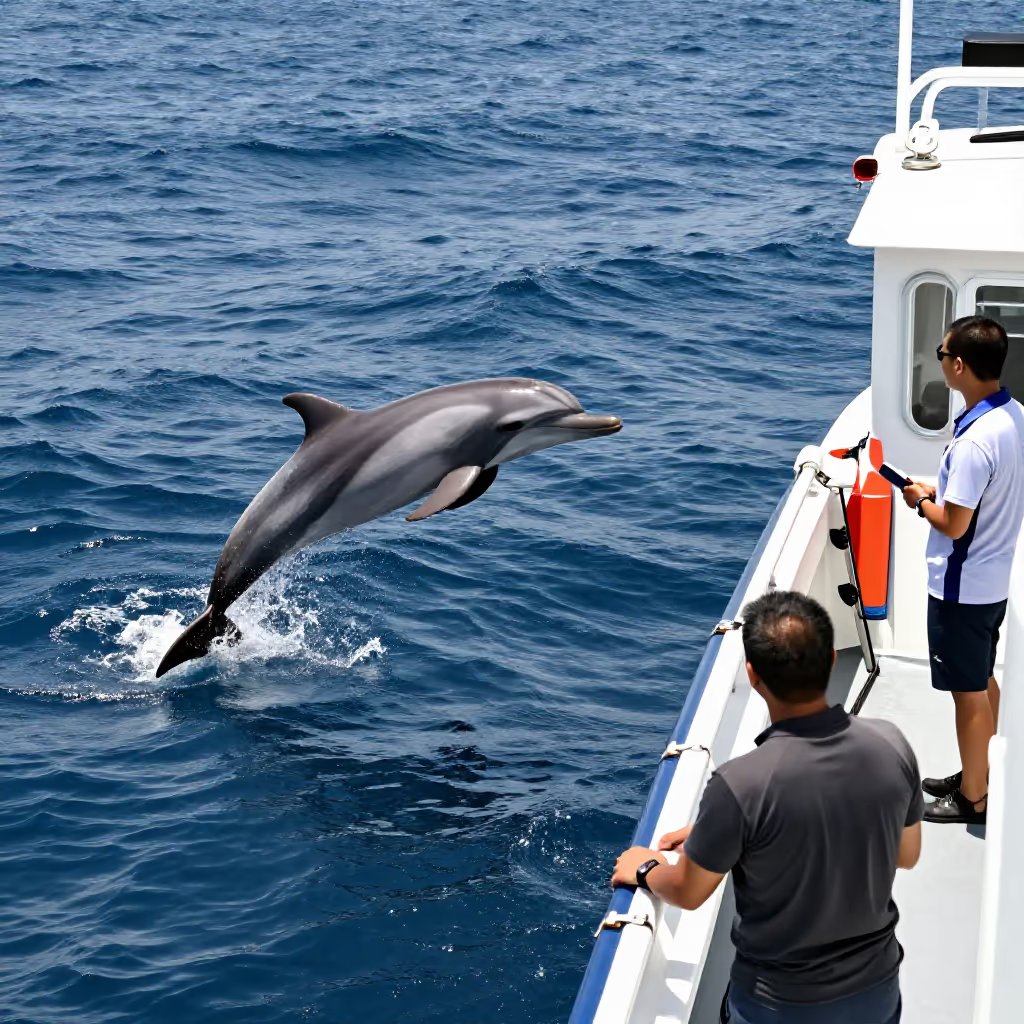
An intelligent marine mammal from the whale family, known for its playful behavior and its ability to communicate.
example
Im Urlaub sahen wir eine Gruppe Delfine, die neben unserem Boot schwammen.
On vacation, we saw a group of dolphins swimming next to our boat.

Usage tips
Context clue
You can always tell from the context whether the animal or the swimming stroke is meant. If you are talking about the sea and animals, it is the marine mammal. In the context of sports and swimming pools, the swimming stroke is meant.
EXAMPLE
Im Ozeanarium kann man Delfine sehen.
You can see dolphins at the oceanarium.
Use without an article
When the swimming stroke is meant, 'Delfin' (butterfly) is often used without an article, like a sport. You say 'ich schwimme Delfin' (I swim butterfly) or speak of the event '100 Meter Delfin' (100-meter butterfly).
EXAMPLE
Kannst du Delfin schwimmen?
Can you swim butterfly?
Origin of the name
The name of the swimming stroke comes from the wave-like body movement of the swimmers. This movement is reminiscent of the way a real dolphin swims.
EXAMPLE
Für Delfin braucht man eine starke Rumpfmuskulatur.
For butterfly, you need strong core muscles.
Compare with
confusable
Delfin vs Fisch
fish
'der Fisch' and 'der Delfin' both refer to animals that live in water. They are easy to confuse because dolphins swim like fish and live in the sea. Biologically, however, a dolphin is not a fish, but a mammal from the whale family. A fish breathes with gills and has fins. A dolphin has to come to the water's surface to breathe. So in everyday language, you do not say 'ein Fisch' if you mean a dolphin.
Delfin
Ein Delfin sprang neben dem Boot aus dem Wasser.
A dolphin jumped out of the water next to the boat.
Fisch
Beim Tauchen sah Lena einen bunten Fisch nahe am Korallenriff.
While diving, Lena saw a colorful fish near the coral reef.