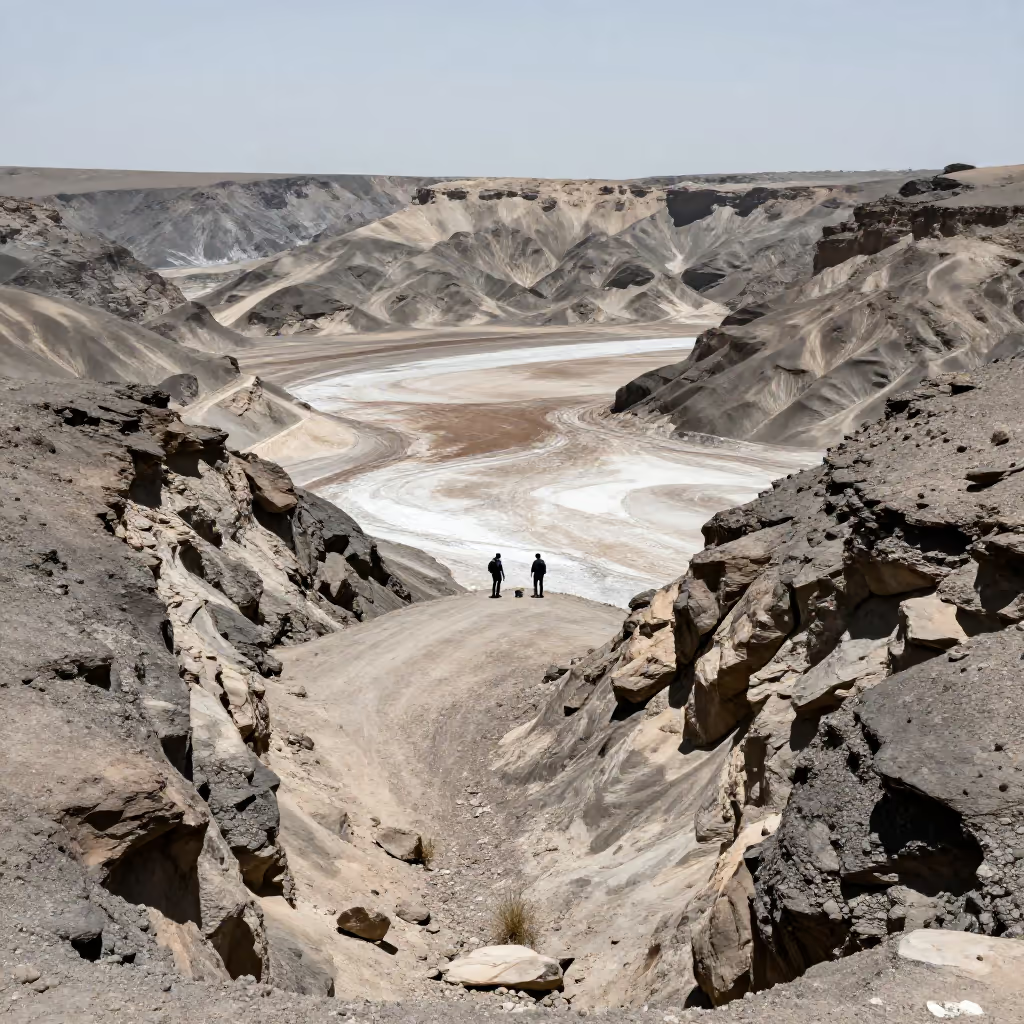
A serious mental illness characterized by persistent sadness, loss of interest, lack of drive, and other emotional and physical problems.
example
Er befindet sich wegen einer schweren Depression in therapeutischer Behandlung.
He is receiving therapeutic treatment for severe depression.
Usage tips
Word structure
Words ending in '-ion' are almost always feminine in German. So when you see this ending, you can use the article 'die' with a high degree of certainty.
EXAMPLE
Die Diskussion über das Thema war sehr intensiv.
The discussion about the topic was very intense.
Context clues
You can recognize the meaning of 'Depression' (depression) from the context. Words like 'Patient' (patient), 'Therapie' (therapy), or 'psychisch' (psychological/mental) point to the illness. Terms like 'Wirtschaft' (economy), 'Markt' (market), or 'Arbeitslosigkeit' (unemployment) indicate the economic meaning.
EXAMPLE
Wegen seiner Depression kann er zurzeit nicht arbeiten.
Because of his depression, he currently cannot work.
Typical prepositions
In a psychological context, fixed prepositions are often used. You suffer 'an' einer Depression (from depression; dative) or fall 'in' eine Depression (into depression; accusative).
EXAMPLE
Viele Menschen leiden im Winter an einer saisonalen Depression.
Many people suffer from seasonal depression in winter.
Fixed term
In an economic context, 'die Große Depression' (the Great Depression) is a fixed term for the global economic crisis starting in 1929. Here, the term is used like a proper noun.
EXAMPLE
Die Große Depression hatte weltweite Auswirkungen.
The Great Depression had worldwide effects.
Meteorology context
In weather reports, 'Depression' (depression) is a technical term for a low-pressure area. A geographic origin is often mentioned, for example 'eine atlantische Depression' (an Atlantic depression).
EXAMPLE
Eine isländische Depression sorgt für kühles Wetter.
An Icelandic depression is bringing cool weather.
Compare with
antonym
Depression vs Aufschwung
upswing / upturn
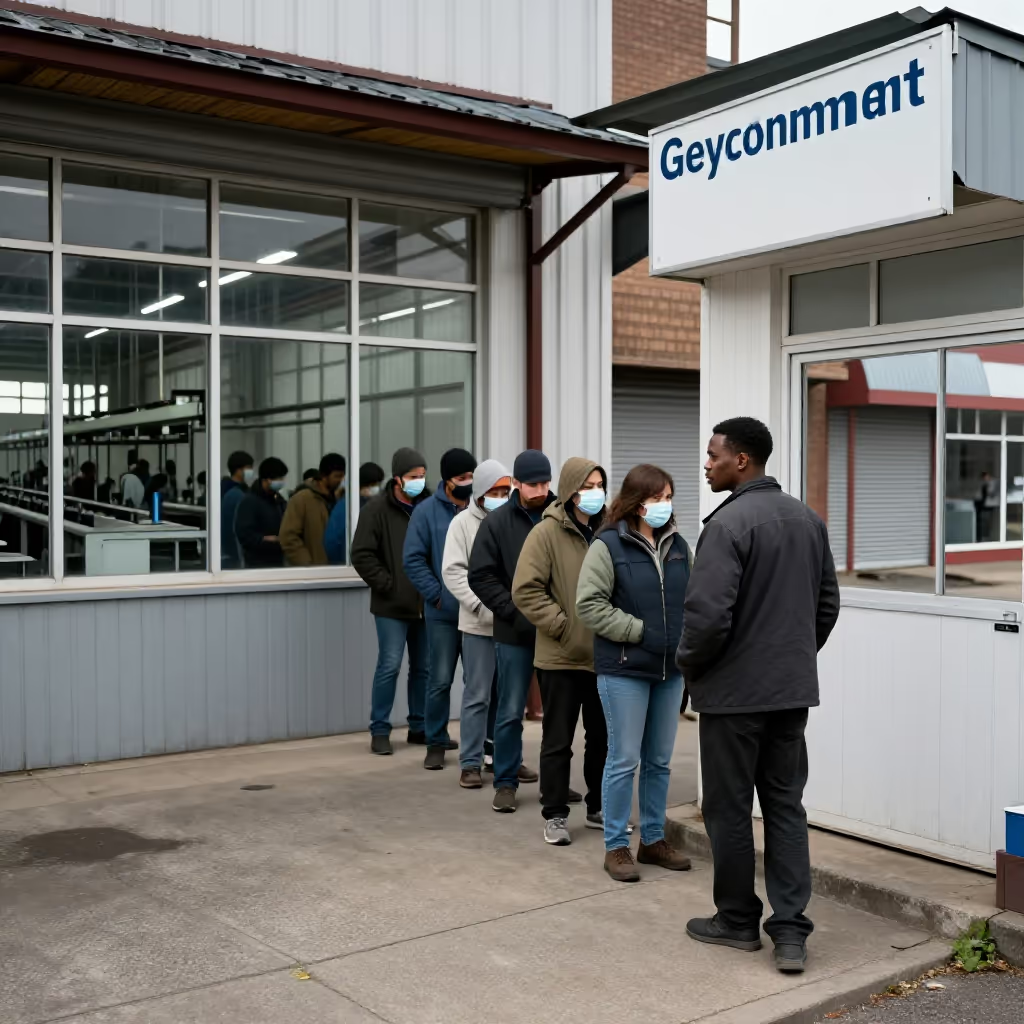
'die Depression' and 'der Aufschwung' can be opposites in economics. An economic depression is a very bad phase with little demand, falling production, and often high unemployment. An 'Aufschwung' is a positive phase in which the economy grows again and more is produced. So the difference is the direction: in a depression, the economy goes sharply downward; in an 'Aufschwung', it goes upward.
Depression
Während der wirtschaftlichen Depression verloren viele Menschen ihre Arbeit.
During the economic depression, many people lost their jobs.
Aufschwung
Nach einigen schwierigen Jahren brachte der Aufschwung wieder mehr Aufträge.
After several difficult years, the upturn brought more orders again.