

deutsch
German
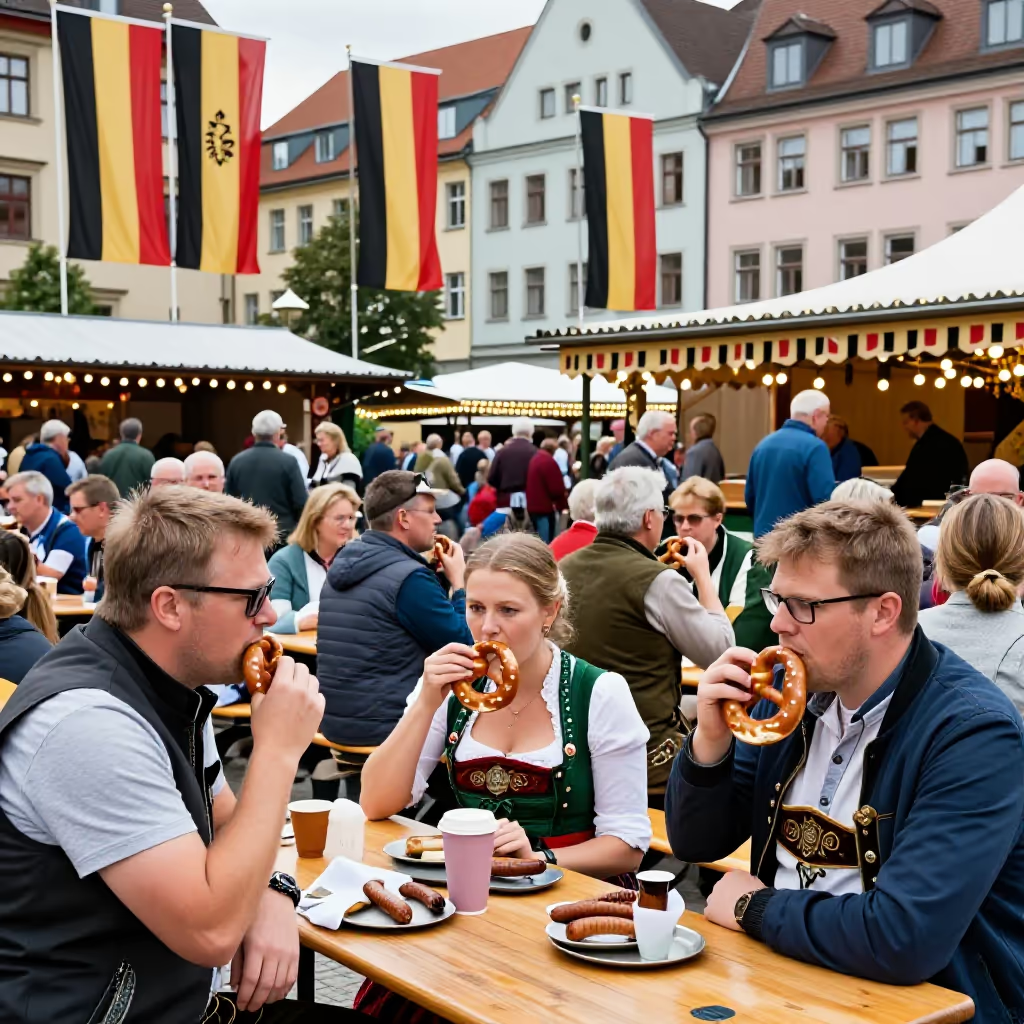
Relates to Germany, its inhabitants, its culture, or its language.
EXAMPLE
Mein Lieblingsessen ist eine deutsche Spezialität.
My favorite food is a German specialty.
German
Loading your saved state.
German
Relates to Germany, its inhabitants, its culture, or its language.
Mein Lieblingsessen ist eine deutsche Spezialität.
My favorite food is a German specialty.

in plain language
An idiom meaning that you say something directly, openly, and without beating around the bush.
Auf gut Deutsch gesagt: Deine Idee ist Unsinn.
To put it in plain language: your idea is nonsense.
The adjective 'deutsch' (German) is the basis for other important words. These include the country 'Deutschland' (Germany) and the term for a person, 'der/die Deutsche' (the German person).
Viele Touristen besuchen Deutschland wegen der deutschen Kultur.
Many tourists visit Germany because of German culture.
As an adjective before a noun or as an adverb, 'deutsch' (German) is written with a lowercase letter. When it refers to the language as a noun, it is capitalized: 'das Deutsch' (German).
Er lernt seit einem Jahr Deutsch.
He has been learning German for a year.
The expression 'auf gut Deutsch' (in plain language) is a fixed idiom. It is used to announce that you are now going to say something very directly, honestly, and perhaps even rudely.
Auf gut Deutsch gesagt, die ganze Arbeit war umsonst.
To put it in plain language, all the work was for nothing.
German
Deutsch is used as a noun for the language itself and is capitalized. The adjective deutsch, by contrast, describes a noun it refers to, such as a text or a phrase. When naming the language, Deutsch is appropriate; when describing something as belonging to the German language, use deutsch.

Der Artikel enthält viele deutsche Fachwörter.
The article contains many German technical terms.
Das Deutsch in diesem Artikel ist leicht verständlich.
The German in this article is easy to understand.