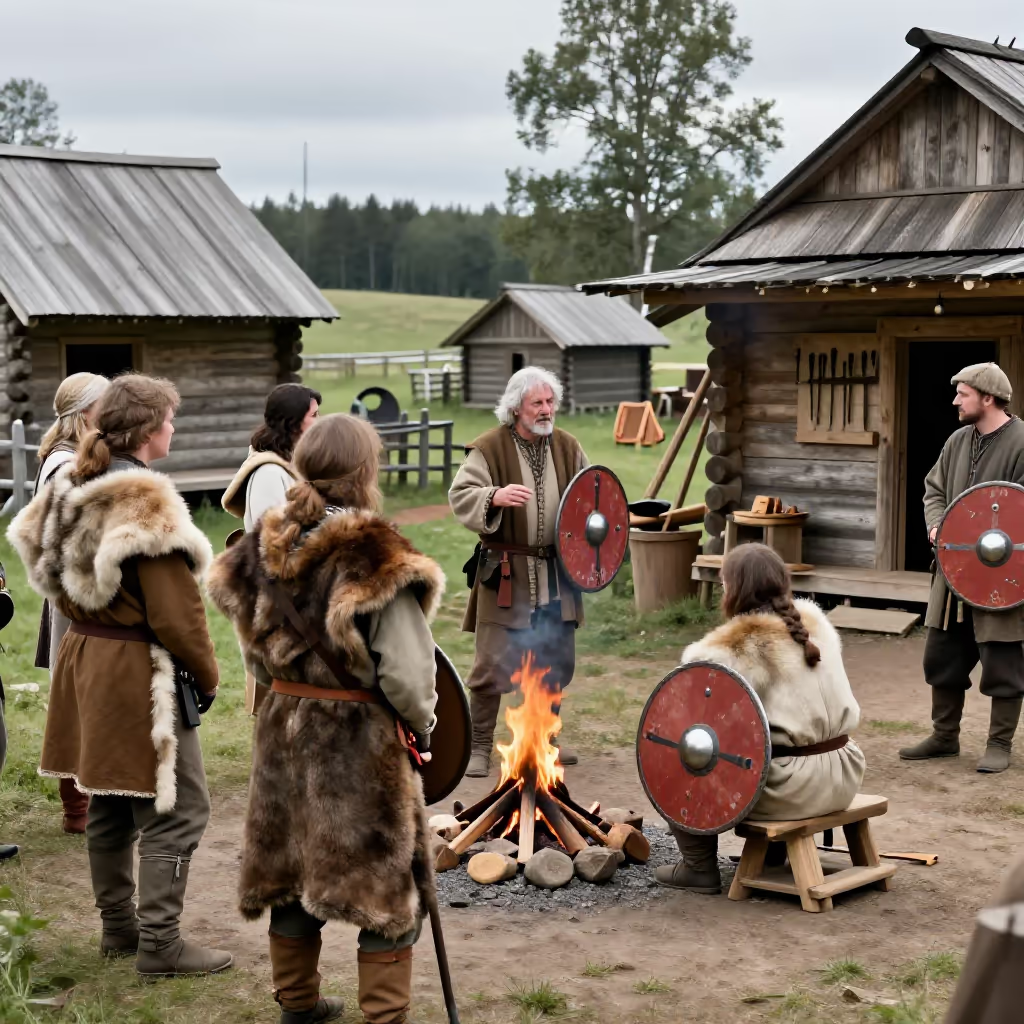
Refers to the Germanic peoples, a group of historically related tribes in Northern and Central Europe in antiquity and the early Middle Ages.
example
Die germanischen Stämme sprachen eng verwandte Sprachen.
The Germanic tribes spoke closely related languages.
Usage tips
Word family
The adjective 'germanisch' (Germanic) is derived from the noun 'der Germane' (Germanic person). The ending '-isch' is often used to form adjectives that describe belonging or origin.
EXAMPLE
Die Ausstellung zeigt Funde aus einer alten germanischen Siedlung.
The exhibition shows finds from an old Germanic settlement.
Lowercase spelling
Adjectives ending in '-isch' that indicate origin are written in lowercase in German, as long as they are not part of a proper noun.
EXAMPLE
Englisch ist eine germanische Sprache.
English is a Germanic language.
Context clue
When 'germanisch' (Germanic) appears with words like 'Stämme' (tribes), 'Völker' (peoples), or 'Mythologie' (mythology), the historical meaning is intended. In connection with 'Sprachen' (languages), 'Wort' (word), or 'Grammatik' (grammar), it refers to the language family.
EXAMPLE
Tacitus schrieb über die Sitten der germanischen Stämme.
Tacitus wrote about the customs of the Germanic tribes.
Typical collocations
In historical contexts, 'germanisch' (Germanic) is often combined with nouns like 'Stämme' (tribes), 'Siedlungen' (settlements), 'Götter' (gods), or 'Mythologie' (mythology).
EXAMPLE
Die germanische Mythologie kennt viele verschiedene Götter.
Germanic mythology includes many different gods.
Typical collocations
In linguistic contexts, 'germanisch' (Germanic) is often found with 'Sprachen' (languages), 'Sprachfamilie' (language family), 'Wurzel' (root), or 'Ursprung' (origin).
EXAMPLE
Der Umlaut ist ein typisches Merkmal vieler germanischer Sprachen.
Umlaut is a typical feature of many Germanic languages.
Compare with
confusable
germanisch vs deutsch
German
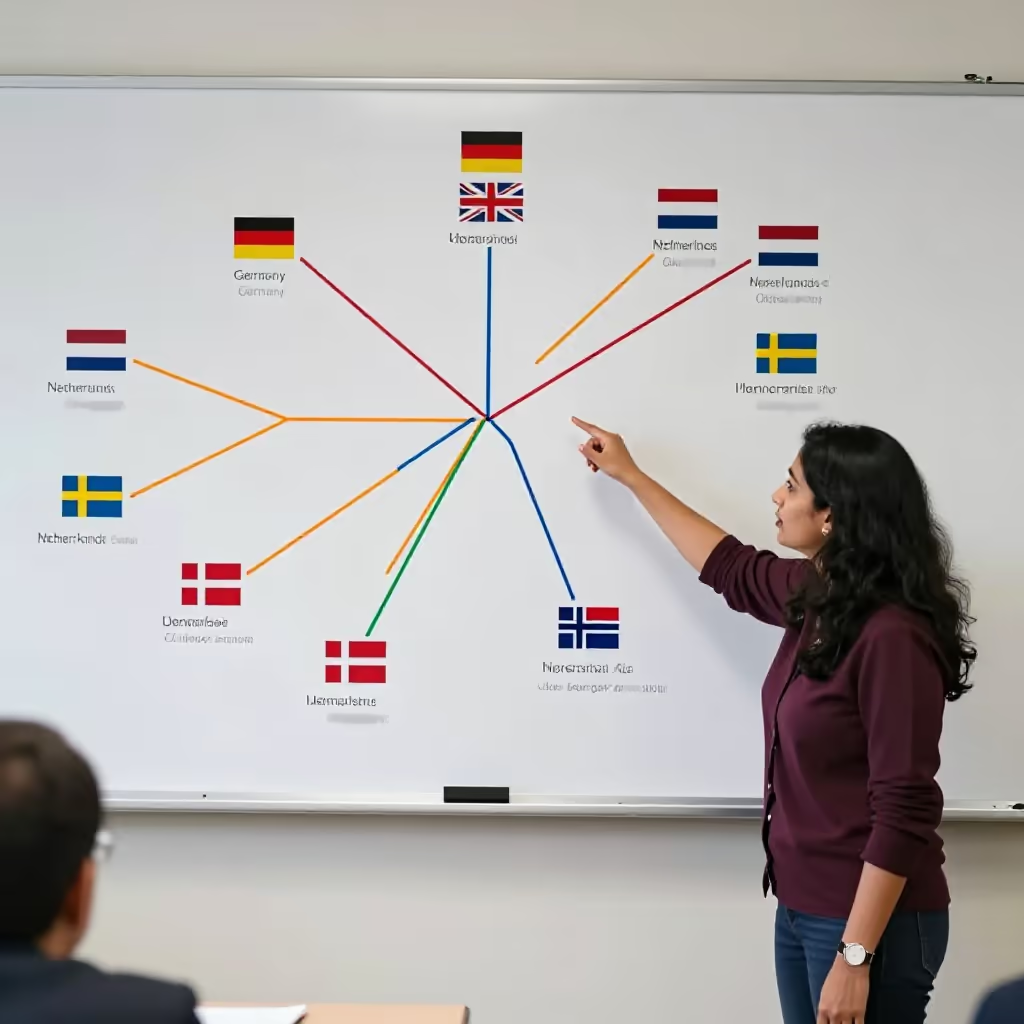
'deutsch' and 'germanisch' both have to do with language, origin, or history in Europe. You use 'deutsch' for anything that belongs to Germany, the German language, or German culture. 'germanisch' is much broader and is usually meant historically or linguistically. It refers to the ancient Germanic peoples or to an entire language family that German also belongs to. Learners may confuse the words because German is a Germanic language. But not everything Germanic is German.
germanisch
Englisch und Deutsch gehören zu den germanischen Sprachen.
English and German belong to the Germanic languages.
deutsch
Nach dem Gespräch hat er den deutschen Ausdruck noch einmal erklärt.
After the conversation, he explained the German expression once again.