


die Fünf
five
The number 5 or the digit used to write this number.
EXAMPLE
Die Fünf auf dem Schild ist kaum noch zu erkennen.
The five on the sign is barely recognizable anymore.
five
die Fünf, die Fünfen
Loading your saved state.
five
The number 5 or the digit used to write this number.
Die Fünf auf dem Schild ist kaum noch zu erkennen.
The five on the sign is barely recognizable anymore.

five
A school grade with a numerical value of 5. In Germany, it means “unsatisfactory”; in other countries, it may indicate a different level of performance.
Wegen der vielen Fehler bekam er eine Fünf in der Klassenarbeit.
Because of all the mistakes, he got a five on the test.
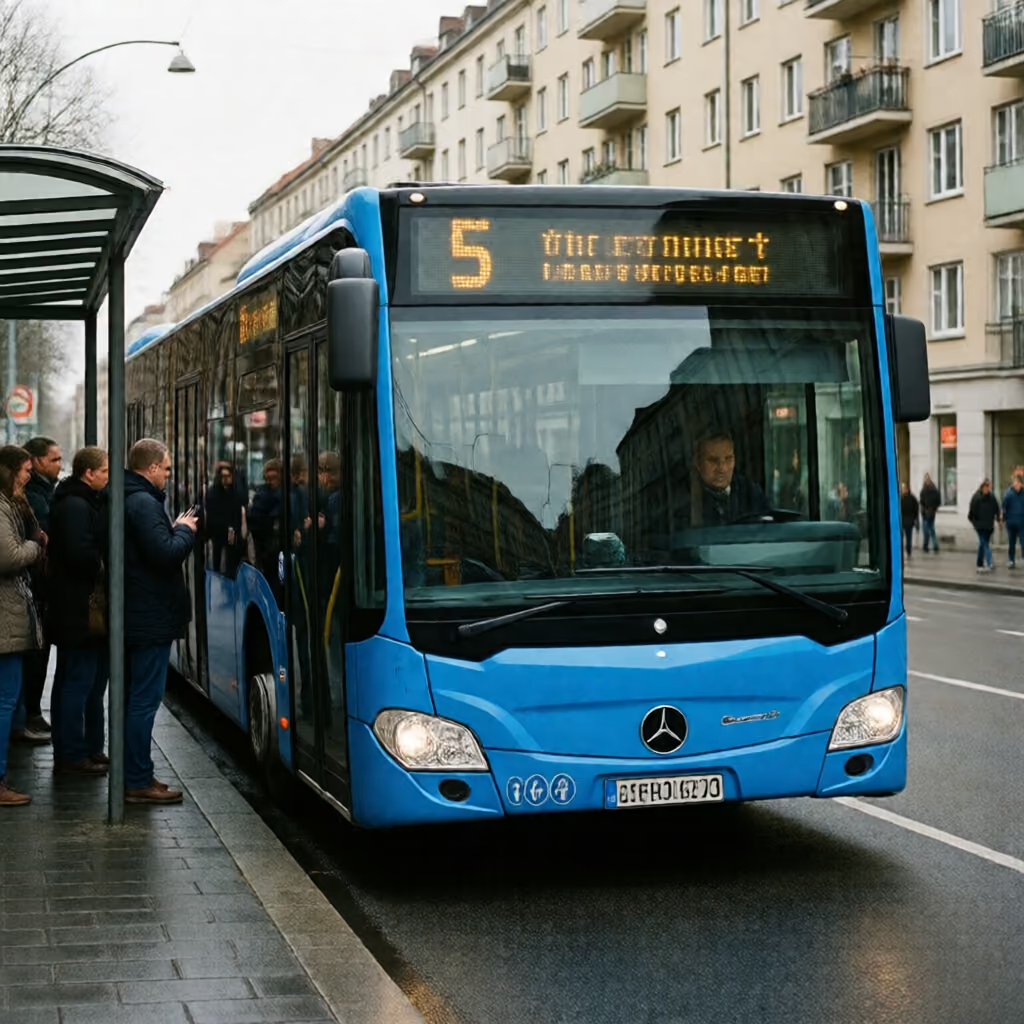
five
A bus or tram on route 5; colloquially, the route itself as well.
Wir nehmen die Fünf bis zum Hauptbahnhof.
We'll take the five to the main train station.

five
A roll of five on a die or the corresponding side of a die.
Mit einer Fünf beim nächsten Wurf gewinnst du das Spiel.
If you roll a five on your next throw, you win the game.

five
A playing card with a value of five.
Sie legte eine Fünf auf den Kartenstapel.
She put down a five on the card pile.
| gender | feminine die |
|---|---|
| plural | die Fünfen |
| genitive | der Fünf |
| singular | plural | |
|---|---|---|
| nominative | die Fünf | die Fünfen |
| accusative | die Fünf | die Fünfen |
| dative | der Fünf | den Fünfen |
| genitive | der Fünf | der Fünfen |
The article changes with the case; it is shown in colour.
When “die Fünf” (the five) refers to the written number, it often appears with verbs such as “schreiben” (to write), “lesen” (to read), “erkennen” (to recognize), or “ankreuzen” (to tick). The context usually involves a form, a sign, or a sequence of numbers.
Bitte schreiben Sie die Fünf deutlich auf das Formular.
Please write the five clearly on the form.
For a school grade, “die Fünf” (a five) often appears with verbs such as “bekommen” (to get), “schreiben” (to receive a grade on a test), or “haben” (to have). The preposition “in” often indicates the subject or exam in which the grade was given.
Er hat in Mathematik eine Fünf geschrieben.
He got a five in math.
When referring to a transit route, “die Fünf” (the five) often follows “mit” (with): “Man fährt oder kommt mit der Fünf” (You travel or arrive by taking the five). The vehicle is identified by its route number.
Wir fahren mit der Fünf bis zum Rathaus.
We're taking the five to the town hall.
When rolling dice, “die Fünf” (a five) often appears with “würfeln” (to roll the dice) or “werfen” (to throw). The verb describes the roll, while “die Fünf” describes the result.
Beim dritten Versuch würfelte sie endlich eine Fünf.
On her third attempt, she finally rolled a five.
When referring to cards, “die Fünf” (a five) often appears with verbs such as “legen” (to put down), “ziehen” (to draw), or “ausspielen” (to play). The context often mentions a card pile, a hand, or a round of play.
Er zog eine Fünf und legte sie sofort auf den Stapel.
He drew a five and immediately put it on the pile.