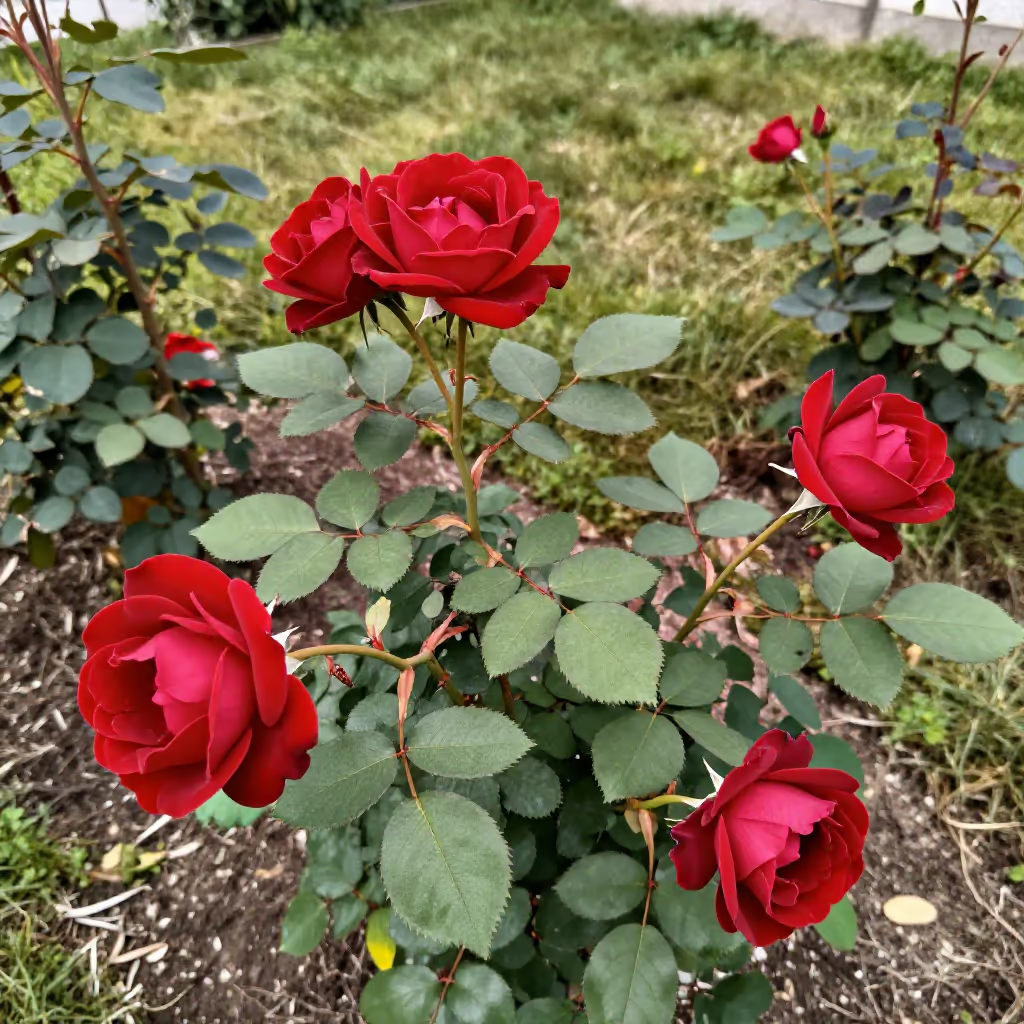
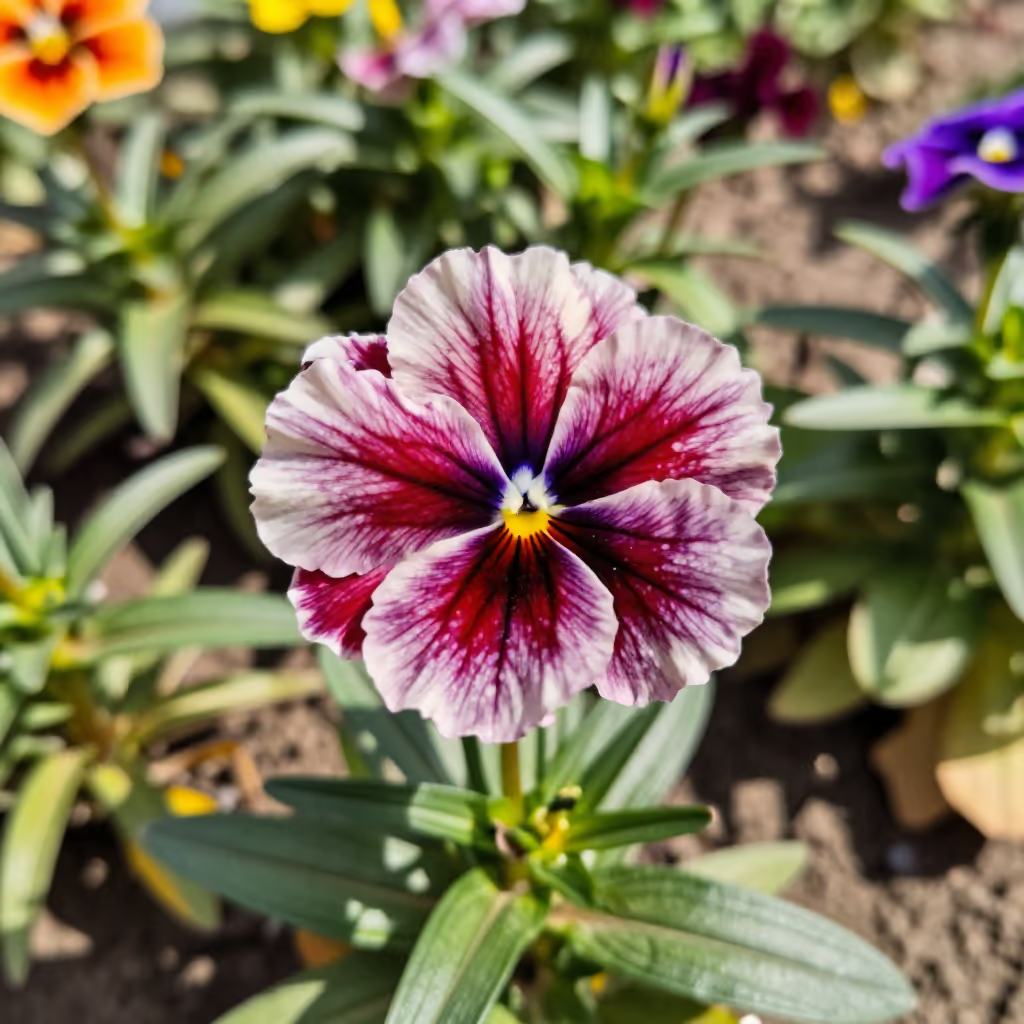
A well-known ornamental plant with usually fragrant flowers and stems that often have thorns. The flower of this plant is considered a symbol of love and beauty.
example
Er hat ihr zum Geburtstag einen Strauß roter Rosen geschenkt.
He gave her a bouquet of red roses for her birthday.
Usage tips
Context clues
You can easily recognize the meaning of 'Rose' (rose) from context. If it is about gardens, flowers, or love, the plant is meant. In connection with churches or architecture, it refers to the round window. If people are talking about the body and pain, it is about the disease.
EXAMPLE
Im Garten wachsen Rosen, während die alte Kirche für ihre Fensterrose bekannt ist.
Roses grow in the garden, while the old church is known for its rose window.
Typical collocations
When the flower is meant, 'Rose' (rose) is often combined with colors (red roses), quantities (a bouquet of roses), or actions such as 'schenken' (to give), 'pflanzen' (to plant), and 'riechen' (to smell).
EXAMPLE
Sie liebt den Duft von weißen Rosen in ihrem Garten.
She loves the scent of white roses in her garden.
Architectural context
In architecture, 'die Rose' (the rose) or 'die Fensterrose' (the rose window) refers to a large, round window that is typical of Gothic churches. Look for words like 'Kirche' (church), 'Kathedrale' (cathedral), 'Fassade' (facade), or 'Fenster' (window).
EXAMPLE
Die große Rose über dem Hauptportal der Kirche ist ein Meisterwerk.
The large rose window above the main portal of the church is a masterpiece.
Colloquial usage
In a medical context, 'die Rose' (the rose) is a colloquial abbreviation for skin diseases such as 'die Gürtelrose' (shingles) or 'die Wundrose' (erysipelas). In a conversation with a doctor, the full names are usually used.
EXAMPLE
Der Arzt diagnostizierte bei ihm eine Gürtelrose am Rücken.
The doctor diagnosed him with shingles on his back.
Compare with
near_synonym · confusable
Rose vs Blume
flower
'die Blume' and 'die Rose' both belong to the area of plants and are often used as gifts or decoration. 'Blume' is the more general word: it can mean many different plants with beautiful flowers. 'Rose' is a specific kind of flower, often with a scent and thorns. The words can be confused because in everyday language, a rose is also a flower. If the exact type is not important, you say 'Blume'. If it really is this specific plant, you say 'Rose'.
Rose
Zum Geburtstag schenkte Tom seiner Freundin eine rote Rose.
For her birthday, Tom gave his girlfriend a red rose.
Blume
Auf dem Tisch steht eine gelbe Blume in einer kleinen Vase.
There is a yellow flower on the table in a small vase.