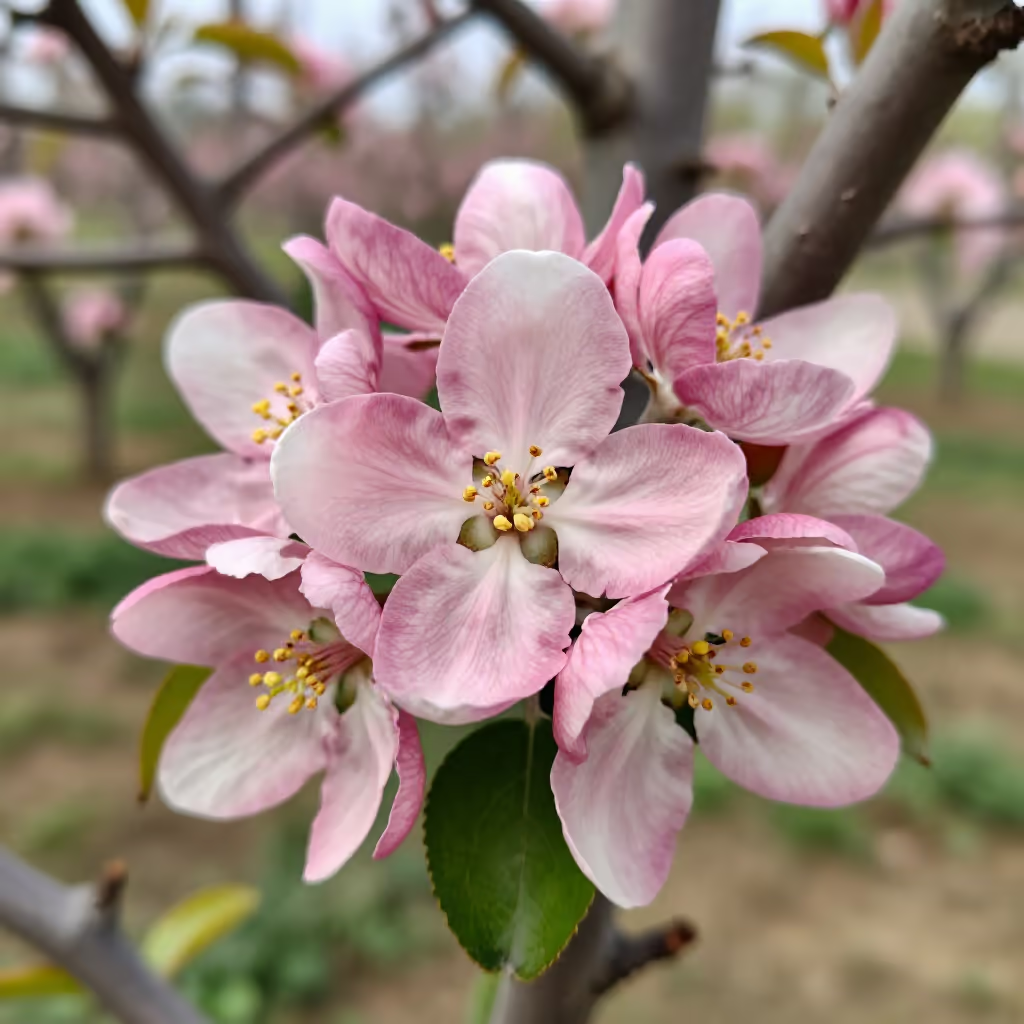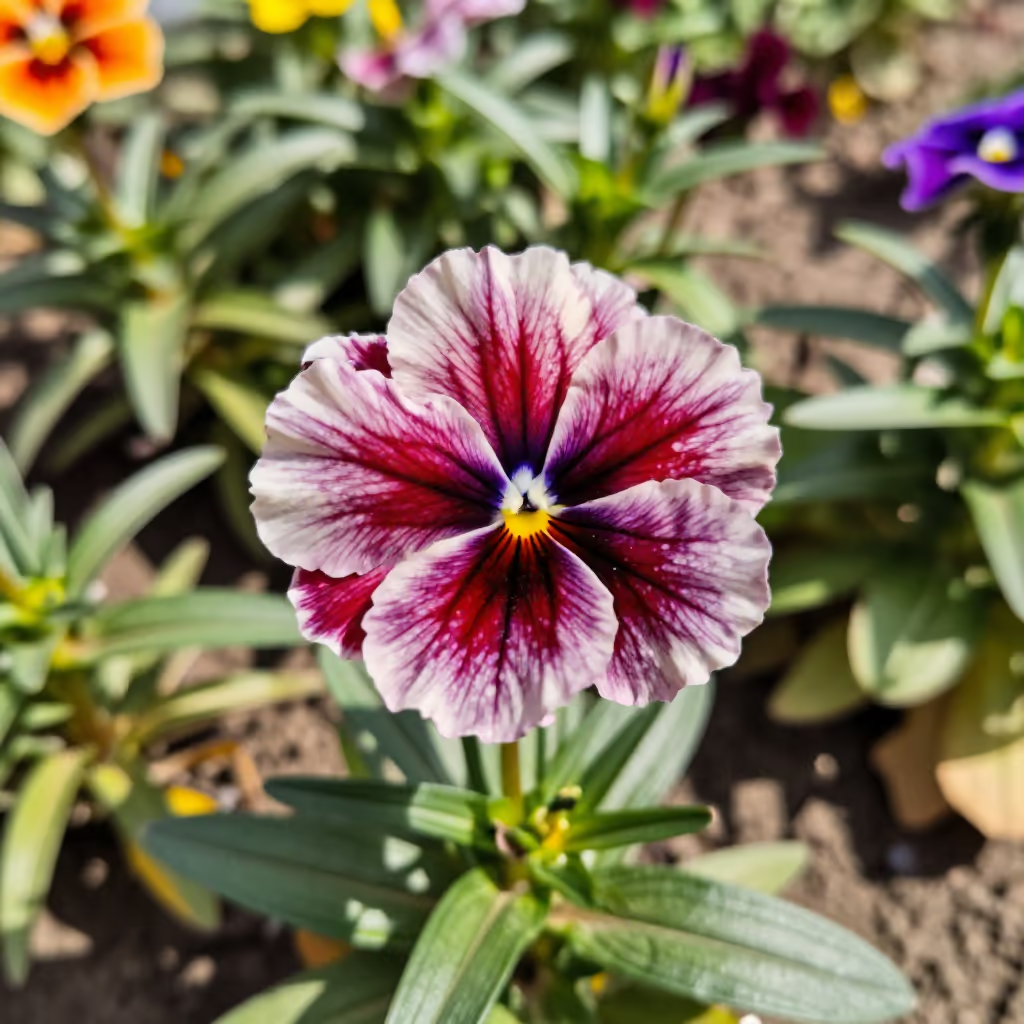
The colorful, often fragrant part of a plant that serves for reproduction. In everyday language, it often refers to the whole plant that bears such blossoms.
example
Sie hat zum Geburtstag einen großen Strauß bunter Blumen bekommen.
She received a large bouquet of colorful flowers for her birthday.

Usage tips
Word composition
'Blume' (flower) is a very productive base word for many compound nouns. If you see '-blume' at the end of a word, it is usually a specific type of flower.
EXAMPLE
Im Frühling blühen die Tulpen und die Schneeglöckchen.
In spring, the tulips and snowdrops bloom.
Context clues
In special contexts, 'Blume' (flower) has a figurative meaning. In connection with beer, it refers to the foam head; in connection with wine, it refers to the aroma.
EXAMPLE
Der Wirt zapfte ein Bier mit perfekter Blume.
The landlord poured a beer with a perfect foam head.
Typical collocations
In everyday language, 'Blume' (flower) is often used with verbs such as 'gießen' (to water), 'pflanzen' (to plant), 'pflücken' (to pick), or 'schenken' (to give as a gift). A common combination is also 'ein Strauß Blumen' (a bouquet of flowers).
EXAMPLE
Vergiss nicht, die Blumen auf dem Balkon zu gießen.
Don't forget to water the flowers on the balcony.
Compare with
near_synonym · confusable
Blume vs Rose
rose
'die Blume' and 'die Rose' both belong to the area of plants and are often used as gifts or decoration. 'Blume' is the more general word: it can mean many different plants with beautiful flowers. 'Rose' is a specific kind of flower, often with a scent and thorns. The words can be confused because in everyday language, a rose is also a flower. If the exact type is not important, you say 'Blume'. If it really is this specific plant, you say 'Rose'.
Blume
Auf dem Tisch steht eine gelbe Blume in einer kleinen Vase.
There is a yellow flower on the table in a small vase.
Rose
Zum Geburtstag schenkte Tom seiner Freundin eine rote Rose.
For her birthday, Tom gave his girlfriend a red rose.