

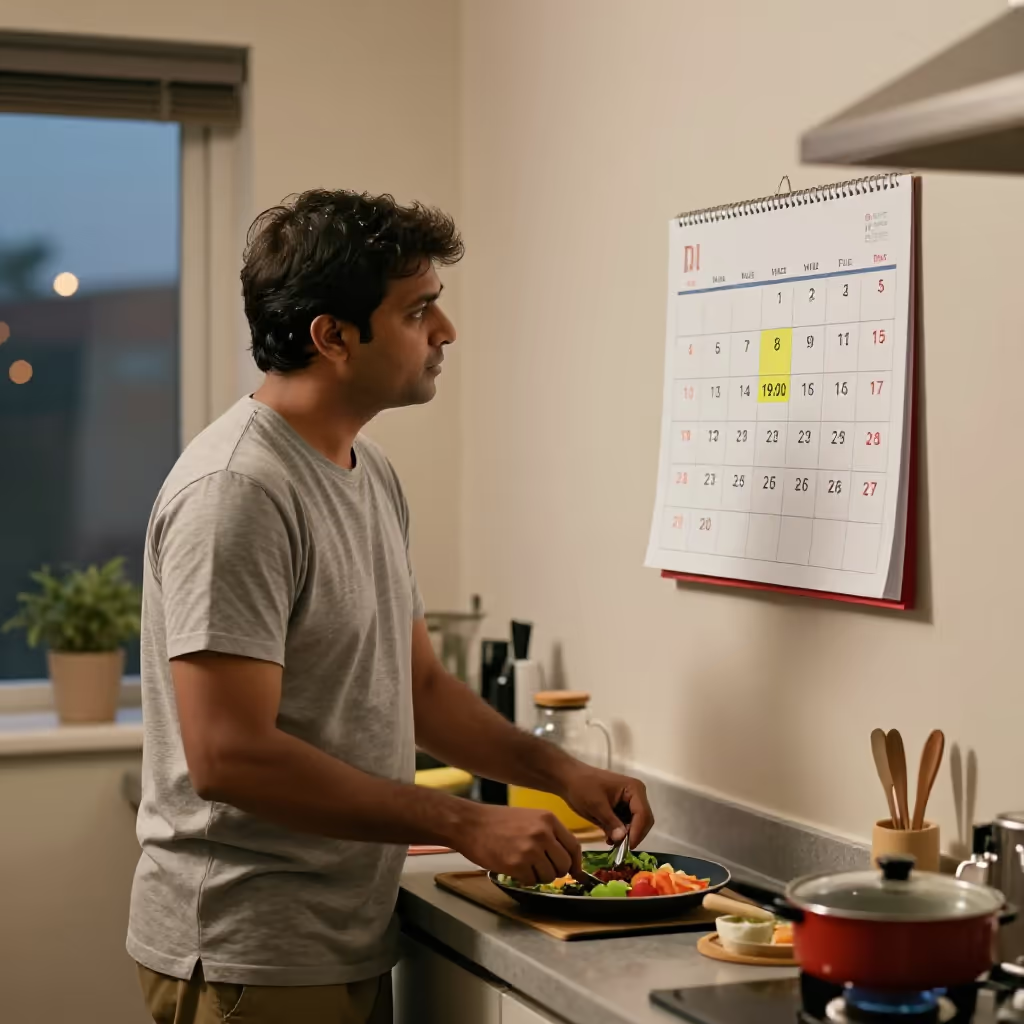
der Dienstagabend
Tuesday evening
The evening of the weekday Tuesday.
EXAMPLE
Was machst du am Dienstagabend? Wollen wir ins Kino gehen?
What are you doing on Tuesday evening? Shall we go to the movies?
Tuesday evening
Loading your saved state.
Tuesday evening
The evening of the weekday Tuesday.
Was machst du am Dienstagabend? Wollen wir ins Kino gehen?
What are you doing on Tuesday evening? Shall we go to the movies?
The word is a simple compound made up of the weekday 'Dienstag' (Tuesday) and the time of day 'Abend' (evening). All evenings of the week are formed this way, e.g. 'Montagabend' (Monday evening), 'Mittwochabend' (Wednesday evening).
Der Film läuft am Dienstagabend im Fernsehen.
The film is on TV on Tuesday evening.
To indicate a point in time, the preposition 'am' is almost always used; it is a contraction of 'an dem'. The question for this is 'Wann?' (When?).
Wir treffen uns am Dienstagabend zum Essen.
We are meeting for dinner on Tuesday evening.
The word can also stand in the accusative without a preposition to express regularity. It then answers the question 'Wann?' (When?) in the sense of 'Wie oft?' (How often?).
Jeden Dienstagabend spiele ich Tennis.
Every Tuesday evening I play tennis.