

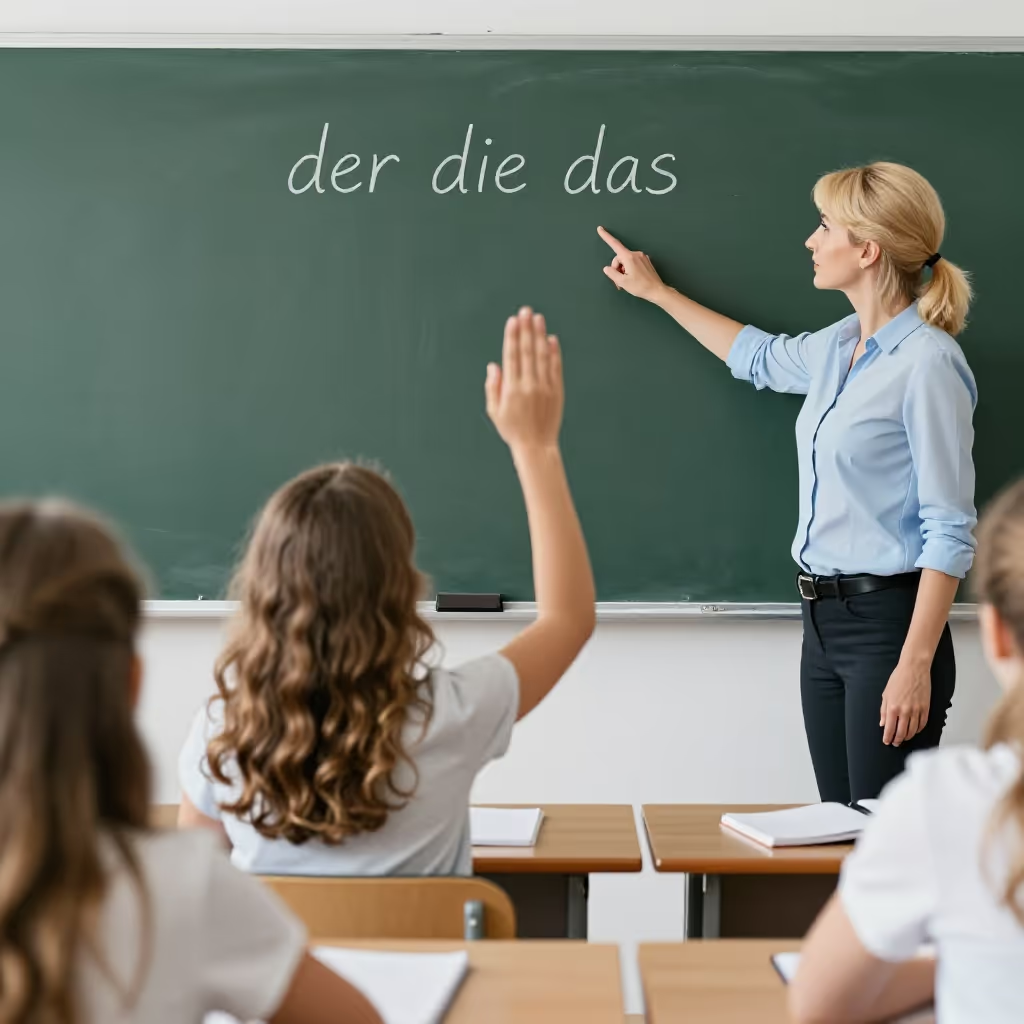
The school subject or course in which the German language, literature, and culture are taught and learned.
example
Im Deutschunterricht analysieren wir heute ein Gedicht von Goethe.
In German class today, we're analyzing a poem by Goethe.
Usage tips
Word composition
This word is made up of 'Deutsch' (German) and 'Unterricht' (lesson/class). The 's' between them is a linking s, which connects the two parts of the word and makes pronunciation easier.
EXAMPLE
Mein Deutschunterricht findet immer montags und mittwochs statt.
My German class is always on Mondays and Wednesdays.
Typical prepositions
To describe the place, you use 'im Deutschunterricht' (in German class, dative). To express movement or attendance, you say 'in den Deutschunterricht gehen' (to go to German class, accusative) or 'am Deutschunterricht teilnehmen' (to take part in German class, dative).
EXAMPLE
Im Deutschunterricht sprechen wir nur Deutsch.
In German class, we only speak German.
Typical verbs
Common verbs used with 'Deutschunterricht' are 'haben' (to have), 'besuchen' (to attend), and 'teilnehmen an' (to take part in). They are used to describe being part of a course.
EXAMPLE
Wir haben jeden Tag Deutschunterricht.
We have German class every day.
Compare with
near_synonym · confusable
Deutschunterricht vs Deutsch
German
'das Deutsch' and 'der Deutschunterricht' are close in meaning when it comes to learning. 'Deutsch' can mean the language itself, but also the school subject. 'Deutschunterricht' more specifically means the lesson or course in which German is learned or taught. That is why you can sometimes say both, for example at school. But if you mean the language, only 'Deutsch' is correct. If you mean the classroom or teaching situation, 'Deutschunterricht' is more precise.
Deutschunterricht
Im Deutschunterricht lesen wir diese Woche eine kurze Geschichte.
In German class, we are reading a short story this week.
Deutsch
Mehmet spricht in der Schule schon sehr gutes Deutsch.