

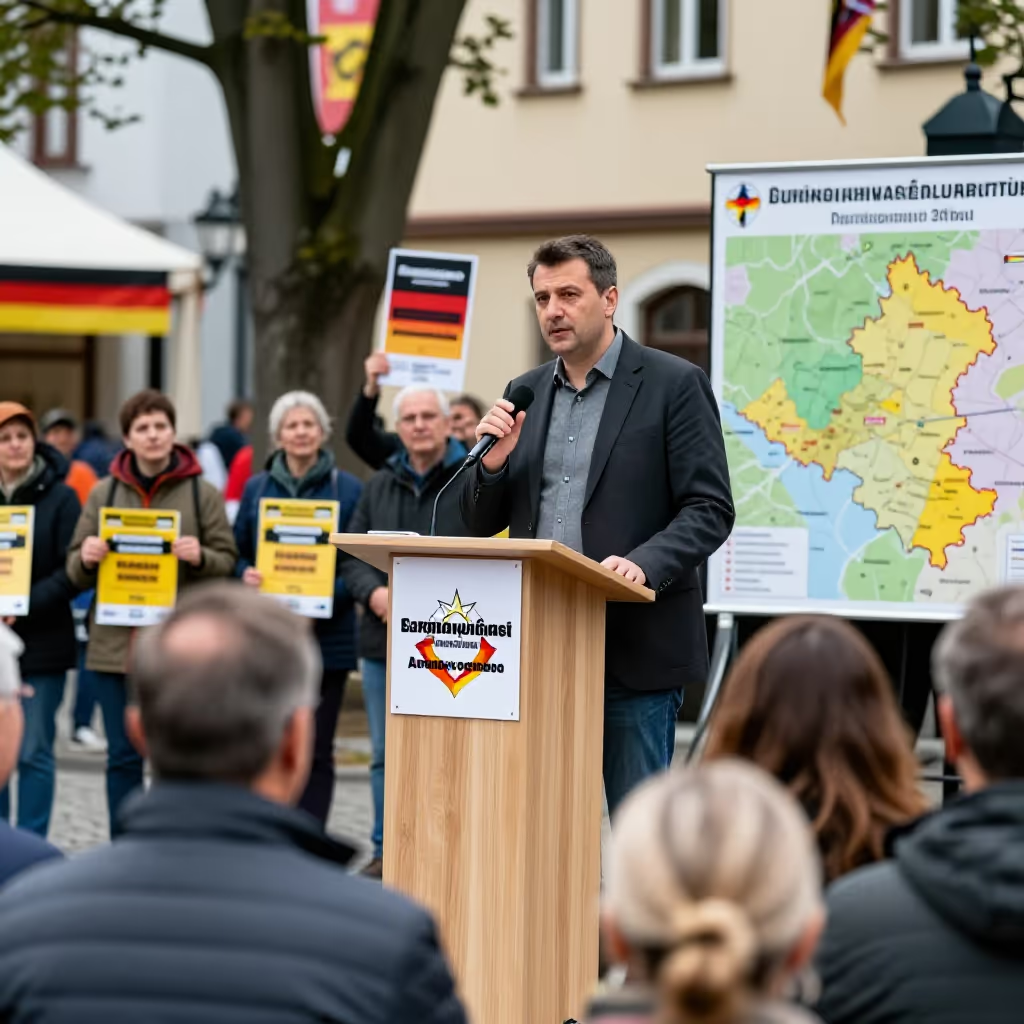
A person who is elected directly by voters in a constituency to represent them in parliament. In the German electoral system, the direct candidate with the most first votes receives the direct mandate.
example
In unserem Wahlkreis hat der Direktkandidat der Regierungspartei gewonnen.
In our constituency, the direct candidate from the governing party won.
Usage tips
Word composition
The word is made up of 'direkt' (direct) and 'Kandidat' (candidate). It therefore describes a person who is running for a 'direkte' (direct) election to a parliament, as opposed to candidates who are elected via a party list.
EXAMPLE
Jede Partei stellt in unserem Wahlkreis einen eigenen Direktkandidaten auf.
Each party puts forward its own direct candidate in our constituency.
Political context
This term is very specific to the political system in Germany and other countries with a similar electoral system. A direct candidate is always connected to a particular 'Wahlkreis' (constituency, a geographic region).
EXAMPLE
Der Direktkandidat muss die meisten Stimmen in seinem Wahlkreis bekommen, um zu gewinnen.
The direct candidate has to get the most votes in their constituency in order to win.
Typical collocations
Common verbs used with this word are 'einen Direktkandidaten wählen' (to elect a direct candidate), 'als Direktkandidat antreten' (to run as a direct candidate), or 'zum Direktkandidaten nominiert werden' (to be nominated as a direct candidate).
EXAMPLE
Er möchte bei der nächsten Wahl als unabhängiger Direktkandidat antreten.
He wants to run as an independent direct candidate in the next election.
Compare with
near_synonym · confusable
Direktkandidat vs Kandidat
candidate
'der Kandidat' and 'der Direktkandidat' can both refer to a person who runs in an election. 'Kandidat' is the general word. It does not yet say which office the person wants to be elected to or by what route. 'Direktkandidat' is more precise and belongs to the electoral system: this person runs in a specific constituency and is meant to be elected directly to parliament by the voters. The words can be confused because a direct candidate is always also a candidate. For normal general statements, 'Kandidat' fits; for the constituency and the first vote, 'Direktkandidat' fits.
Direktkandidat
Am Sonntag wählen viele Menschen im Wahlkreis ihren Direktkandidaten.
On Sunday, many people in the constituency will vote for their direct candidate.
Kandidat
Der Kandidat sprach auf dem Marktplatz mit vielen Bürgern.
The candidate spoke with many citizens in the marketplace.