

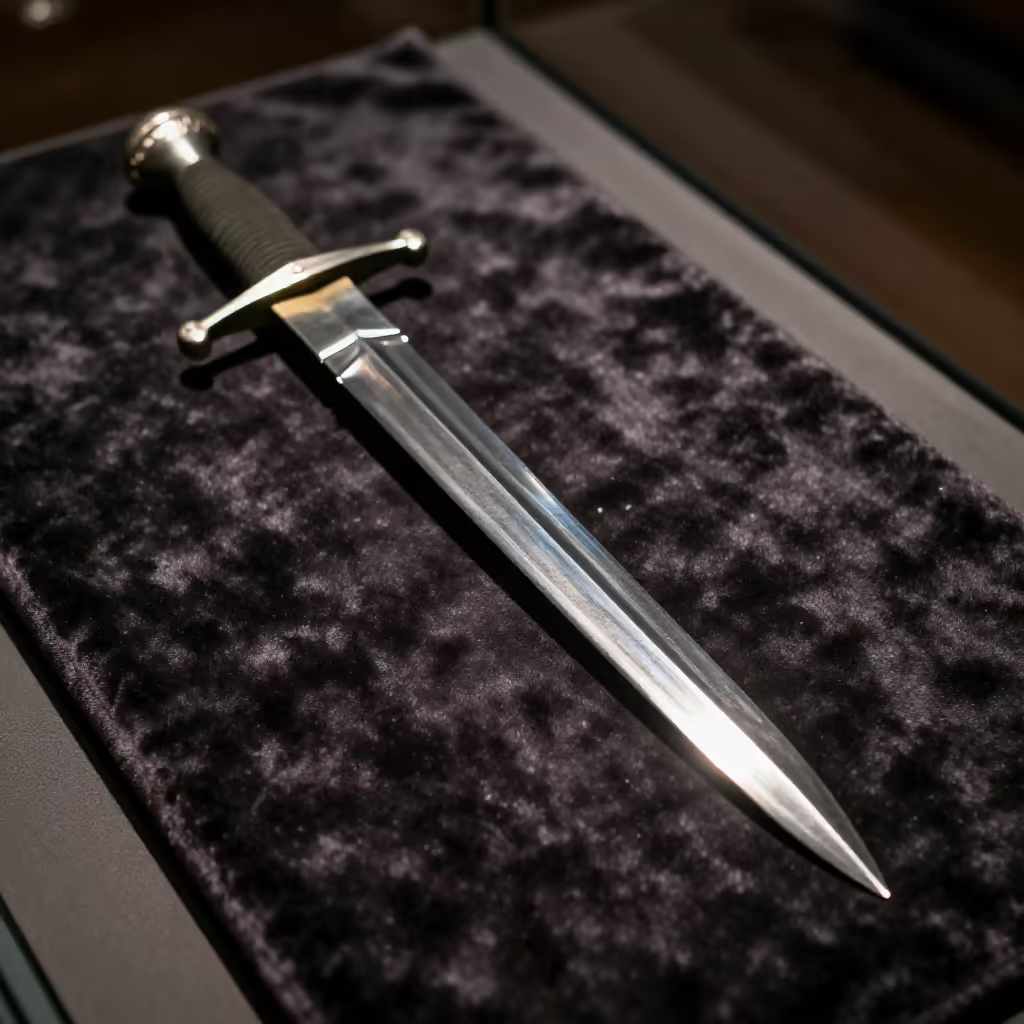
A short, double-edged stabbing weapon with a handle and a pointed blade. It is shorter than a sword and is mainly used for thrusting.
example
Im Museum war ein alter römischer Dolch ausgestellt.
An old Roman dagger was on display in the museum.
Usage tips
Typical collocations
A dagger is often used in combination with the verbs 'ziehen' (to draw, from a sheath) or 'stoßen' (to thrust, as an attack).
EXAMPLE
Der Held zog seinen Dolch, um sich zu verteidigen.
The hero drew his dagger to defend himself.
Metaphorical use
The word 'Dolch' (dagger) is often used metaphorically for betrayal or a sudden, painful action. A well-known expression is 'Dolchstoß' (stab in the back), which describes an attack from behind or by surprise.
EXAMPLE
Seine falschen Anschuldigungen waren ein Dolchstoß für ihre Freundschaft.
His false accusations were a stab in the back for their friendship.
Context clues
The word 'Dolch' (dagger) is found mainly in historical contexts (e.g., about knights or Romans), in fantasy stories, or in crime novels.
EXAMPLE
In dem Fantasy-Roman trug der Elf einen verzierten Dolch am Gürtel.
In the fantasy novel, the elf wore an ornate dagger on his belt.
Compare with
near_synonym · confusable
Dolch vs Messer
knife
'das Messer' and 'der Dolch' both have a blade and a handle. The most important difference is their purpose. A knife is usually a tool or piece of cutlery for cutting, for example in the kitchen or while eating. A dagger is a short weapon with a pointed, often double-edged blade and is mainly meant for stabbing. The words can be confused because both can look similar. In everyday life, you almost always say 'Messer'; 'Dolch' fits better with weapons, history, fantasy, or crime stories.
Dolch
Im Museum sahen wir einen alten Dolch aus der Zeit der Ritter.
In the museum, we saw an old dagger from the time of the knights.
Messer
Kannst du mir bitte das Messer geben, damit ich den Käse schneiden kann?
Can you please give me the knife so I can cut the cheese?