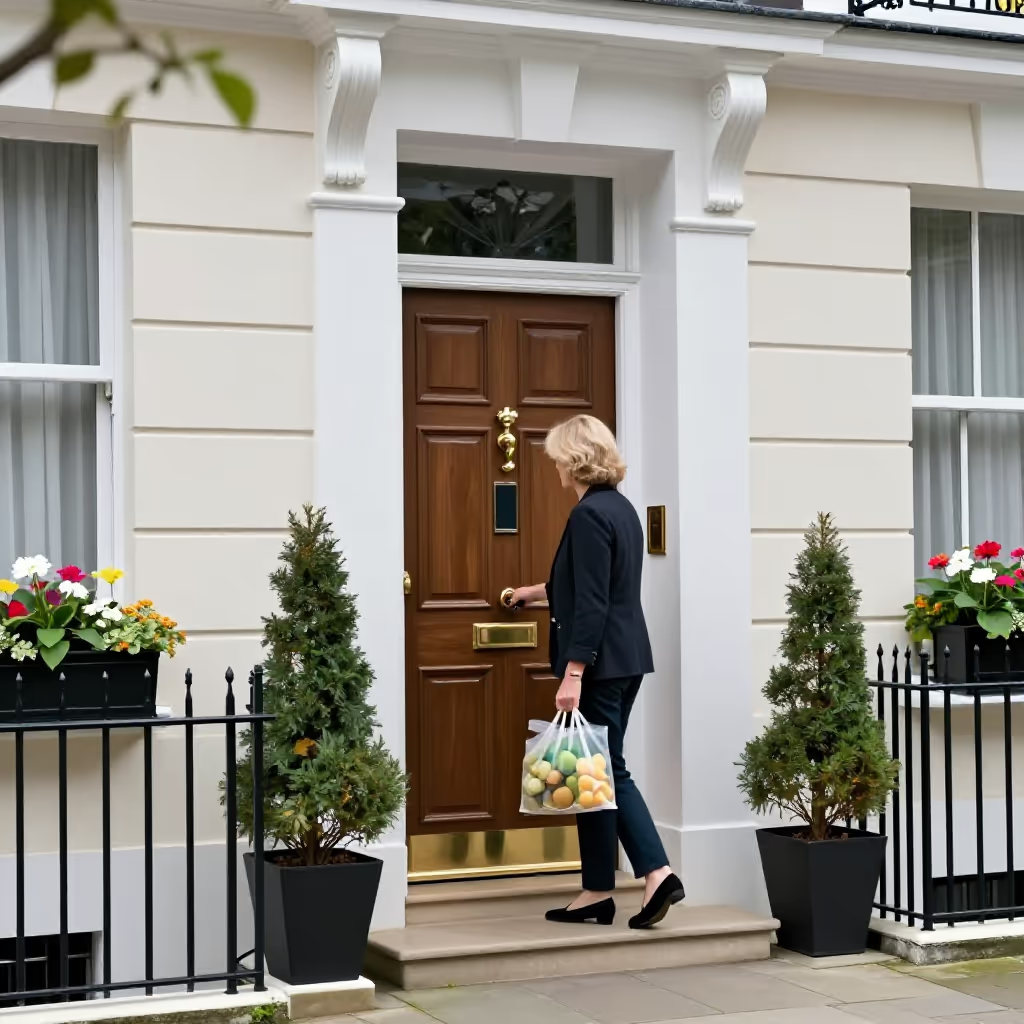
An elevated expression for a person's place of residence or permanent home.
example
Nach langer Suche hat die Familie ein neues Domizil am Stadtrand gefunden.
After a long search, the family found a new residence on the outskirts of town.

Usage tips
Register
'Domizil' (residence / domicile) is an elevated and formal expression for a place of residence. In normal everyday language, people would more likely say 'Wohnung' (apartment) or 'Haus' (house). Using 'Domizil' makes a statement sound more refined or also more detached.
EXAMPLE
Der Schriftsteller hat sein Domizil auf einer ruhigen Insel gefunden.
The writer found his residence on a quiet island.
Context clue
The meaning depends strongly on the context. In real estate advertising or literature, 'Domizil' (residence) describes a place to live, often an exclusive one. In legal or business texts, it refers to the official legal domicile of a person or company.
EXAMPLE
Zum Verkauf steht ein exklusives Domizil mit Seeblick.
An exclusive residence with a lake view is for sale.
Typical collocations
When referring to a place of residence, 'Domizil' (residence) is often used with verbs such as 'suchen' (to look for), 'finden' (to find), or 'beziehen' (to move into). A figurative expression is also 'sein Domizil aufschlagen', which means to settle down in a place.
EXAMPLE
Die junge Familie sucht ein neues Domizil im Grünen.
The young family is looking for a new residence in the countryside.
Legal context
In the legal sense, 'Domizil' (domicile) is often combined with the verb 'haben' (to have) or 'verlegen' (to relocate). This refers to the official registered office or residence, which has legal consequences.
EXAMPLE
Aus steuerlichen Gründen hat das Unternehmen sein Domizil ins Ausland verlegt.
For tax reasons, the company has moved its domicile abroad.
Compare with
near_synonym · confusable
Domizil vs Wohnung
apartment
'die Wohnung' and 'das Domizil' can both have to do with the place where someone lives. 'Wohnung' is concrete and everyday language: you think of rooms in a building. 'Domizil' sounds elevated or official and more often means a person's residence. In legal contexts, it can also be the official domicile or registered office where documents can be served. Learners may confuse the words because both point to a place of residence. In everyday language, you almost always say 'Wohnung'. 'Domizil' is more appropriate in formal texts, advertisements, or legal situations.
Domizil
Das neue Domizil des Künstlers liegt ruhig am Stadtrand.
The artist's new residence is in a quiet location on the outskirts of town.
Wohnung
Sofia lernt zu Hause in ihrer Wohnung für die Prüfung.
Sofia is studying for the exam at home in her apartment.