

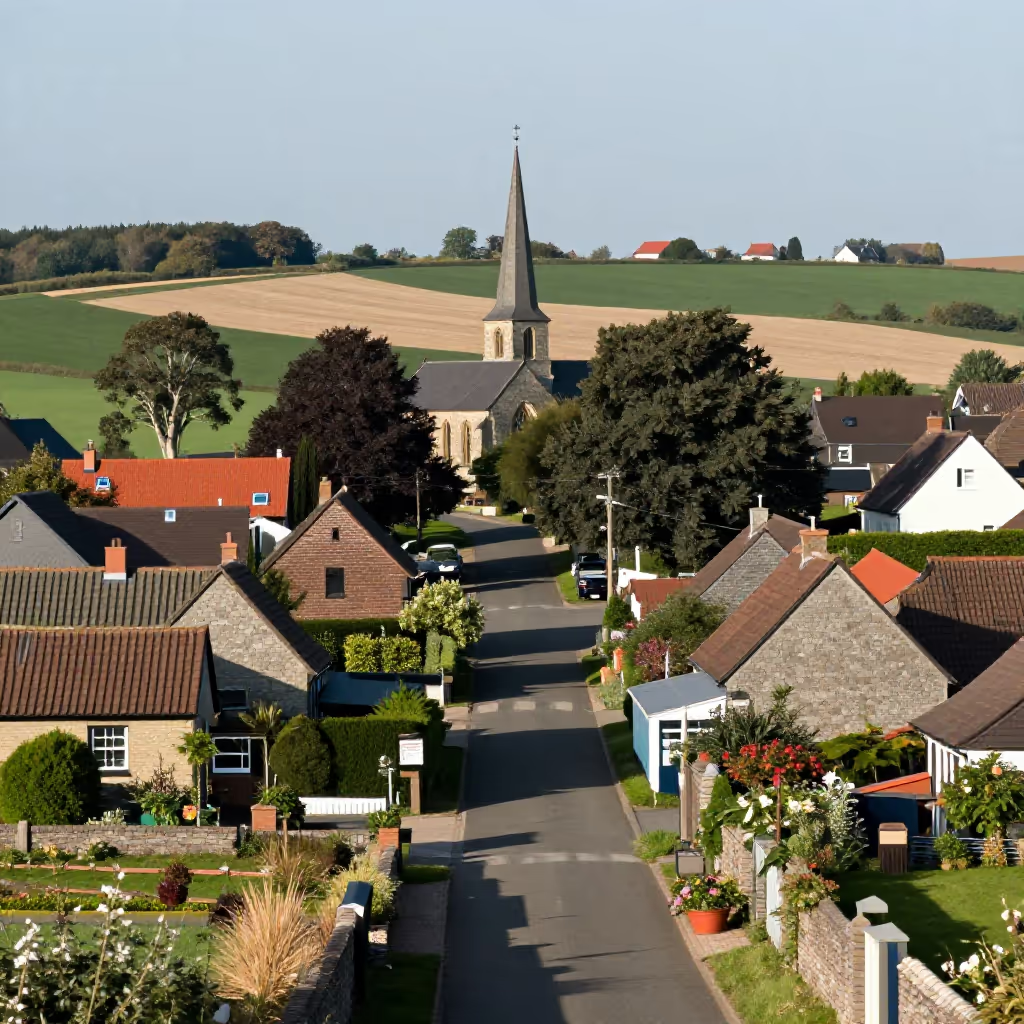
das Dorf
village
A small rural settlement that is smaller than a town and often has its own church and community.
EXAMPLE
Er zog aus der Großstadt in ein ruhiges Dorf am See.
He moved from the big city to a quiet village by the lake.
village
Loading your saved state.
village
A small rural settlement that is smaller than a town and often has its own church and community.
Er zog aus der Großstadt in ein ruhiges Dorf am See.
He moved from the big city to a quiet village by the lake.
village
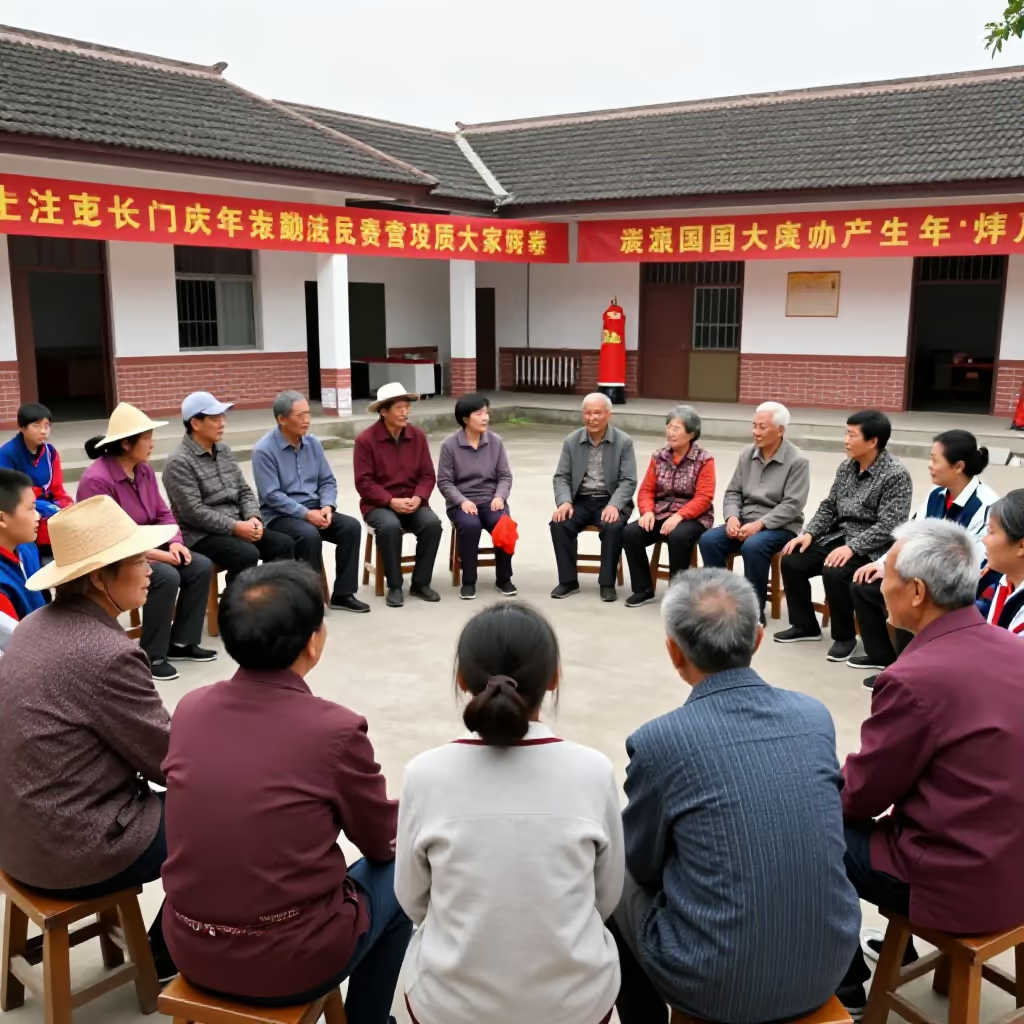
All the inhabitants of a village. Often used to refer to the community as a whole.
Das ganze Dorf half mit, das neue Gemeindehaus zu bauen.
The whole village helped build the new community center.
The word 'Dorf' (village) is often the first part of compound nouns that refer to life in a small community. Examples are 'der Dorfplatz' (the village square), 'die Dorfkirche' (the village church), 'das Dorffest' (the village festival), or 'die Dorfgemeinschaft' (the village community).
Jeden Sommer findet auf dem Dorfplatz ein großes Fest statt.
Every summer, a big festival takes place in the village square.
To indicate a place, you use 'im Dorf' (in the village), with the dative. To describe movement into the village, you use 'ins Dorf' (into the village), with the accusative.
Wir treffen uns im Dorf vor der Bäckerei.
We'll meet in the village in front of the bakery.
A very common fixed expression is 'auf dem Dorf wohnen' (to live in the countryside / in a village). Here, the preposition 'auf' is often used instead of 'in' to describe life in a rural area in general.
Meine Großeltern haben schon immer auf dem Dorf gelebt.
My grandparents have always lived in the countryside.
You can tell whether 'Dorf' (village) means the place or its inhabitants from the verb. If the verb describes an action that only people can perform, such as celebrating, talking, or helping, then the inhabitants are meant.
Nach dem Sieg der Fußballmannschaft feierte das ganze Dorf.
After the soccer team's victory, the whole village celebrated.
place / town
„Ort“ and „Dorf“ can refer to the same inhabited rural area. „Ort“ remains neutral and can mean any locality, while „Dorf“ explicitly refers to a small rural settlement. Use „Ort“ when the type of settlement should remain open, and „Dorf“ when it is important.
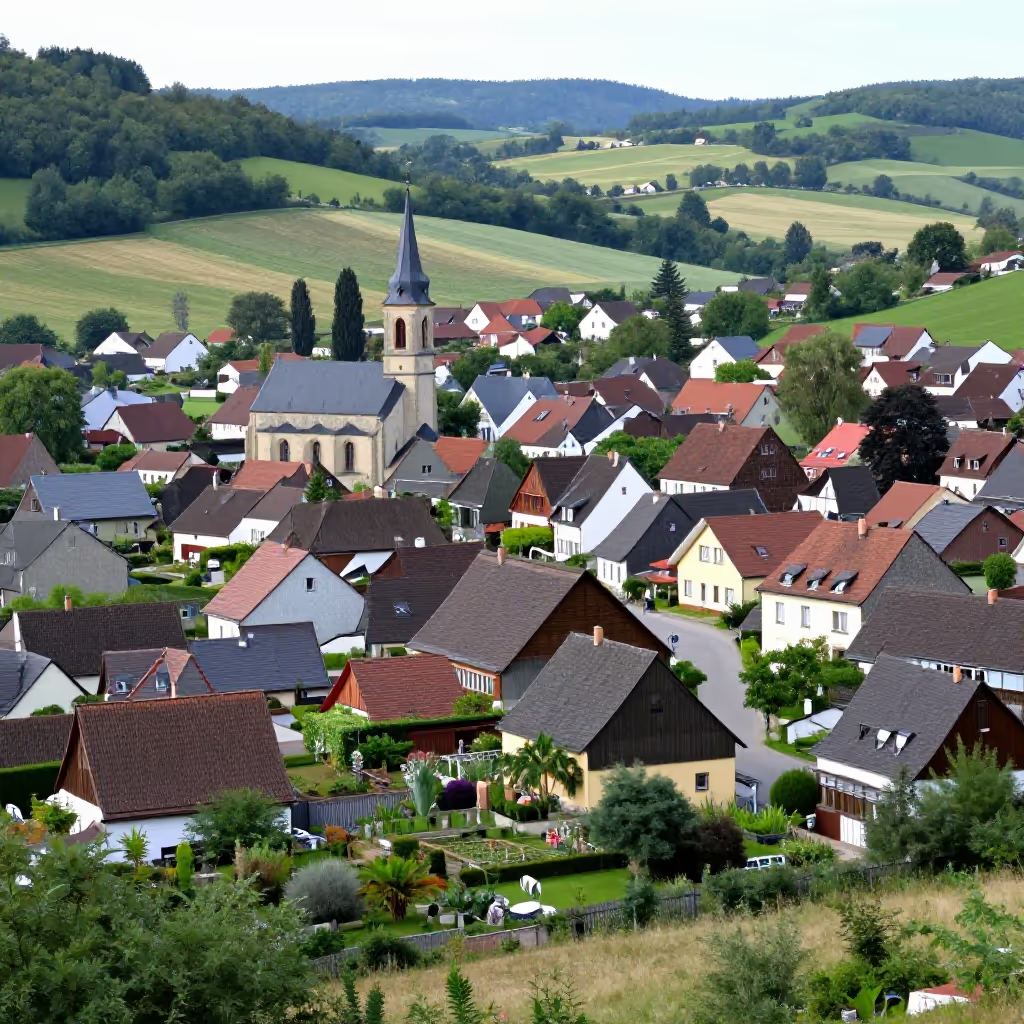
Das Dorf liegt ruhig zwischen zwei kleinen Wäldern.
The village lies peacefully between two small forests.
Der Ort liegt ruhig zwischen zwei kleinen Wäldern.
The town lies peacefully between two small forests.