

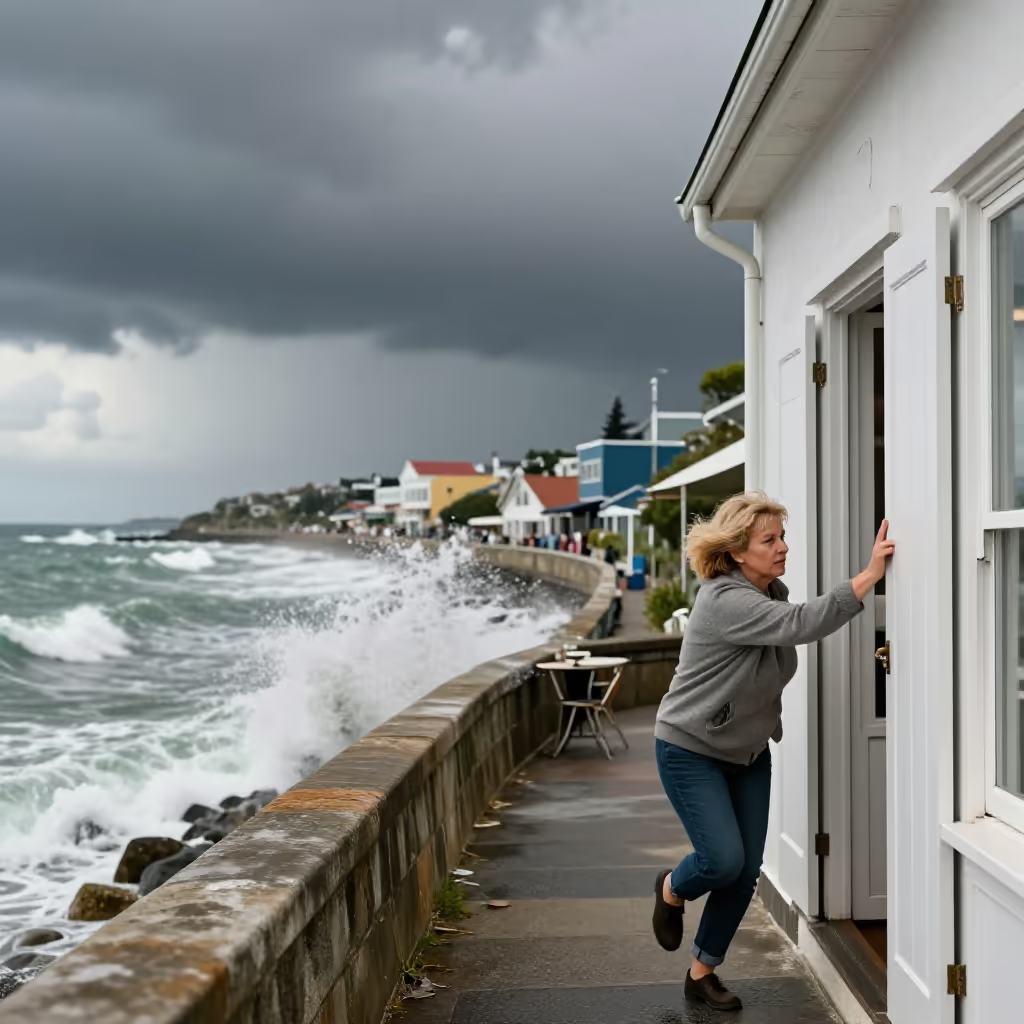
drohend
threatening / looming
Describes a danger or negative event that seems to be about to happen.
EXAMPLE
Trotz der drohenden Gewitterwolken gingen sie weiter.
Despite the threatening storm clouds, they kept going.
threatening
Loading your saved state.
threatening / looming
Describes a danger or negative event that seems to be about to happen.
Trotz der drohenden Gewitterwolken gingen sie weiter.
Despite the threatening storm clouds, they kept going.

threateningly
In a way that expresses a threat or is intended to be intimidating.
Er hob drohend den Finger.
He raised his finger threateningly.
'Drohend' (threatening/looming) is the present participle of the verb 'drohen' (to threaten). It is used like an adjective and describes something that currently poses a threat or is imminent.
Die drohende Wirtschaftskrise macht vielen Menschen Sorgen.
The looming economic crisis is worrying many people.
The word can stand as an adjective before a noun or as an adverb describing a verb. As an adjective, it describes an impending danger; as an adverb, an intimidating action.
Eine drohende Gefahr muss ernst genommen werden.
A threatening danger must be taken seriously.
In this meaning, 'drohend' (threatening/looming) is often combined with abstract nouns that describe a negative development. Typical examples are 'drohende Gefahr' (looming danger), 'drohender Verlust' (threatened loss), or 'drohendes Unheil' (impending disaster).
Die Firma konnte den drohenden Bankrott gerade noch abwenden.
The company was just barely able to avert the looming bankruptcy.
threatening
Drohend emphasizes that a danger or negative event seems likely to happen soon. Bedrohlich, by contrast, mainly describes something that seems dangerous or frightening. Use drohend for an expected danger that is close at hand, and bedrohlich for its frightening effect.

Wegen des weiter steigenden Flusses warnte die Stadt vor einer drohenden Überschwemmung.
Because the river kept rising, the city warned of an impending flood.
Wegen des weiter steigenden Flusses wirkte die Lage in der Stadt bedrohlich.
Because the river kept rising, the situation in the city seemed threatening.