

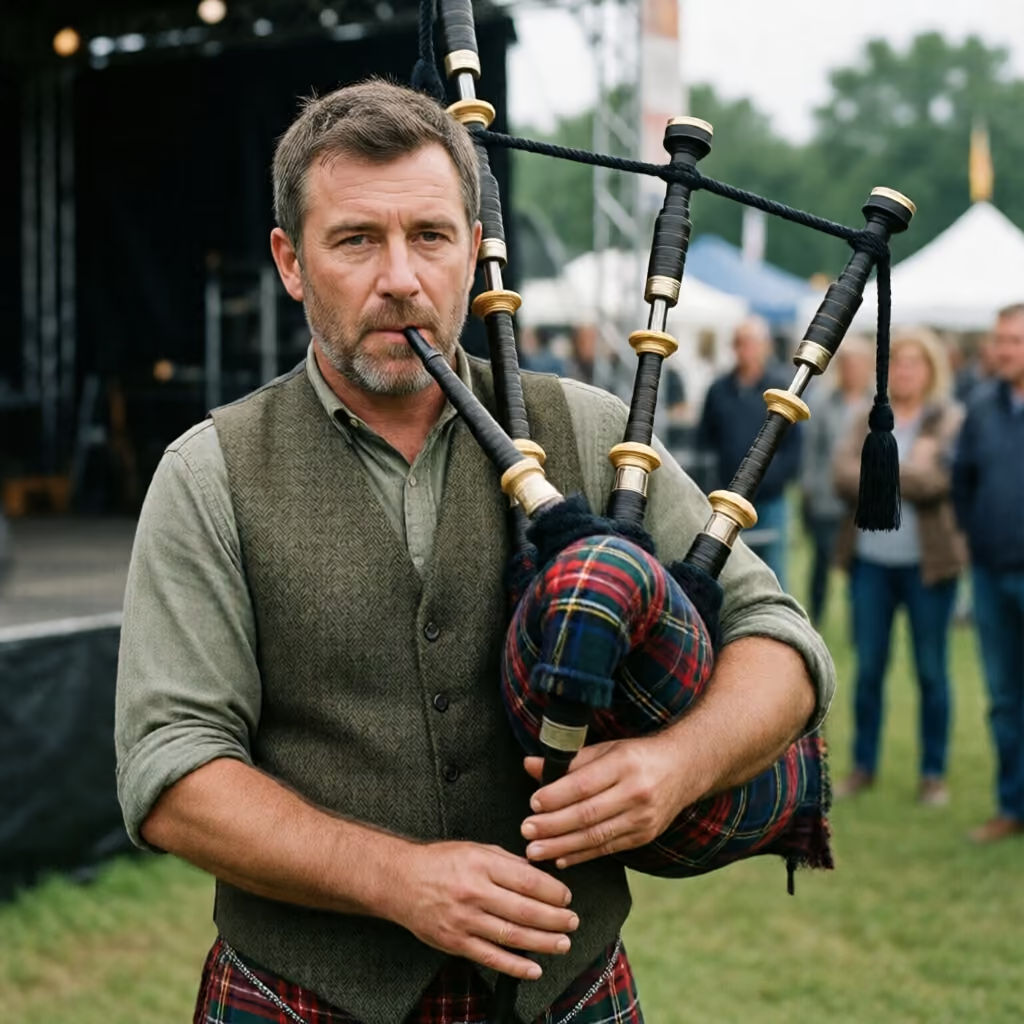
der Dudelsack
bagpipe
A musical instrument with several pipes and a bag that holds air, supplied with air by blowing into it or using bellows.
EXAMPLE
Beim Fest spielte ein Musiker Dudelsack.
At the festival, a musician played the bagpipes.
bagpipe
der Dudelsack, die Dudelsäcke
Loading your saved state.
bagpipe
A musical instrument with several pipes and a bag that holds air, supplied with air by blowing into it or using bellows.
Beim Fest spielte ein Musiker Dudelsack.
At the festival, a musician played the bagpipes.
| gender | masculine der |
|---|---|
| plural | die Dudelsäcke |
| genitive | des Dudelsackes |
| singular | plural | |
|---|---|---|
| nominative | der Dudelsack | die Dudelsäcke |
| accusative | den Dudelsack | die Dudelsäcke |
| dative | dem Dudelsack | den Dudelsäcken |
| genitive | des Dudelsackes des Dudelsacks | der Dudelsäcke |
The article changes with the case; it is shown in colour.
In „Dudelsack“ („bagpipe“), the component „Dudel-“ belongs to the word family of „dudeln“ (to play tunelessly). The component „Sack“ (bag) refers to the instrument’s air reservoir and helps you remember its structure.
Der Musiker drückt den Sack des Dudelsacks unter seinem Arm zusammen.
The musician squeezes the bag of the bagpipes under his arm.
When speaking generally about making music, you can use „Dudelsack spielen“ (to play the bagpipes) without an article. This pattern is also common when learning the instrument: „Dudelsack spielen lernen“ (to learn to play the bagpipes).
Meine Nachbarin möchte Dudelsack spielen lernen.
My neighbor wants to learn to play the bagpipes.
When you name a specific piece of music, the pattern „etwas auf dem Dudelsack spielen“ (to play something on the bagpipes) is appropriate. After „auf“ (on), the dative is used in this expression.
Zum Abschluss spielte sie ein altes Volkslied auf dem Dudelsack.
To finish, she played an old folk song on the bagpipes.