

dürr
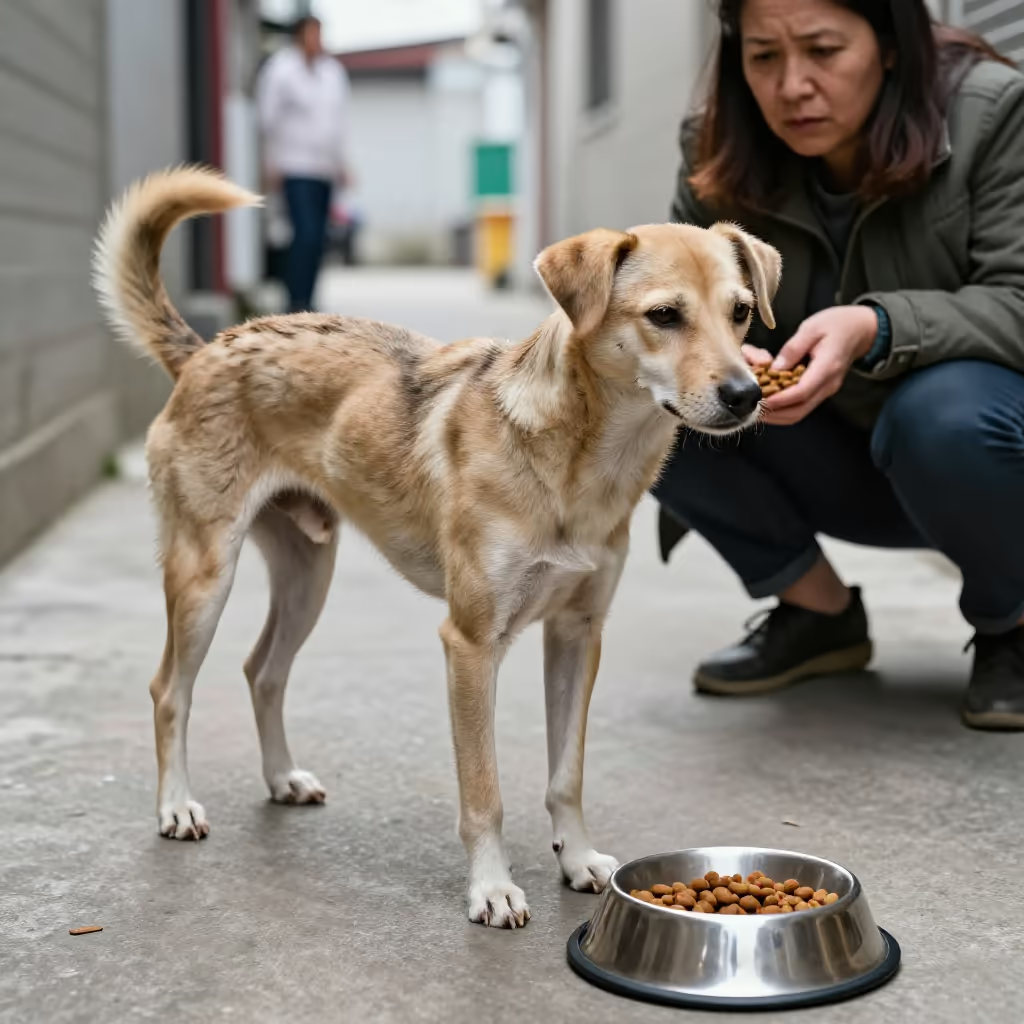
gaunt
Refers to a person or animal that is very thin or skinny, often in an unhealthy way.
EXAMPLE
Das alte Pferd war ganz dürr und schwach.
The old horse was completely gaunt and weak.
gaunt / withered / sparse
Loading your saved state.
gaunt
Refers to a person or animal that is very thin or skinny, often in an unhealthy way.
Das alte Pferd war ganz dürr und schwach.
The old horse was completely gaunt and weak.
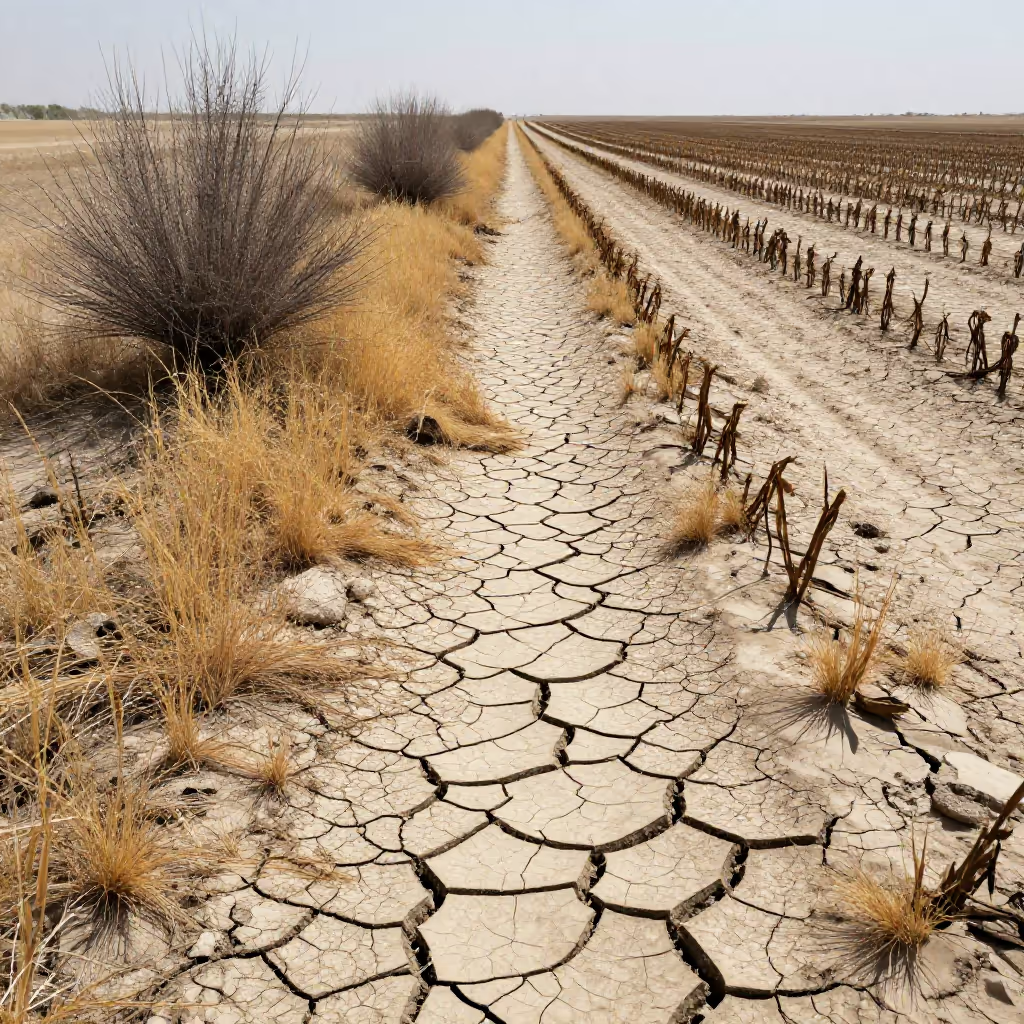
withered
Refers to plants or landscapes that are dried out and withered.
Nach dem langen, heißen Sommer waren die Äste des Baumes völlig dürr.
After the long, hot summer, the branches of the tree were completely withered.

sparse
In a figurative sense, used for something that is very bare, factual, or lacking decorative details, for example words or a description.
Er fasste die Ereignisse mit ein paar dürren Worten zusammen.
He summarized the events in a few sparse words.
The adjective 'dürr' (gaunt / withered / sparse) is closely related to the noun 'die Dürre' (drought), which describes a long period without rain. Both words share the basic meaning of dryness and lack.
Wegen der langen Dürre ist das Gras auf den Feldern ganz dürr.
Because of the long drought, the grass in the fields is completely withered.
The meaning of 'dürr' (gaunt / withered / sparse) becomes clear from the noun it describes. If it refers to a person, it means 'mager' (skinny/gaunt). If it refers to plants, it means 'vertrocknet' (withered/dried out). If it refers to words, it means 'karg' (sparse/bare).
Der Läufer war groß und dürr.
The runner was tall and gaunt.
When 'dürr' (gaunt) describes a person, it often has a negative connotation and means 'ungesund mager' (unhealthily thin) or 'knochig' (bony). It is stronger and more negative than 'dünn' (thin) or 'schlank' (slim).
Nach seiner langen Krankheit war er sehr blass und dürr.
After his long illness, he was very pale and gaunt.
In the meaning 'vertrocknet' (withered/dried out), 'dürr' (withered) is often combined with parts of plants or landscapes. Typical examples are 'dürre Äste' (withered branches), 'dürres Gras' (withered grass), or 'dürre Zweige' (withered twigs).
Das Feuer breitete sich im dürren Unterholz rasend schnell aus.
The fire spread incredibly quickly through the dry undergrowth.
In its figurative meaning, 'dürr' (sparse) is often used for communication that lacks details or emotion. Typical examples are 'dürre Worte' (sparse words), 'eine dürre Mitteilung' (a terse message), or 'eine dürre Zusammenfassung' (a sparse summary).
Er beantwortete meine Frage nur mit ein paar dürren Worten.
He answered my question only with a few sparse words.
dry
Trocken generally refers to a lack of moisture and can also be used for soil or plants. Dürr emphasizes that plants or landscapes are dried out, withered, and sparse. Use trocken for a simple lack of water, and dürr for visibly withered vegetation.

Nach vielen Wochen ohne Regen sind die Pflanzen im Garten dürr.
After many weeks without rain, the plants in the garden are withered.
Nach einer Woche ohne Regen ist der Boden im Garten trocken.
After a week without rain, the soil in the garden is dry.