


mager
thin
Very thin, with little body fat. Refers to people or animals.
EXAMPLE
Nach seiner langen Krankheit war er sehr mager geworden.
After his long illness, he had become very thin.
thin / lean / meager
Loading your saved state.
thin
Very thin, with little body fat. Refers to people or animals.
Nach seiner langen Krankheit war er sehr mager geworden.
After his long illness, he had become very thin.
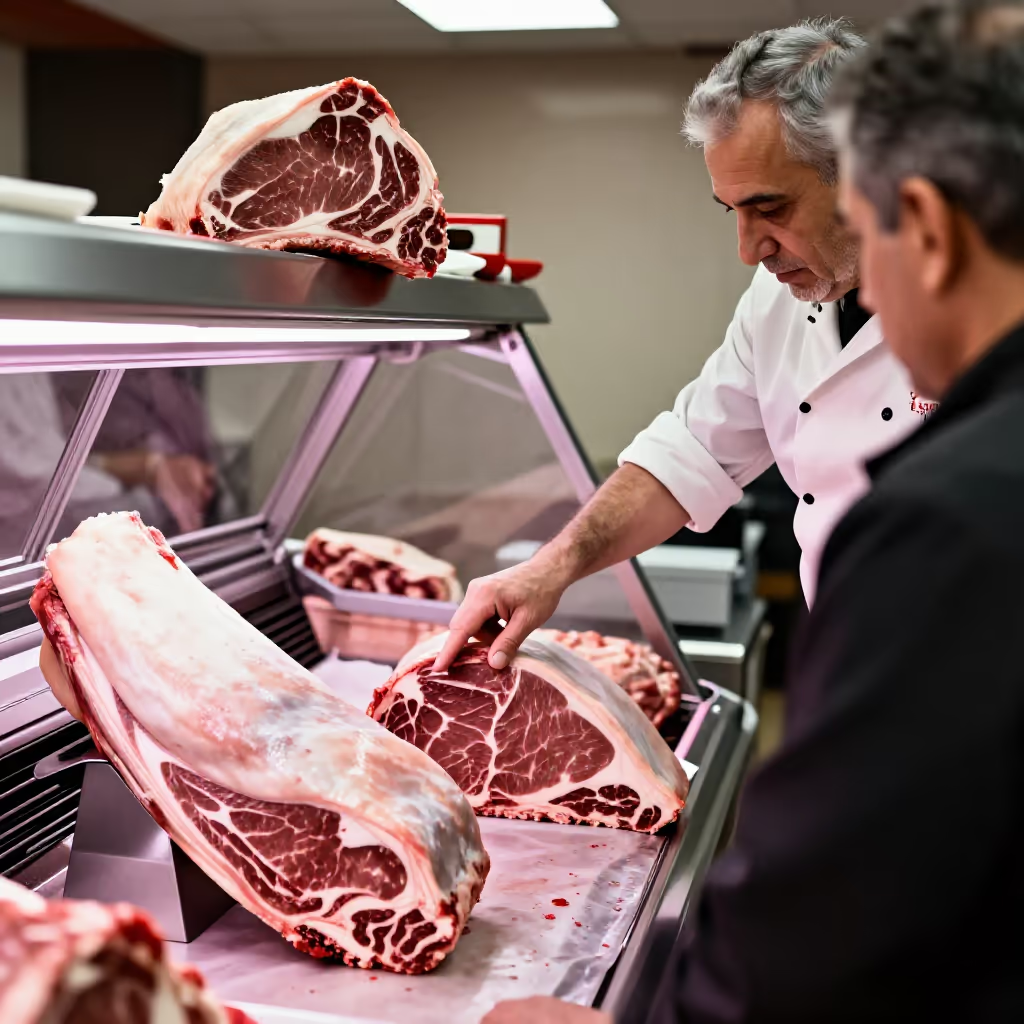
lean
Having a low fat content. Refers to foods such as meat or dairy products.
Für eine gesunde Ernährung wird oft mageres Fleisch empfohlen.
Lean meat is often recommended for a healthy diet.
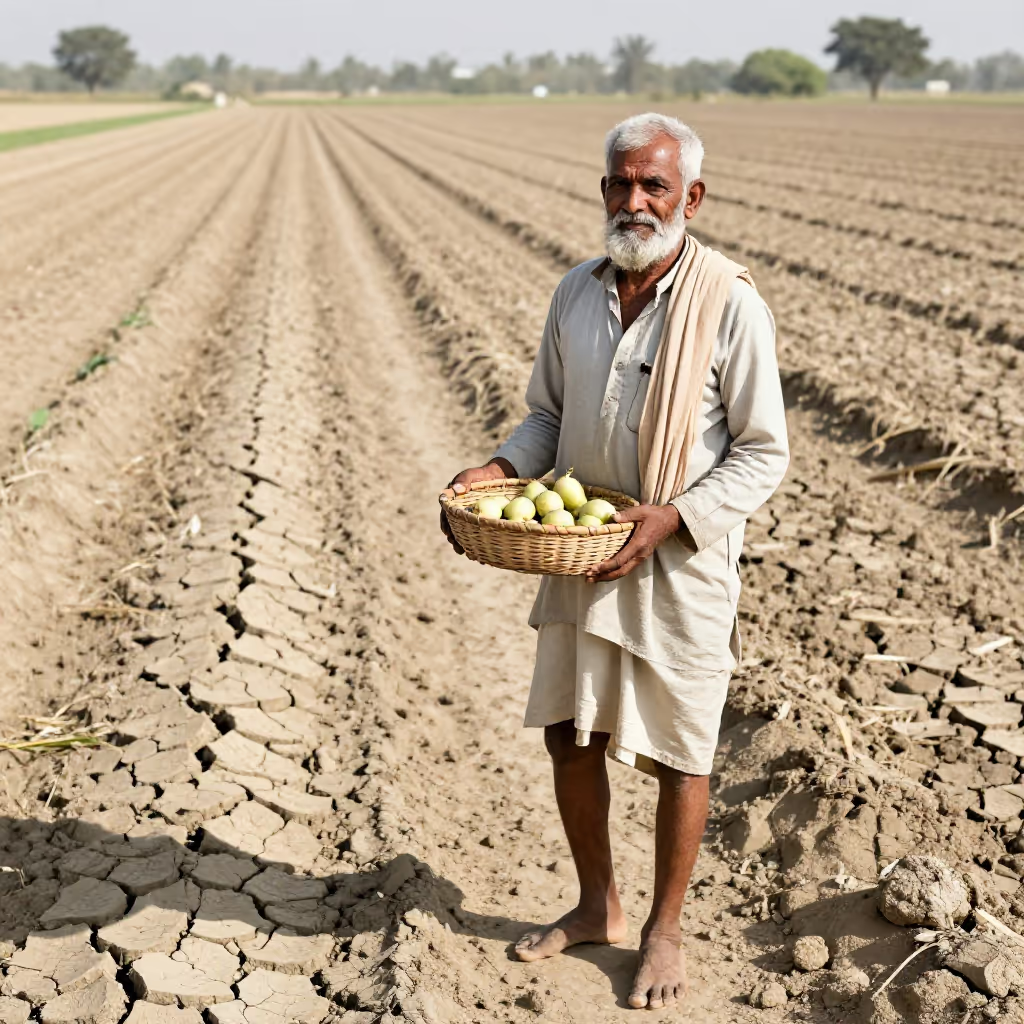
meager
In a figurative sense: small, sparse, or insufficient in quantity or quality.
Wegen der Dürre fiel die Ernte dieses Jahr sehr mager aus.
Because of the drought, the harvest was very meager this year.
The meaning of 'mager' depends strongly on the noun it describes. With people and animals, it means 'dünn' (thin); with foods, it means 'fettarm' (low-fat/lean); and with results or quantities, it means 'gering' (small) or 'unzureichend' (insufficient).
Der Streuner war ein magerer Hund.
The stray was a thin dog.
When 'mager' describes a person, it often has a slightly negative or concerned connotation. It usually implies that someone is underweight or unhealthily thin.
Der Arzt sagte, der Patient sei zu mager und müsse zunehmen.
The doctor said the patient was too thin and needed to gain weight.
In the context of nutrition, 'mager' is frequently combined with certain foods. Typical examples are 'mageres Fleisch' (lean meat), 'magerer Joghurt' (low-fat yogurt), 'Magerquark' (low-fat quark), or 'magere Milch' (low-fat milk).
Zum Frühstück esse ich gerne Magerquark mit Früchten.
For breakfast I like eating low-fat quark with fruit.
In its figurative meaning, 'mager' is often used for abstract things. Common combinations are 'eine magere Ernte' (a meager harvest), 'ein mageres Gehalt' (a meager salary), or 'ein mageres Ergebnis' (a meager result).
Mit einem so mageren Lohn kann man kaum eine Familie ernähren.
With such a meager wage, you can hardly support a family.
scarce / just under / close
Knapp and mager can both describe a low yield or limited resources. Knapp emphasizes that the available amount is barely sufficient. Mager additionally evaluates the result as disappointing or inadequate. For an objective limitation in quantity, knapp is therefore the better choice.
Die Ernte ist dieses Jahr mager und enttäuscht die Bauern.
This year's harvest is meager and disappoints the farmers.
Die Ernte ist dieses Jahr knapp und reicht kaum für alle Bestellungen.
This year's harvest is scarce and barely enough to fulfill all the orders.