

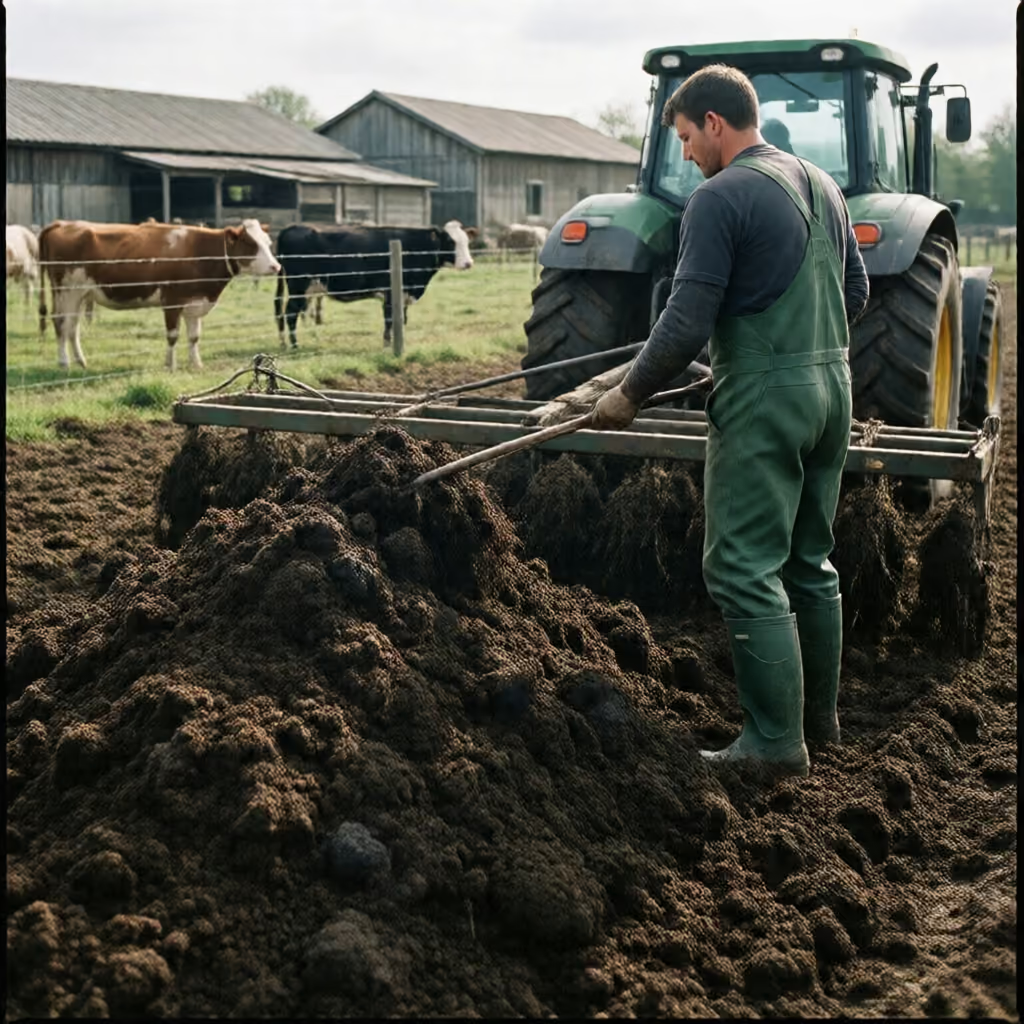
der Dung
manure
Animal waste, especially from livestock, that is often used as fertilizer.
EXAMPLE
Der Bauer verteilt den Dung seiner Kühe auf den Feldern.
The farmer spreads his cows' manure over the fields.
manure
der Dung
Loading your saved state.
manure
Animal waste, especially from livestock, that is often used as fertilizer.
Der Bauer verteilt den Dung seiner Kühe auf den Feldern.
The farmer spreads his cows' manure over the fields.
| gender | masculine der |
|---|---|
| genitive | des Dunges |
| singular | plural | |
|---|---|---|
| nominative | der Dung | – |
| accusative | den Dung | – |
| dative | dem Dung | – |
| genitive | des Dunges des Dungs | – |
The article changes with the case; it is shown in colour.
'Dung' is used mainly in agriculture and in texts about animal husbandry, farming, or horticulture. In these contexts, the word usually refers to animal waste that is used as fertilizer.
Der Dung wird vor dem Pflanzen in den Boden eingearbeitet.
The manure is worked into the soil before planting.
Common collocations include 'Dung ausbringen' (to spread manure), 'Dung verteilen' (to distribute manure), 'Dung sammeln' (to collect manure), and 'Dung als Dünger verwenden' (to use manure as fertilizer). The word is often used with information about the type of animal or where it comes from.
Die Landwirte bringen den Dung im Frühjahr auf den Feldern aus.
The farmers spread the manure over the fields in spring.
'Dung' usually refers to a quantity or substance and is therefore often used without a number word. Quantities are often specified with expressions such as 'eine Ladung' (a load), 'viel' (a lot of), or 'wenig' (a little).
Hinter dem Stall lag eine große Ladung Dung.
There was a large load of manure behind the barn.