

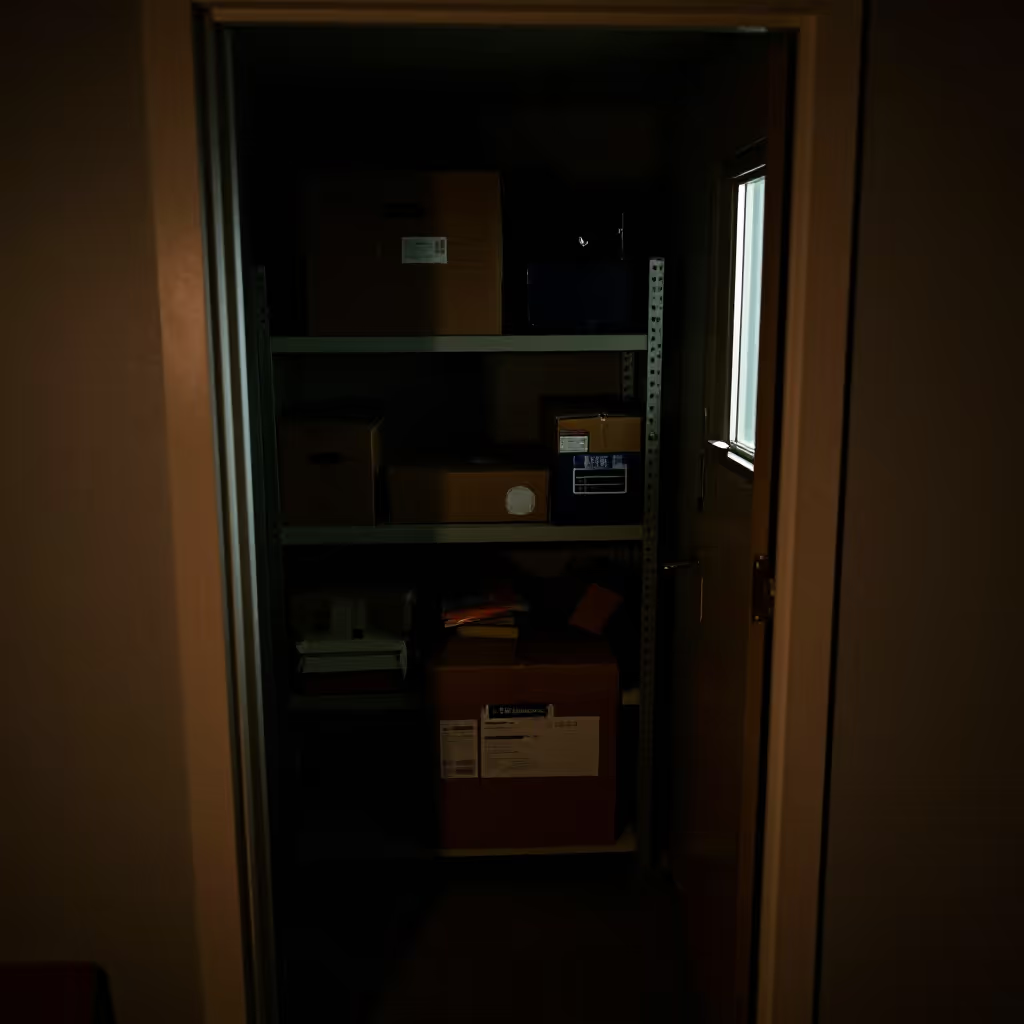
die Dunkelheit
darkness
The state in which there is no light or only very little light, for example at night or in a room without windows.
Als der Strom ausfiel, saßen wir in völliger Dunkelheit.
When the power went out, we sat in complete darkness.

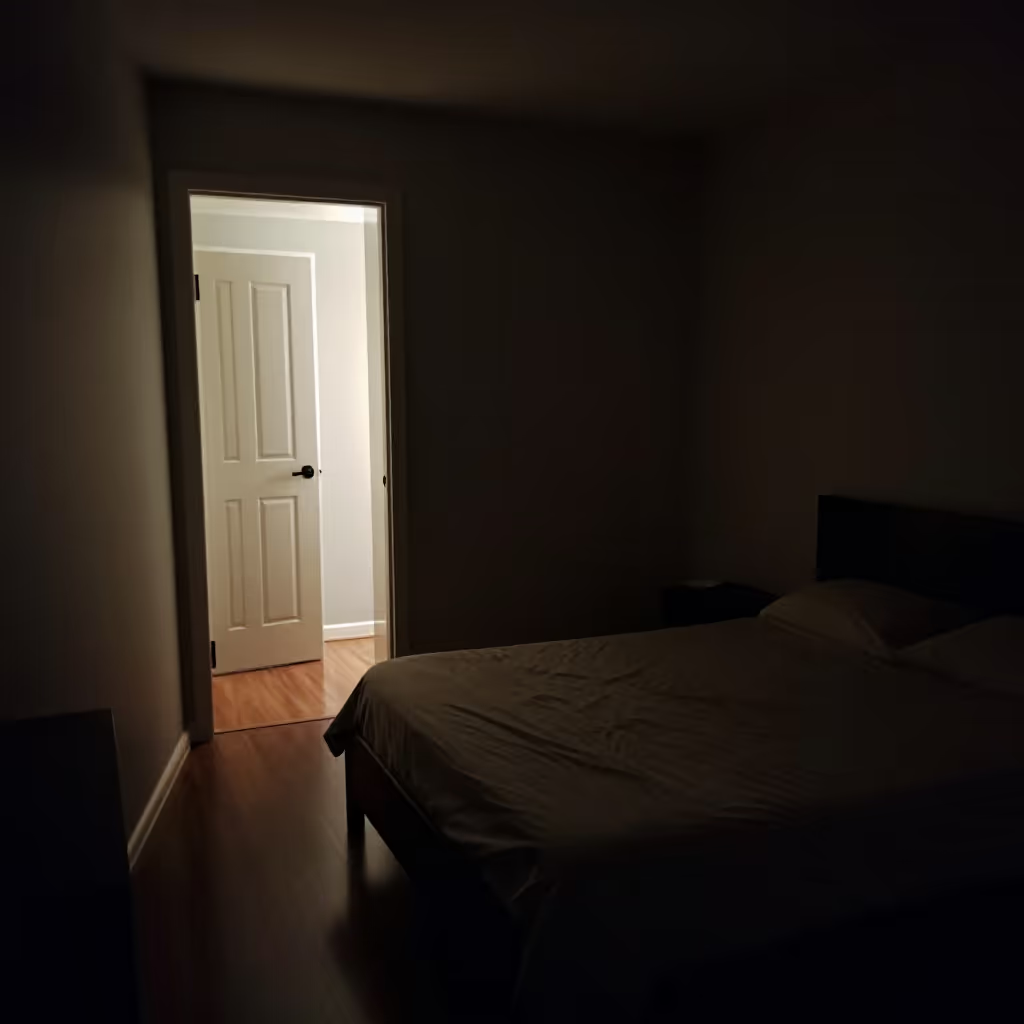
darkness
Loading your saved state.
darkness
The state in which there is no light or only very little light, for example at night or in a room without windows.
Als der Strom ausfiel, saßen wir in völliger Dunkelheit.
When the power went out, we sat in complete darkness.

The noun 'Dunkelheit' (darkness) is derived from the adjective 'dunkel' (dark). The ending '-heit' is often used in German to form abstract nouns from adjectives that describe a state or quality.
Die Schönheit der Natur ist atemberaubend.
The beauty of nature is breathtaking.
You can tell from the context whether the literal or figurative meaning is intended. If it is about light, night, or seeing, it is literal. If it is about knowledge, fear, or hope, it is usually meant figuratively.
Viele Kinder haben Angst vor der Dunkelheit im Keller.
Many children are afraid of the darkness in the basement.
In the literal sense, 'Dunkelheit' (darkness) is often combined with certain verbs and adjectives. Typical phrases are 'in der Dunkelheit tappen' (to grope around in the dark), 'die Dunkelheit bricht herein' (darkness falls), or 'völlige Dunkelheit' (complete darkness).
Im Winter bricht die Dunkelheit schon am Nachmittag herein.
In winter, darkness falls in the afternoon already.
The figurative meaning of 'Dunkelheit' (darkness) is often used in literary, philosophical, or poetic texts to describe a negative or unknown state.
Der Roman beschreibt die Dunkelheit in der menschlichen Seele.
The novel describes the darkness in the human soul.
night
'die Nacht' (night) and 'die Dunkelheit' (darkness) are closely connected because it is usually dark at night. But 'die Nacht' refers to a time: the hours between evening and morning. 'die Dunkelheit' refers to the state of there being little or no light. That is why it can also be dark during the day, for example in a basement or during a power outage. Learners often confuse the words because both are connected with little light. A simple tip is: for the question 'When?', 'Nacht' usually fits; for the question 'What is it like?', 'Dunkelheit' is more likely to fit.

Nach dem Stromausfall saßen wir eine Stunde in völliger Dunkelheit.
After the power outage, we sat in complete darkness for an hour.
In der Nacht hört man auf dem Land kaum Autos.
At night, you hardly hear any cars in the countryside.