

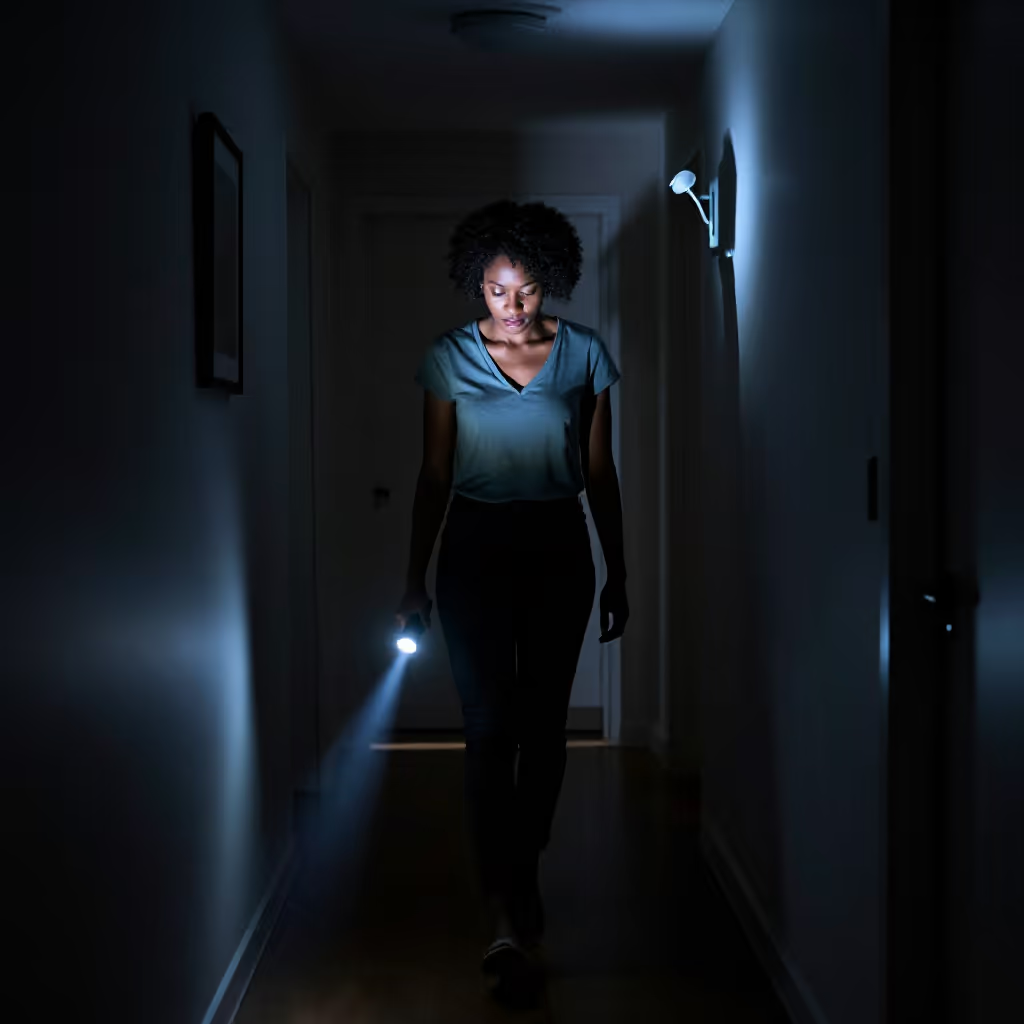
die Finsternis
darkness
A state of complete darkness in which there is no light or only very little light.
EXAMPLE
Als der Strom ausfiel, saßen wir in völliger Finsternis.
When the power went out, we sat in complete darkness.
darkness / eclipse
Loading your saved state.
darkness
A state of complete darkness in which there is no light or only very little light.
Als der Strom ausfiel, saßen wir in völliger Finsternis.
When the power went out, we sat in complete darkness.
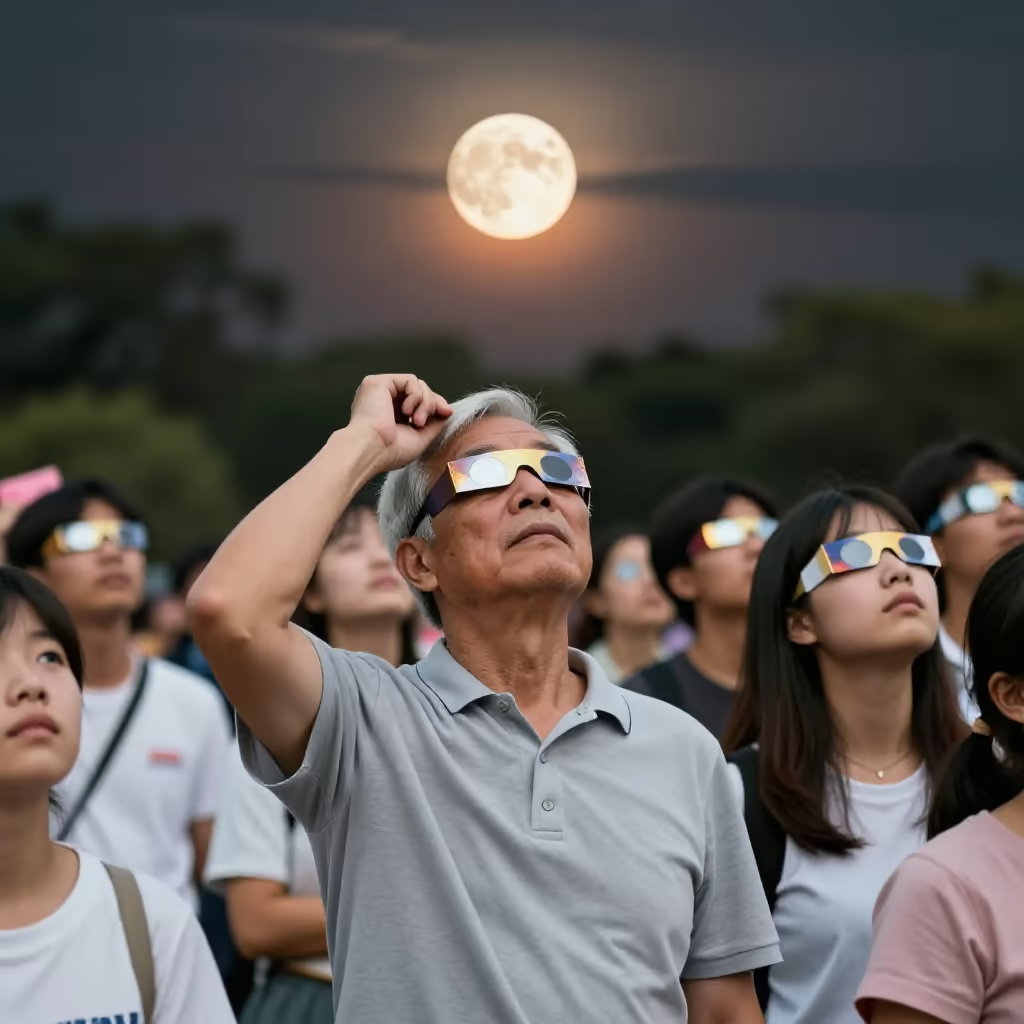
eclipse
An astronomical event in which one celestial body is covered by another, especially a solar or lunar eclipse.
Tausende Menschen versammelten sich, um die totale Sonnenfinsternis zu beobachten.
Thousands of people gathered to watch the total solar eclipse.

darkness
In a figurative sense, a state of ignorance, evil, grief, or hopelessness.
Die Schreckensherrschaft des Diktators stürzte das Land in eine lange Finsternis.
The dictator's reign of terror plunged the country into a long darkness.
'Die Finsternis' (darkness/eclipse) is a noun derived from the adjective 'finster' (dark, gloomy). The ending '-nis' forms an abstract noun here that describes the state of being dark.
Er hatte Angst vor der finsteren Gestalt im Schatten.
He was afraid of the dark figure in the shadow.
The word 'Finsternis' (darkness/eclipse) is almost always used in the singular. The plural 'die Finsternisse' is rare and refers almost exclusively to several astronomical events such as solar or lunar eclipses.
Plötzlich herrschte im ganzen Haus Finsternis.
Suddenly there was darkness throughout the whole house.
In an astronomical context, 'Finsternis' (eclipse) is most commonly used in the compound words 'Sonnenfinsternis' (solar eclipse) and 'Mondfinsternis' (lunar eclipse). These words are very specific and make the meaning immediately clear.
Für die Beobachtung der Sonnenfinsternis braucht man eine spezielle Brille.
You need special glasses to observe the solar eclipse.
The figurative meaning of 'Finsternis' (darkness) is often used in historical, philosophical, or literary contexts. It describes negative states such as ignorance, hopelessness, or evil.
Die Zeit des Krieges war eine Epoche der Finsternis für das ganze Land.
The time of war was an era of darkness for the whole country.
darkness
Dunkelheit and Finsternis both describe a lack of light. Dunkelheit is the neutral word and also works when there is little light; Finsternis usually refers to complete darkness and sounds considerably more elevated or ominous. In everyday situations, Dunkelheit is usually the better choice; use Finsternis for a particularly strong or literary effect.
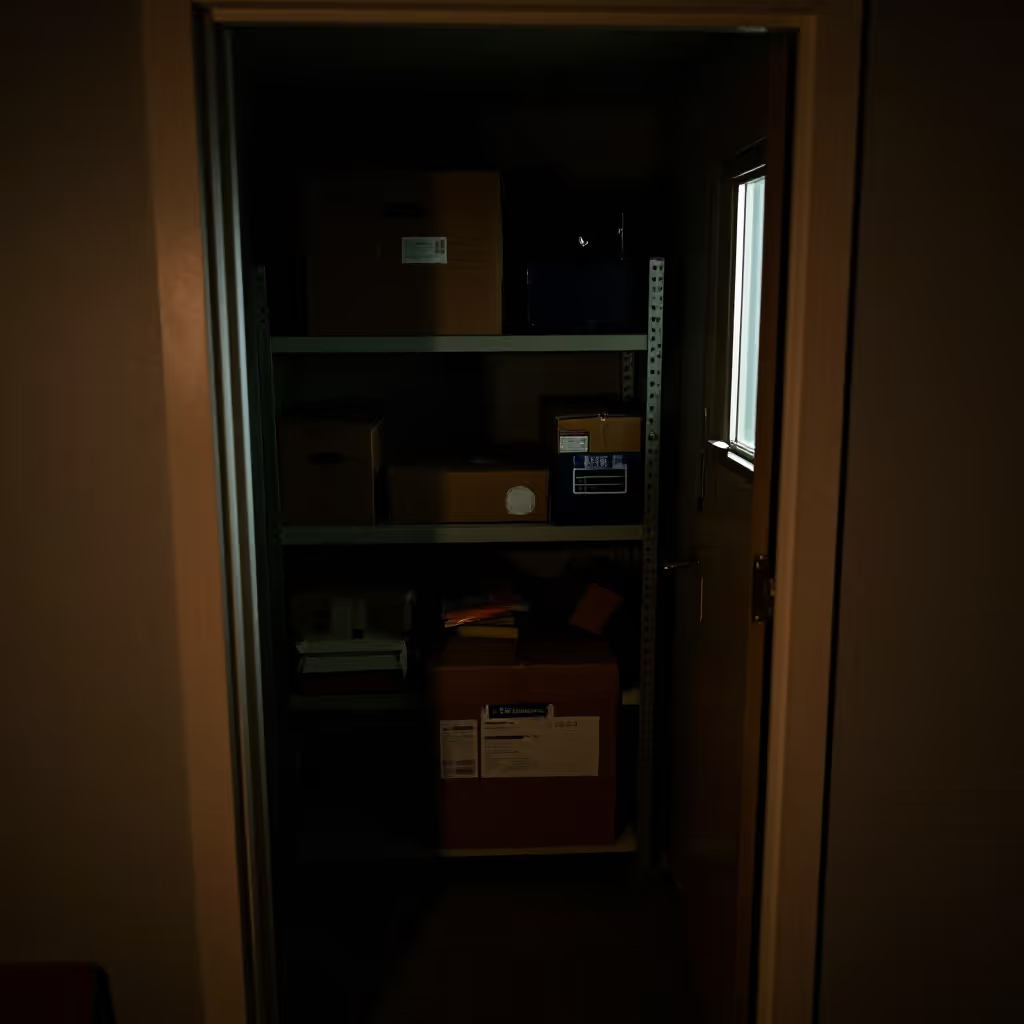
In der Finsternis konnte ich den Weg überhaupt nicht erkennen.
I could not make out the path at all in the darkness.
In der Dunkelheit konnte ich den Weg kaum erkennen.
I could barely make out the path in the darkness.