

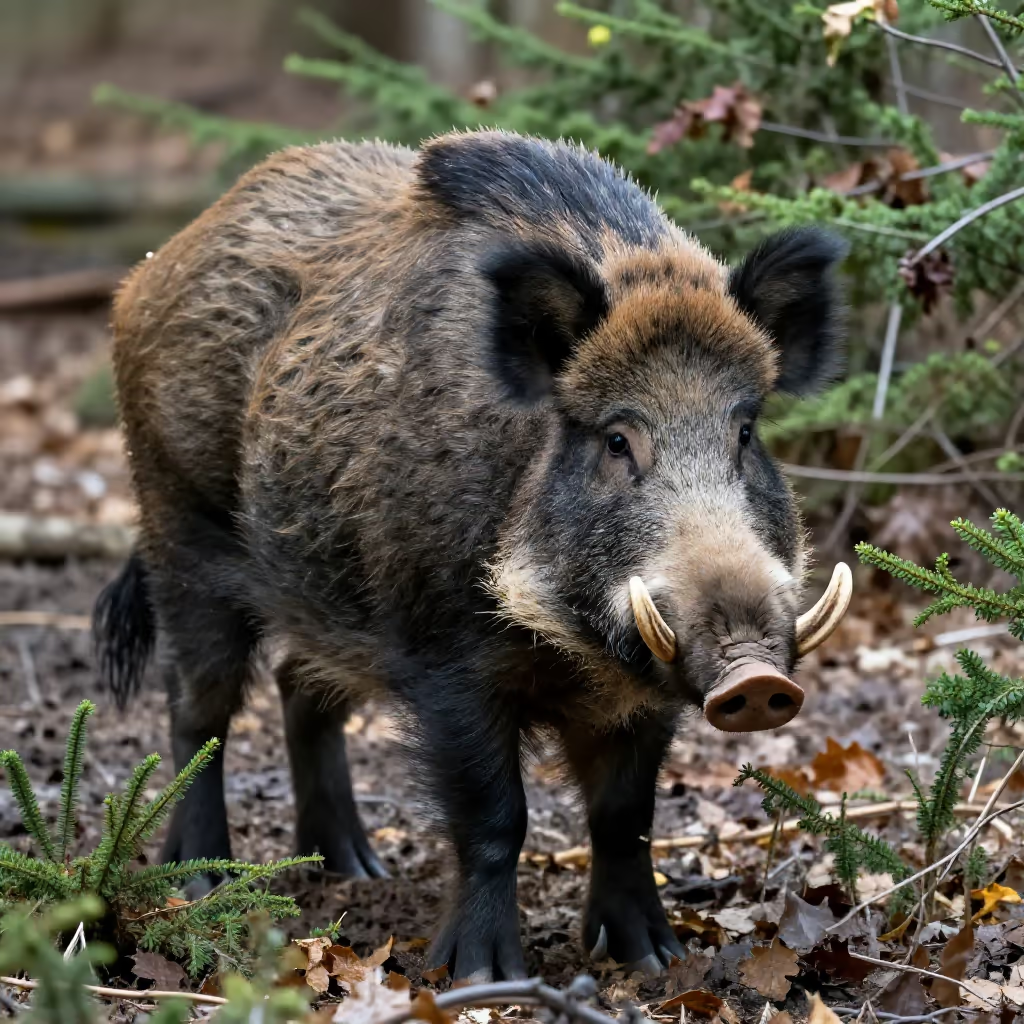
der Eber
boar
A male, uncastrated domestic pig or wild pig.
EXAMPLE
Der Jäger entdeckte die Spuren eines großen Ebers im Wald.
The hunter discovered the tracks of a large boar in the forest.
boar
Loading your saved state.
boar
A male, uncastrated domestic pig or wild pig.
Der Jäger entdeckte die Spuren eines großen Ebers im Wald.
The hunter discovered the tracks of a large boar in the forest.
The word 'Eber' (boar) is used mainly in specific contexts such as biology, agriculture (pig breeding), and hunting. It precisely refers to the male animal.
In der Schweinezucht werden nur die besten Eber zur Weitervermehrung eingesetzt.
In pig breeding, only the best boars are used for further breeding.
'Eber' (boar) is often used in connection with hunting or nature. Typical combinations are 'ein wilder Eber' (a wild boar), 'die Spuren eines Ebers' (the tracks of a boar), or 'einen Eber jagen' (to hunt a boar).
Im Dämmerlicht konnten wir einen wilden Eber am Waldrand beobachten.
In the twilight, we were able to observe a wild boar at the edge of the forest.
The boar has often had symbolic significance in European cultural history. It frequently stands for strength, courage, and wildness and appears in many coats of arms, myths, and legends.
Das Wappen der Stadt zeigt einen springenden Eber.
The town’s coat of arms shows a leaping boar.
wild boar
„Das Wildschwein“ refers to the wild species of pig or to an individual animal without specifying its sex. „Der Eber“, by contrast, explicitly refers to a male, uncastrated domestic or wild pig. Speak generally of „dem Wildschwein“; use „Eber“ when emphasizing the sex.
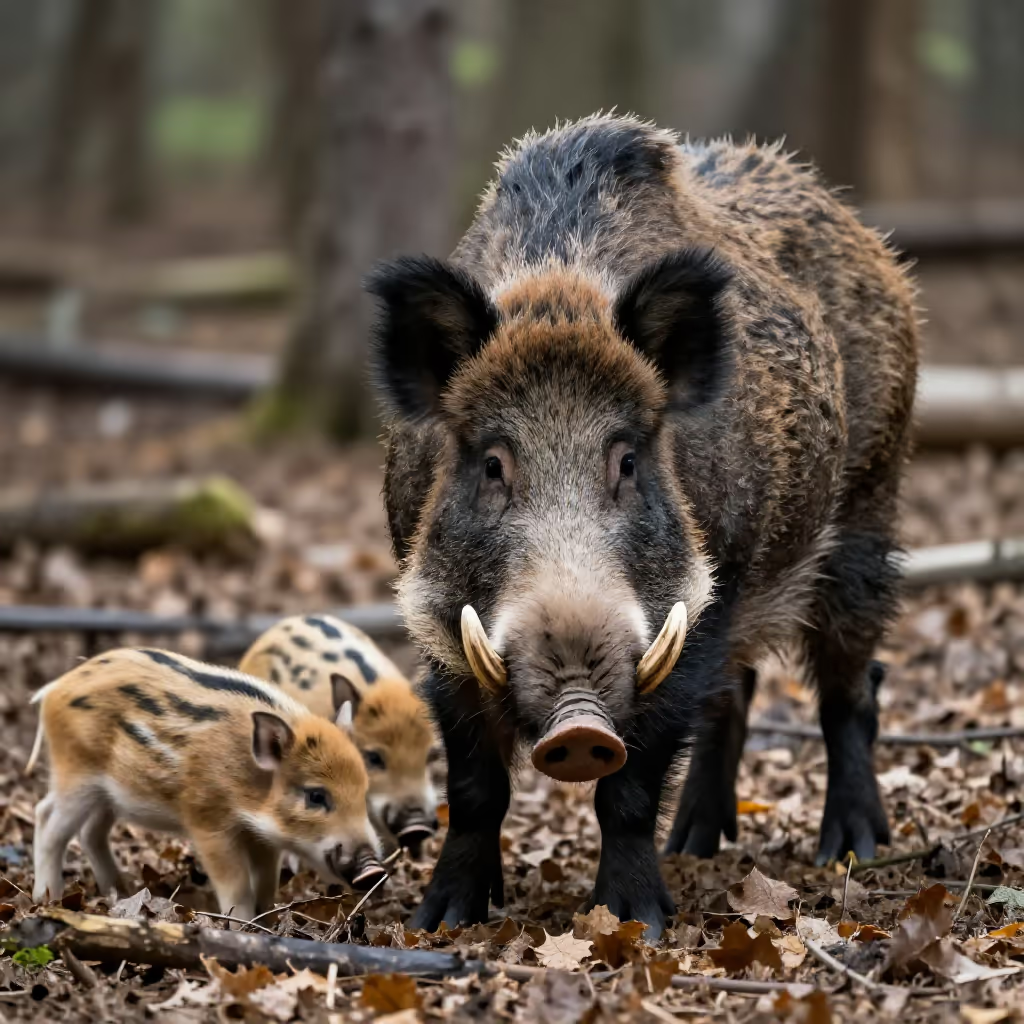
Der Förster erklärte, dass dieser kräftige Eber zur Wildschweinrotte gehört.
The forester explained that this powerful boar belongs to the wild boar sounder.
Am Waldrand sahen wir ein Wildschwein mit mehreren Jungtieren.
At the edge of the forest, we saw a wild boar with several young.