

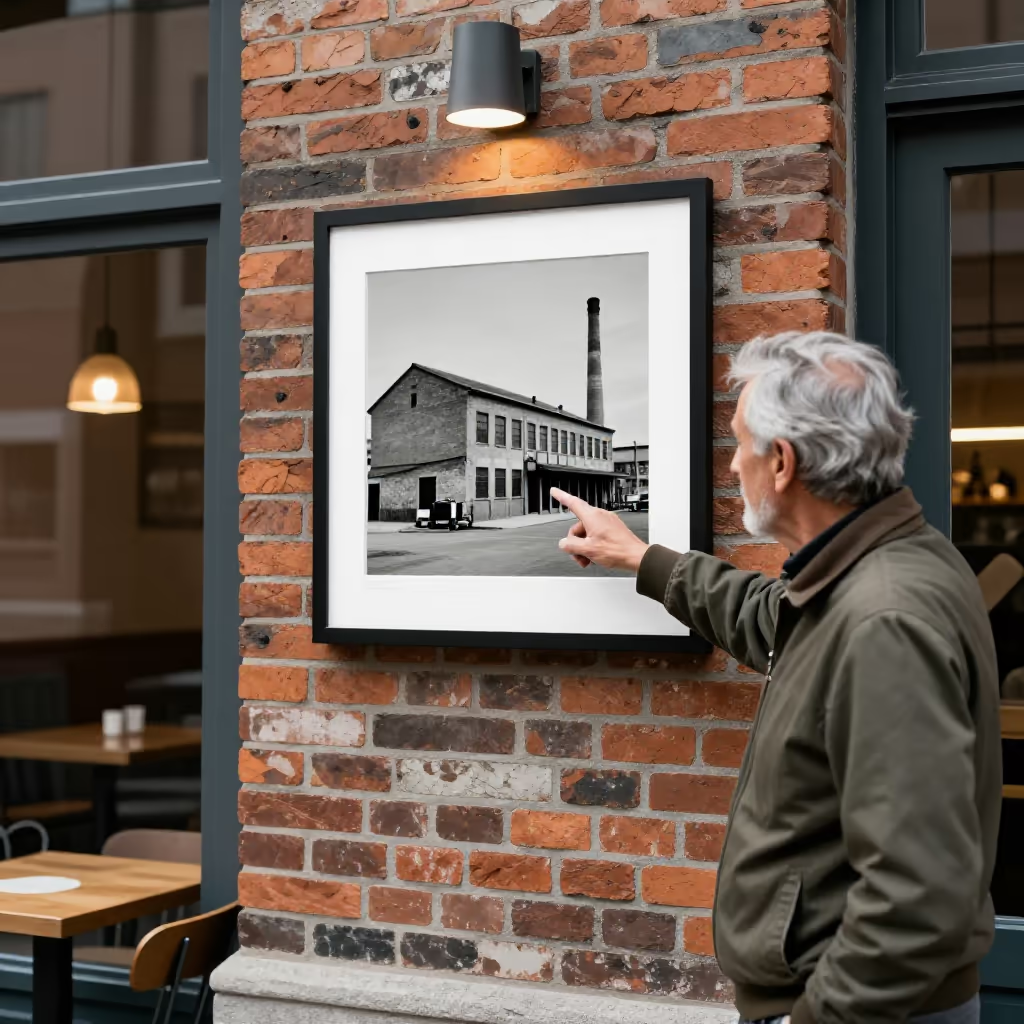
ehemals
formerly
Expresses that something was different in the past or had a different function; earlier.
EXAMPLE
Das ehemals prächtige Schloss ist heute nur noch eine Ruine.
The formerly magnificent castle is now only a ruin.
formerly
Loading your saved state.
formerly
Expresses that something was different in the past or had a different function; earlier.
Das ehemals prächtige Schloss ist heute nur noch eine Ruine.
The formerly magnificent castle is now only a ruin.
The word is composed of 'ehe' (earlier, before) and 'mals' (an old form of 'Mal', meaning time). So it literally means 'in earlier times'.
Das Gebäude war ehemals eine Schule.
The building was formerly a school.
As an adverb, 'ehemals' (formerly) can stand at the beginning of a sentence (position 1), which leads to inversion (verb in position 2). But it can also stand after the verb inside the sentence.
Ehemals gehörte dieses Land dem König.
Formerly, this land belonged to the king.
'Ehemals' (formerly) is used mainly in written language or in a formal, narrative style. It often sounds somewhat elevated or historical.
Die ehemals mächtige Stadt ist heute ein kleines Dorf.
The formerly powerful city is now a small village.
back then
„Damals“ and „ehemals“ can both refer to an earlier time. „Damals“ mainly indicates the point in time or period when something happened in the past, while „ehemals“ emphasizes that a former role or state no longer applies today. Use „damals“ for the time reference and „ehemals“ for former status.

Anna war ehemals Bürgermeisterin und wohnt heute in einem anderen Haus.
Anna was formerly mayor and now lives in a different house.
Damals war Anna Bürgermeisterin und wohnte noch im Rathaus.
Back then, Anna was mayor and was still living in the town hall.