

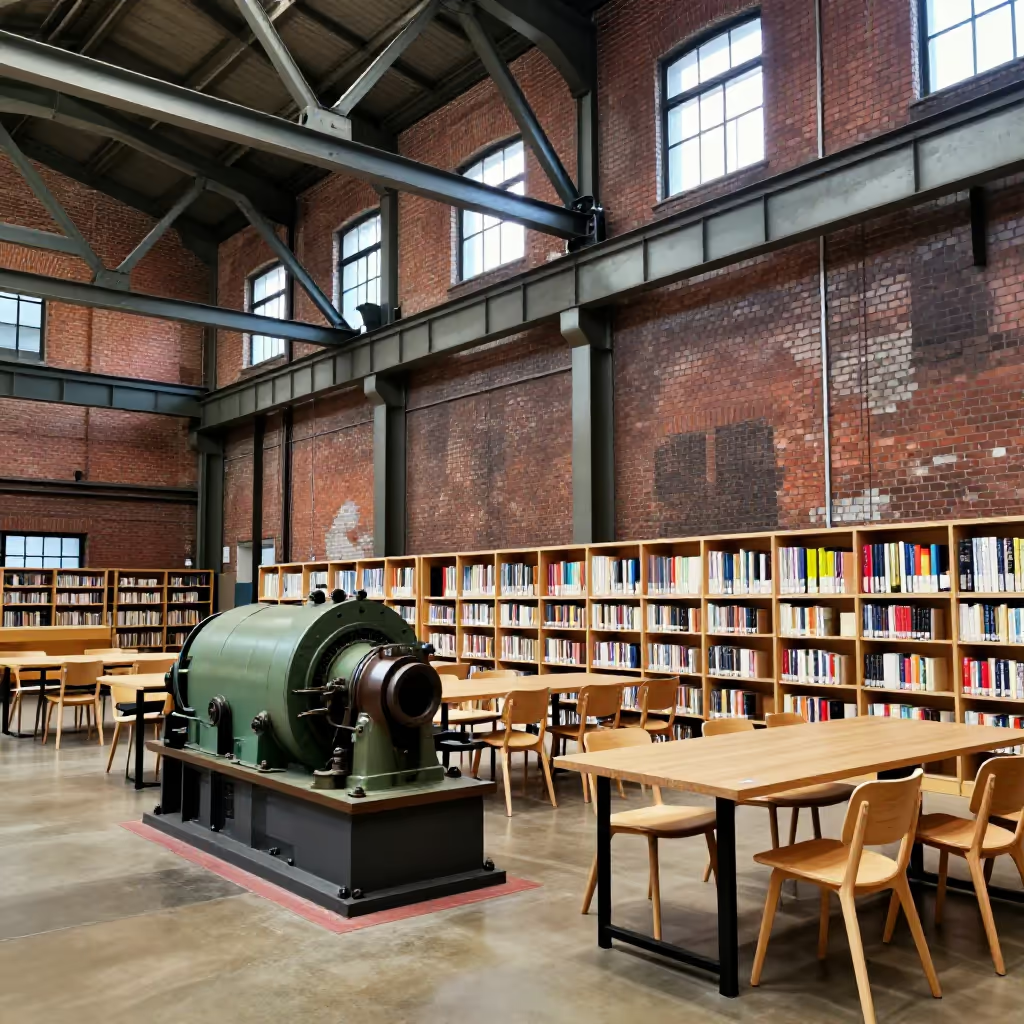
Refers to an earlier state or an earlier function; formerly, previously. It is often used in formal or written contexts.
example
Das Gebäude, vormals eine Fabrik, ist heute ein modernes Museum.
The building, formerly a factory, is now a modern museum.
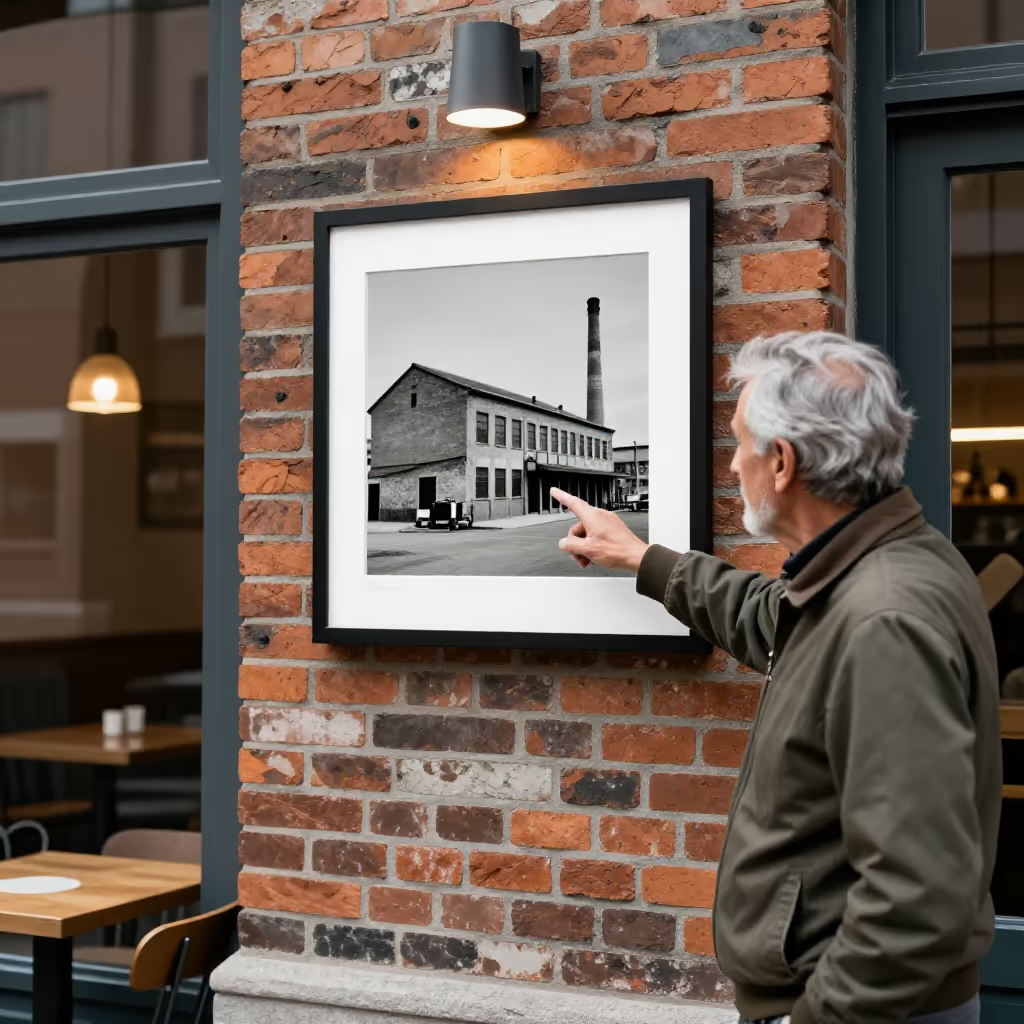
Usage tips
Word structure
The word is made up of the preposition 'vor' (before) and the ending '-mals', which often forms a time expression, as in 'damals' (back then). So it literally means 'in the time before'.
EXAMPLE
Die vormals eigenständige Gemeinde gehört heute zur Stadt.
The formerly independent municipality is now part of the city.
Elevated language
'Vormals' (formerly) belongs to written language and is perceived as formal or elevated. You often find it in official, historical, or legal texts.
EXAMPLE
Der Angeklagte war vormals nicht vorbestraft.
The defendant had formerly not had any prior convictions.
Sentence position
As an adverb, 'vormals' (formerly) can stand in different places in the sentence. It often stands in position 1, followed by the verb. But it can also stand after the verb.
EXAMPLE
Vormals stand hier eine alte Mühle.
Formerly, an old mill stood here.
Compare with
near_synonym
vormals vs damals
back then
'damals' and 'vormals' both refer to something earlier. You use 'damals' for a specific point in time or period in the past, and it sounds completely normal in conversation. 'vormals' is more about an earlier state or an earlier function. It sounds more formal and appears more often in written texts. If you are simply telling what happened in the past, 'damals' fits better. If you want to say that something used to have a different name, was used differently, or had a different role, 'vormals' fits better.
vormals
In der Nachbarschaft steht heute ein Kindergarten in der vormals alten Arztpraxis.
In the neighborhood, there is now a kindergarten in what was formerly the old doctor's office.
damals
Damals hast du jeden Abend mit deiner Freundin telefoniert.
Back then, you talked on the phone with your friend every evening.