

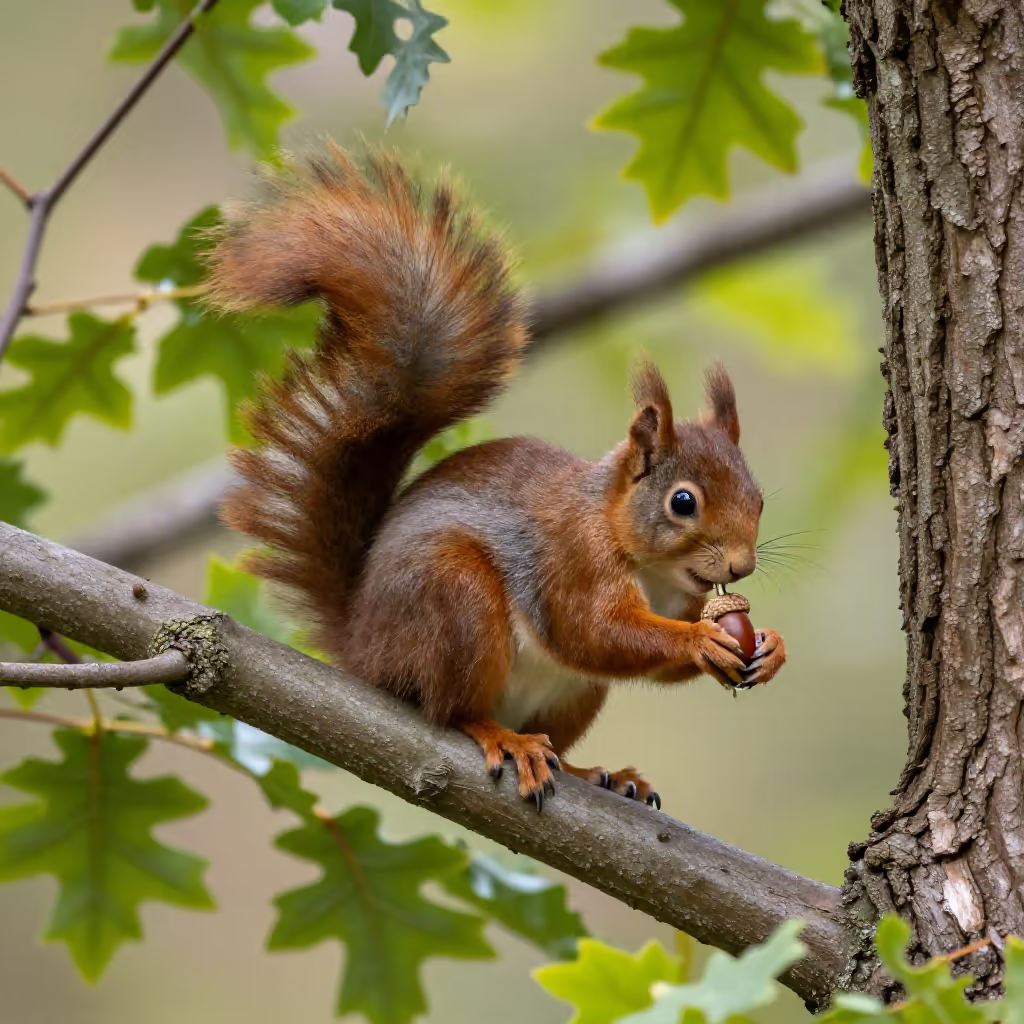
A small tree-dwelling rodent with a bushy tail that is widespread in Europe and Asia. An alternative and more common term is 'Eichhörnchen' (squirrel).
example
Ein flinkes Eichhorn sammelte Nüsse für den Winter.
A nimble squirrel gathered nuts for the winter.
Usage tips
Word composition
The word is made up of 'Eich-' (from 'Eiche', the oak tree) and 'Horn' (horn). The name should not be understood literally, since the animal has no horns. The origin of the word element '-horn' has not been clearly established.
EXAMPLE
Das Eichhorn kletterte flink den Baumstamm hinauf.
The squirrel climbed nimbly up the tree trunk.
Frequency and style
Although 'Eichhorn' (squirrel) is correct, the diminutive form 'Eichhörnchen' (squirrel) is almost always used in everyday speech. The form 'Eichhorn' can be found in older texts, poems, or in biological terminology.
EXAMPLE
Im Park sahen die Kinder ein süßes Eichhörnchen.
In the park, the children saw a cute squirrel.
Regional variant
In some regions, especially in Bavaria and Austria, there are dialect words for this animal. The best-known example is the Bavarian 'Oachkatzl' (squirrel).
EXAMPLE
Im Urlaub in Bayern haben wir gelernt, dass ein Eichhörnchen dort „Oachkatzl“ heißt.
On vacation in Bavaria, we learned that a squirrel is called 'Oachkatzl' there.
Compare with
synonym
Eichhorn vs Eichhörnchen
squirrel
'das Eichhörnchen' and 'das Eichhorn' mean the same animal: a small rodent that often lives in trees and has a bushy tail. In everyday language, people usually say 'Eichhörnchen'. 'Eichhorn' is also correct, but it is somewhat less common and can sound a bit more elevated or old-fashioned in some texts. If you are talking about the animal in a park or garden, 'Eichhörnchen' is usually the more natural choice.
Eichhorn
Auf dem alten Bild sitzt ein Eichhorn auf einem Ast.
In the old picture, a squirrel is sitting on a branch.
Eichhörnchen
Mein Vater sieht am Morgen ein Eichhörnchen im Garten.
My father sees a squirrel in the garden in the morning.