

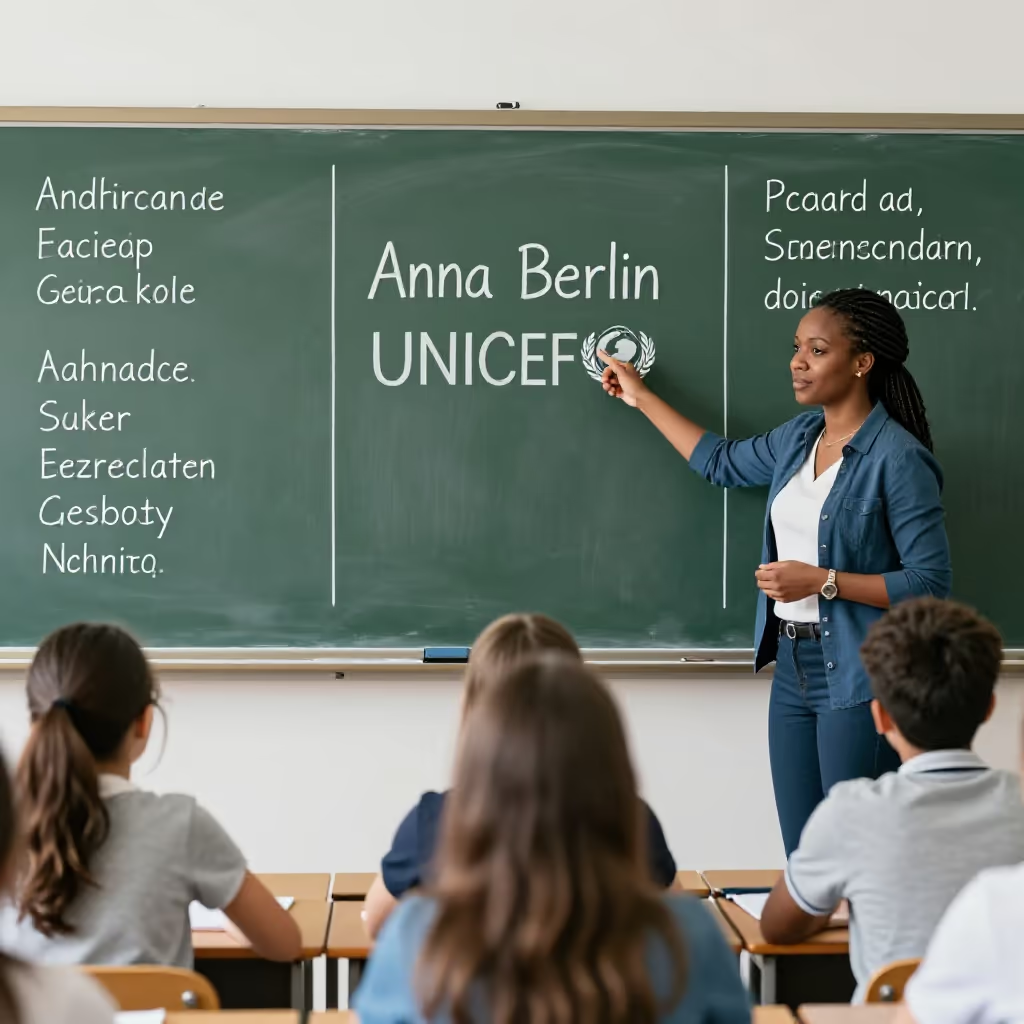
A name that clearly identifies a specific person, place, organization, or thing. In German, proper nouns are capitalized.
example
„Berlin“, „Anna“ und „Amazon“ sind Beispiele für Eigennamen.
'Berlin', 'Anna', and 'Amazon' are examples of proper nouns.
Usage tips
Word composition
'Eigenname' (proper noun) is made up of 'eigen' (own/specific) and 'Name' (name). Here, 'eigen' means 'specific' or 'particular'. An 'Eigenname' is therefore a specific name for an individual person, place, or thing.
EXAMPLE
Der Name deines Haustiers ist auch ein Eigenname.
The name of your pet is also a proper noun.
Most important rule
The most important rule for proper nouns in German is that they are always capitalized. This applies to personal names, city names, country names, brand names, and titles of books or films.
EXAMPLE
Wir fahren im Urlaub nach Italien.
We are going to Italy on vacation.
Grammatical term
'Eigenname' (proper noun) is a technical term from grammar. Although it is a technical word, the concept behind it is fundamental for every German learner from the beginning in order to understand capitalization.
EXAMPLE
Im Deutschunterricht haben wir gelernt, was Eigennamen sind.
In German class, we learned what proper nouns are.
Compare with
near_synonym · confusable
Eigenname vs Name
name
'der Name' and 'der Eigenname' both have to do with what people, places, or things are called. 'Name' is the general word and fits in almost all everyday situations. 'Eigenname' is more specific and means a particular name that refers to exactly one person, place, company, or individual thing, for example 'Anna', 'Berlin', or 'Vokabl'. Learners may confuse the words because every 'Eigenname' is a 'Name'. But not every 'Name' is referred to as an 'Eigenname' in everyday language. 'Eigenname' sounds more like grammar or a precise description.
Eigenname
In der Prüfung soll man Eigennamen wie „München“ und „Anna“ großschreiben.
In the exam, you are supposed to capitalize proper nouns like 'München' and 'Anna'.
Name
Im Garten fragt mein Nachbar nach dem Namen der Pflanze.
In the garden, my neighbor asks for the name of the plant.