

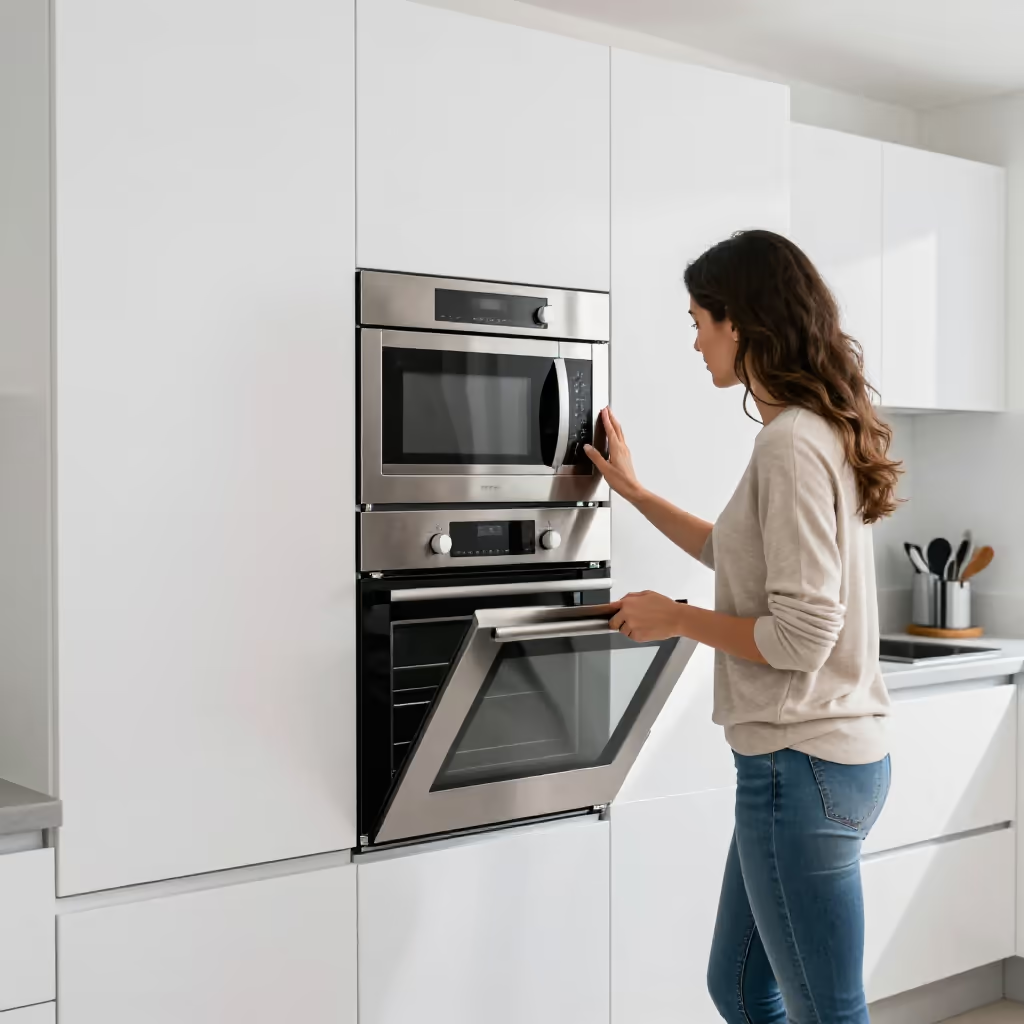
Firmly integrated into something larger or installed as a permanent component. Often refers to furniture, appliances, or technical functions.
example
Die neue Küche hat einen eingebauten Geschirrspüler und einen Backofen auf Augenhöhe.
The new kitchen has a built-in dishwasher and an oven at eye level.

Usage tips
Word structure
'Eingebaut' (built-in) is the past participle of the separable verb 'einbauen' (to install / build in). It is very often used as an adjective to describe that something has been firmly integrated into a larger object.
EXAMPLE
Der Techniker hat gestern die neue Festplatte eingebaut.
The technician installed the new hard drive yesterday.
Typical collocations
This adjective is often used for furniture and technology. Typical combinations are 'eingebauter Schrank' (built-in wardrobe), 'eingebaute Küche' (built-in kitchen), 'eingebaute Kamera' (built-in camera), or 'eingebautes Mikrofon' (built-in microphone).
EXAMPLE
Mein neuer Laptop hat eine sehr gute eingebaute Webcam.
My new laptop has a very good built-in webcam.
Usage context
The word usually describes things that are part of a larger structure and cannot simply be removed. It is often used in the fields of architecture, interior design, and technology.
EXAMPLE
Alle Lampen im Flur sind direkt in die Decke eingebaut.
All the lights in the hallway are built directly into the ceiling.
Compare with
antonym
eingebaut vs extern
external
'extern' and 'eingebaut' are opposites especially when talking about technology or devices. 'extern' means that a device is connected from the outside and is not inside the main device. 'eingebaut' means that something is permanently installed in a larger device or piece of furniture. An external camera can be removed or replaced. A built-in camera is part of the device.
eingebaut
Der Schrank hat eine eingebaute Lampe über dem Spiegel.
The cabinet has a built-in lamp above the mirror.
extern
Für die Videokonferenz nutzt Paul ein externes Mikrofon.
Paul uses an external microphone for the video conference.