

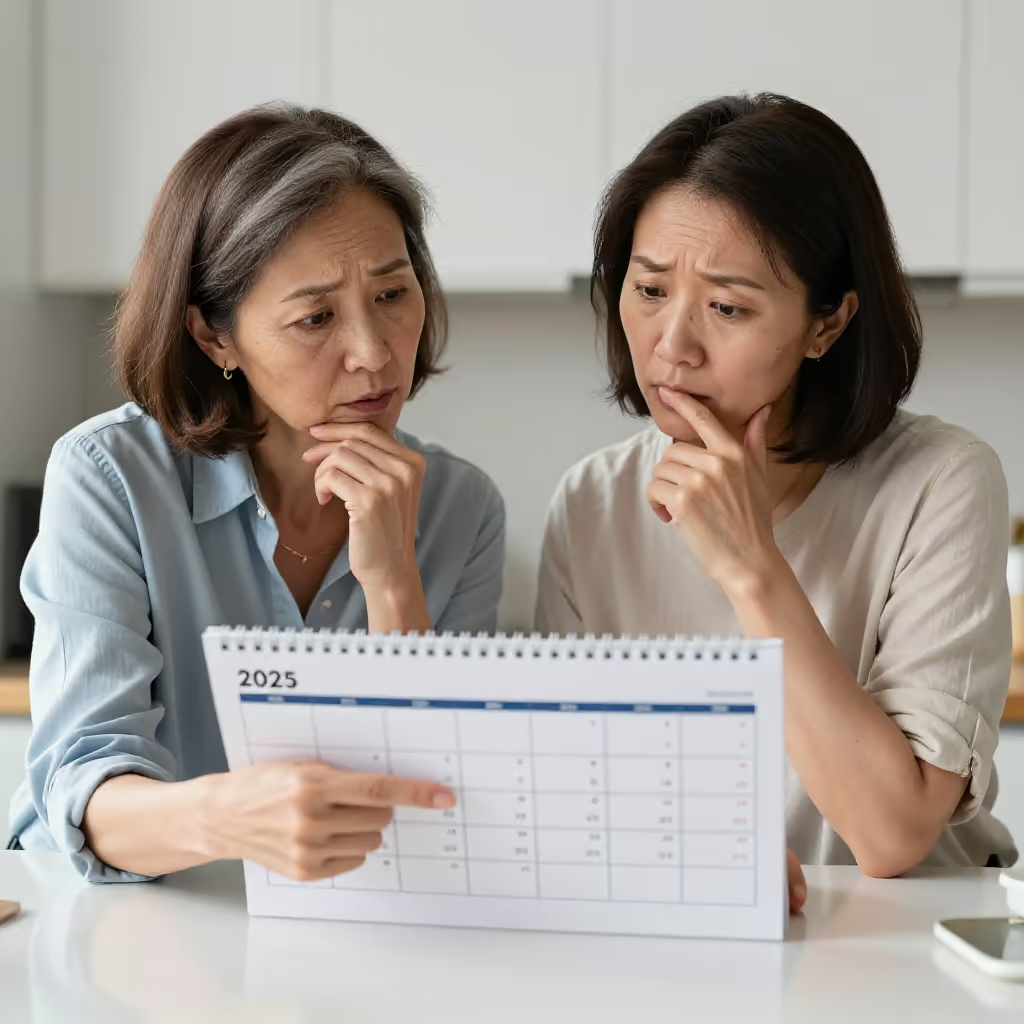
sich einig sein
to agree
To have the same opinion or view as another person or group and be in agreement.
EXAMPLE
In diesem Punkt sind wir uns alle einig.
We all agree on this point.
agreed / united
Loading your saved state.
to agree
To have the same opinion or view as another person or group and be in agreement.
In diesem Punkt sind wir uns alle einig.
We all agree on this point.

to reach agreement
To come to a shared agreement or compromise after a discussion or negotiation.
Nach stundenlanger Debatte wurden sie sich endlich über den Preis einig.
After hours of debate, they finally reached agreement on the price.

united
In rarer use, describes a state of inner unity or cohesion within a group.
Das Volk stand einig hinter seinem König.
The people stood united behind their king.
The word 'einig' (agreed/united) is almost always used reflexively with 'sich': 'sich einig sein' (to agree/be in agreement) or 'sich einig werden' (to reach agreement). The reflexive pronoun changes to match the subject.
Wir sind uns einig, dass wir etwas ändern müssen.
We agree that we need to change something.
The combination with 'sein' (to be) describes a state of agreement, while the combination with 'werden' (to become) describes the process of reaching agreement, which often happens after a discussion.
Die Geschwister sind sich einig, wie sie das Erbe aufteilen.
The siblings agree on how to divide the inheritance.
When you name the subject of the agreement, you use the preposition 'über' followed by the accusative.
Die Experten sind sich über die Ursachen des Problems nicht einig.
The experts do not agree on the causes of the problem.
'Einig' (agreed/united) is derived from the number 'eins' (one). It describes the idea that several people come to 'one' opinion. Related words are 'die Einigkeit' (the state of being in agreement/unity) and 'vereinigen' (to unite).
Einigkeit macht stark.
Unity makes strength.
Use as an adjective before a noun (e.g., 'ein einiges Volk' — a united people) is rare and often sounds formal or literary. In everyday language, the reflexive use dominates.
Die Jury trat als einiges Gremium auf.
The jury appeared as a united body.
one
Eins and einig can both express that several people have the same opinion. However, sich eins sein sounds more formal and less common in everyday speech in this fixed expression, while sich einig sein is usual in normal conversation. Eins may therefore be chosen deliberately in a formal speech.

Nach kurzer Diskussion waren sich die Mitglieder schließlich einig.
After a brief discussion, the members finally agreed.
Nach langer Diskussion waren sich die Mitglieder schließlich eins.
After a long discussion, the members finally reached agreement.