

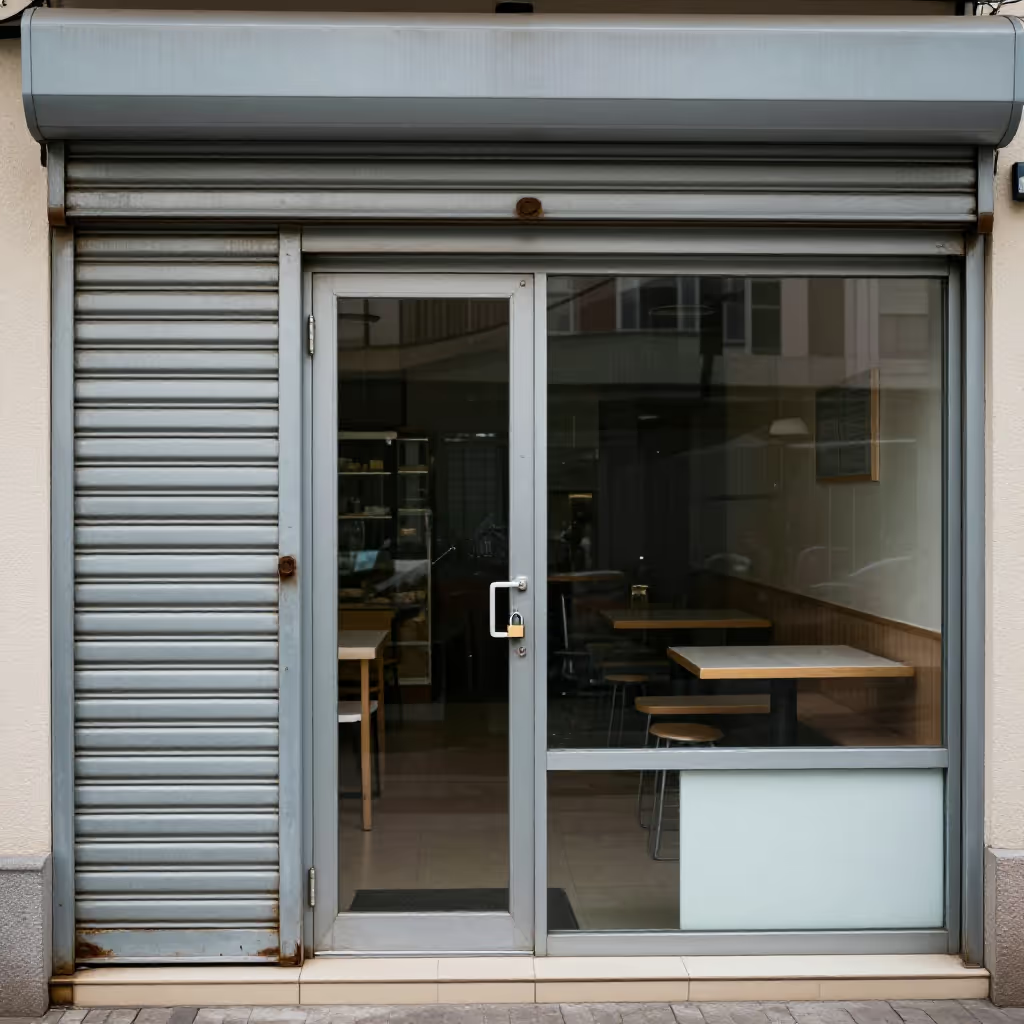
geschlossen
closed
Not open; the opposite of open. Refers to doors, windows, shops, or institutions.
EXAMPLE
Das Museum ist montags immer geschlossen.
The museum is always closed on Mondays.
closed
Loading your saved state.
closed
Not open; the opposite of open. Refers to doors, windows, shops, or institutions.
Das Museum ist montags immer geschlossen.
The museum is always closed on Mondays.

united
Acting as a group in a unified, unanimous, or cohesive way.
Die Partei trat bei der Abstimmung geschlossen auf.
The party presented a united front during the vote.

continuous
Forming a continuous, unbroken unit or surface.
Am Morgen lag eine geschlossene Schneedecke über dem ganzen Land.
In the morning, a continuous blanket of snow lay over the whole country.
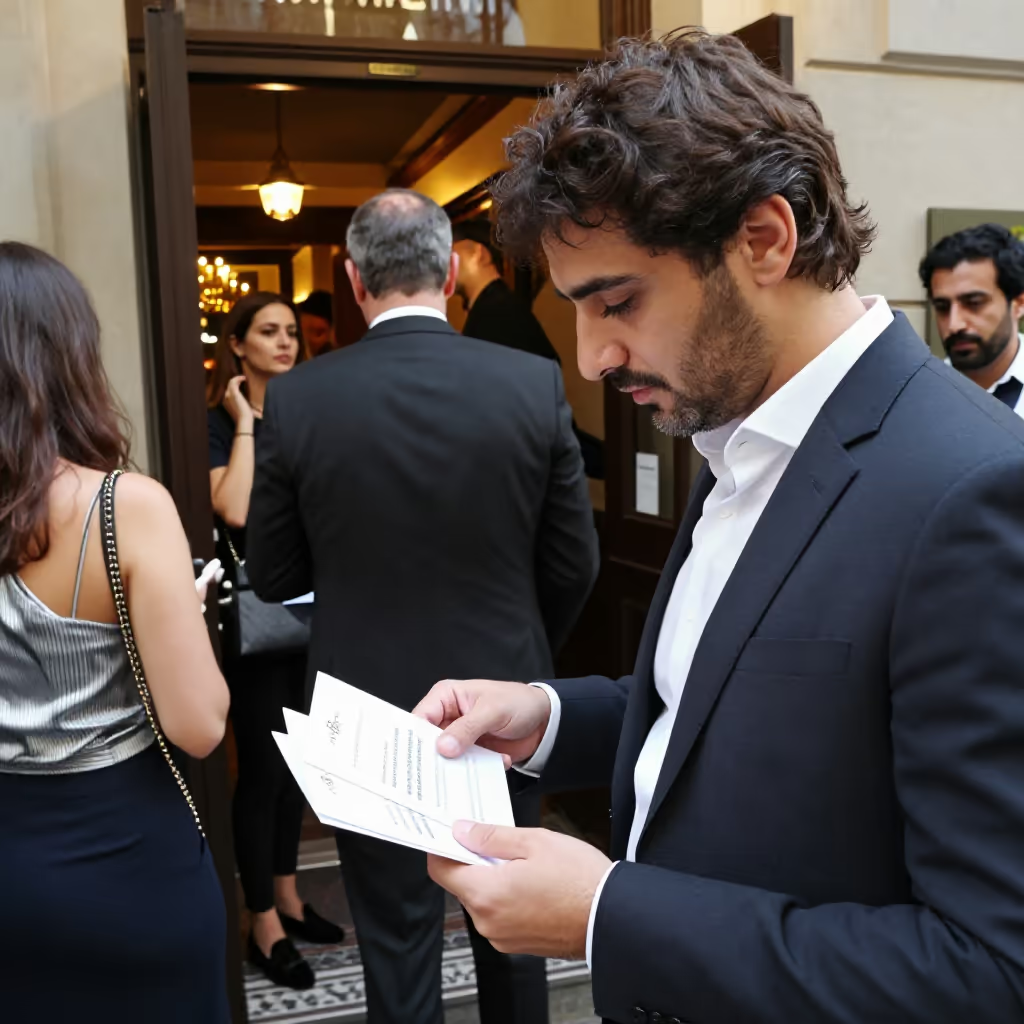
private event
A private event to which only invited guests have access and which is not open to the public.
Wir können leider nicht ins Restaurant, es ist heute für eine geschlossene Gesellschaft reserviert.
Unfortunately, we can't go into the restaurant; it is reserved for a private event today.
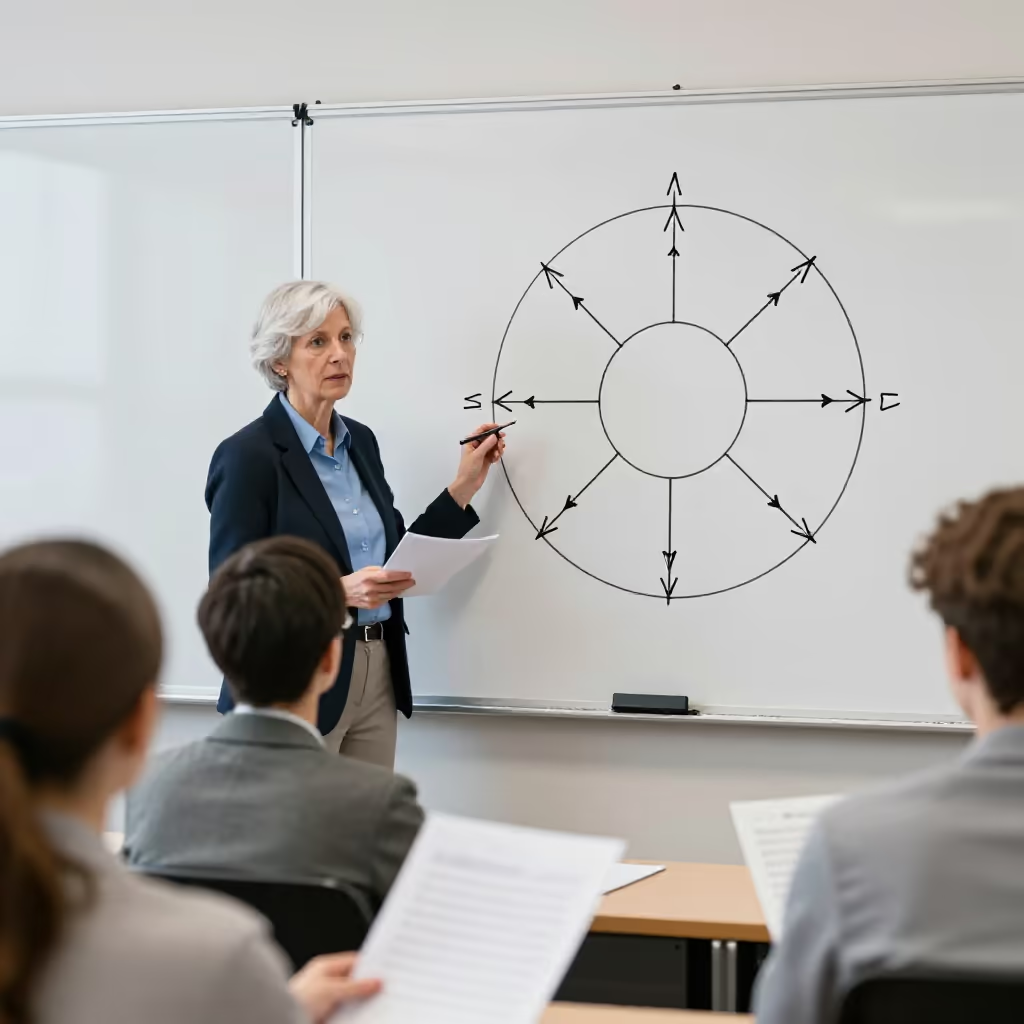
self-contained
Complete and logically structured in itself, with no missing parts. Often refers to systems, arguments, or works of art.
Der Roman bildet ein in sich geschlossenes Universum mit eigenen Regeln.
The novel forms a self-contained universe with its own rules.
'Geschlossen' is the past participle of the verb 'schließen' (to close). This origin explains the basic meaning 'not open' and helps you understand the figurative meanings such as 'unified' or 'complete in itself'.
Bitte halten Sie die Tür stets geschlossen.
Please keep the door closed at all times.
In its most common meaning, 'geschlossen' is used for places such as shops, banks, public offices, or museums. The reason is often given with 'wegen' (because of), e.g. 'wegen Feiertag geschlossen' (closed because of a public holiday).
Die Bibliothek bleibt wegen Renovierungsarbeiten nächste Woche geschlossen.
The library will remain closed next week due to renovation work.
When 'geschlossen' is used in connection with a group of people such as a team, a party, or a sports team, it means 'unified' or 'unanimous'.
Die Mannschaft zeigte eine geschlossene Leistung und gewann das Spiel.
The team showed a united performance and won the game.
In connection with surfaces such as 'Schneedecke' (blanket of snow), 'Wolkendecke' (cloud cover), or 'Eisdecke' (ice cover), 'geschlossen' means something like 'continuous' or 'unbroken'.
Wegen der geschlossenen Wolkendecke war die Sonne den ganzen Tag nicht zu sehen.
Because of the continuous cloud cover, the sun was not visible all day.
The expression 'geschlossene Gesellschaft' (private event) is a fixed expression. It refers to a private event that is not open to the public and is often seen on signs outside restaurants.
Die Feier findet als geschlossene Gesellschaft statt, nur geladene Gäste haben Zutritt.
The celebration is being held as a private event; only invited guests have access.
In an abstract, intellectual sense, 'geschlossen' describes something that is logical and complete. It is often combined with 'in sich': 'ein in sich geschlossenes System' (a self-contained system) or 'eine in sich geschlossene Argumentation' (a self-contained argument).
Der Philosoph entwickelte ein in sich geschlossenes Gedankensystem.
The philosopher developed a self-contained system of thought.
agreed / united
Einig emphasizes that the members of a group share the same opinion or stand together internally. Geschlossen places more emphasis on presenting a united front, even when internal agreement is not the focus. Use einig for the shared view and geschlossen for acting together.
Die Fraktion trat bei der Abstimmung geschlossen auf.
The parliamentary group presented a united front in the vote.
Die Fraktion ist sich über den Antrag einig.
The parliamentary group agrees on the motion.