

einmal
once
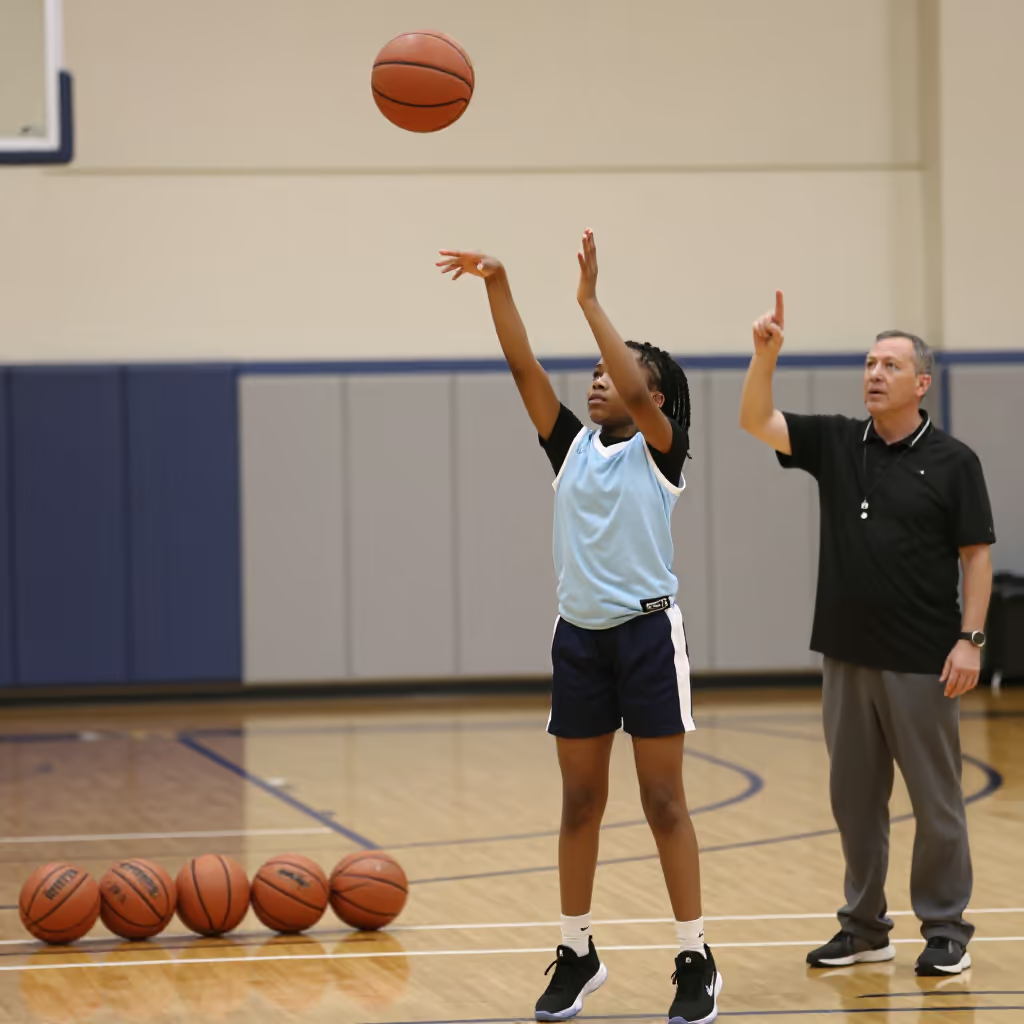
Refers to one single time or one single occasion in the past, present, or future.
EXAMPLE
Ich habe diese Oper nur einmal gesehen.
I have seen this opera only once.
once
Loading your saved state.
once
Refers to one single time or one single occasion in the past, present, or future.
Ich habe diese Oper nur einmal gesehen.
I have seen this opera only once.

just
Often used in colloquial language to make a request or command sound more casual and friendly, similar to 'mal'.
Gib mir doch einmal den Stift, bitte.
Just give me the pen, please.

all at once
A fixed expression meaning 'suddenly' or 'unexpectedly'.
Auf einmal fing es an zu regnen.
All at once, it started to rain.
once upon a time
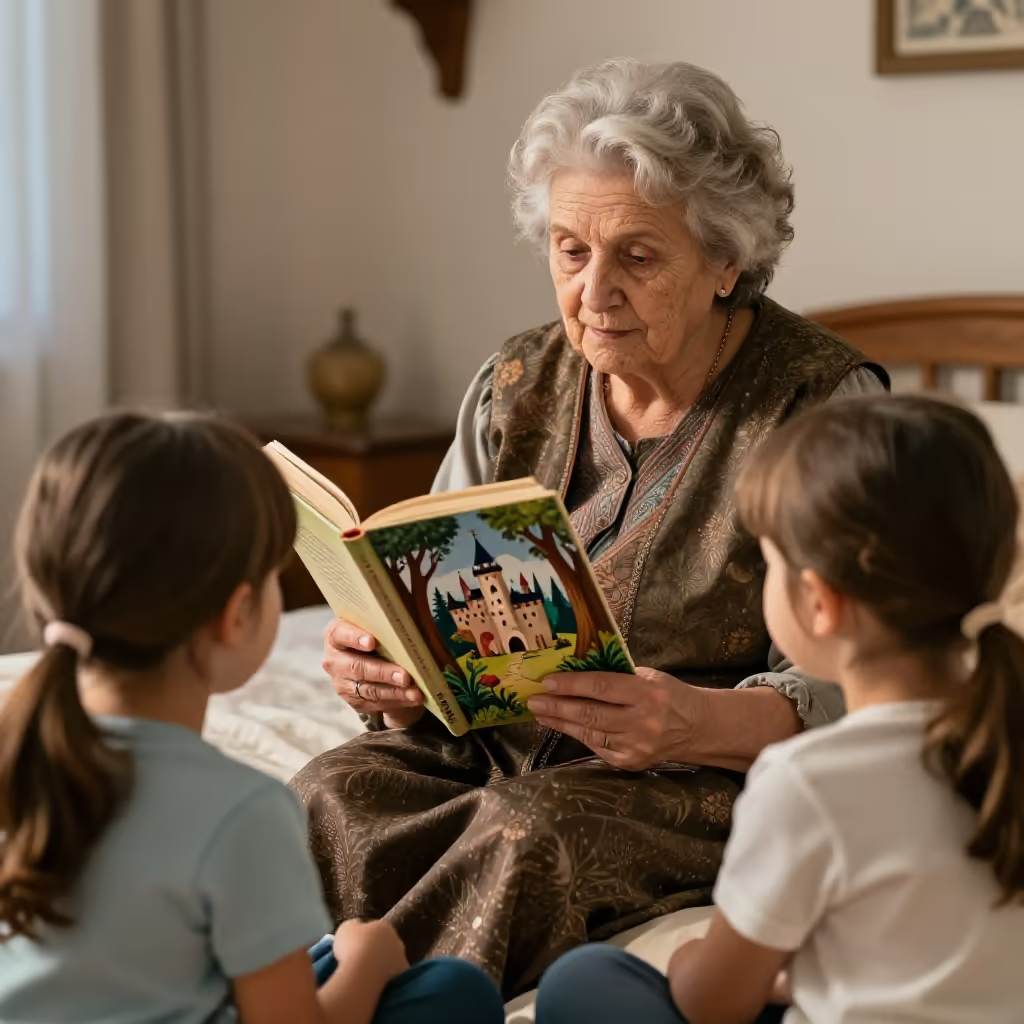
The traditional opening formula for fairy tales, meaning 'in the past' or 'a long time ago'.
Es war einmal eine Prinzessin, die in einem großen Schloss lebte.
Once upon a time, there was a princess who lived in a large castle.
not even
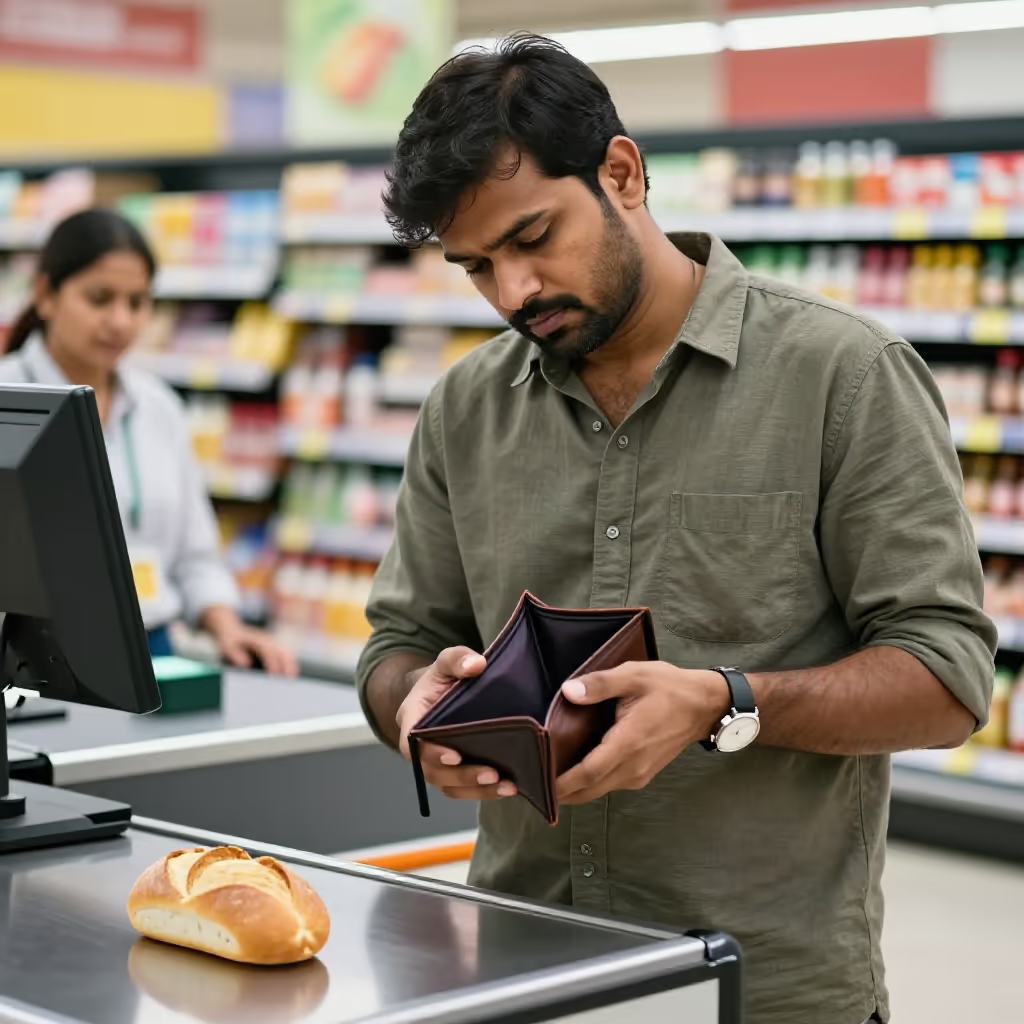
Used to emphasize that even a minimal or expected thing is not the case.
Er hat nicht einmal angerufen, um sich zu entschuldigen.
He didn't even call to apologize.
The word is a combination of 'ein' (one) and 'Mal' (time/occasion). It literally means 'one single time' and can refer to the past or the future.
Ich möchte dieses Restaurant noch einmal besuchen.
I would like to visit this restaurant once more.
The meaning of 'einmal' depends heavily on context. When it describes a number of times, it is often stressed. As a filler word in a request, it is unstressed and often sounds like 'mal'.
Ich war nur einmal in Berlin.
I was in Berlin only once.
In spoken language, 'einmal' (often shortened to 'mal') is used to make a request or prompt sound friendlier and less direct. Here it has no literal meaning.
Schau einmal, was ich gefunden habe!
Look what I found!
The expression 'auf einmal' (all at once/suddenly) is a fixed unit and means 'plötzlich' (suddenly). It often appears at the beginning of a sentence and then causes inversion (verb before subject).
Wir saßen im Garten und auf einmal begann es zu stürmen.
We were sitting in the garden, and all at once it started to storm.
The phrase 'Es war einmal ...' (Once upon a time ...) is the traditional and fixed opening of fairy tales in German. It introduces a story that takes place a long time ago.
Es war einmal ein König, der hatte drei Töchter.
Once upon a time, there was a king who had three daughters.
The combination 'nicht einmal' is used for emphasis and means 'not even'. It expresses that even a minimal expectation was not met.
Er war so müde, er hat nicht einmal zu Abend gegessen.
He was so tired that he didn't even eat dinner.
once / times
Mal and einmal can make a request sound more casual and less direct. Mal is a typical colloquial particle without its own indication of time, while einmal can also genuinely mean a single occasion. Use mal for the offhand tone and einmal when the one-time nature is implied.

Ruf mich einmal an, um den Termin zu bestätigen.
Call me once to confirm the appointment.
Ruf mich mal an, wenn du Zeit hast.
Call me sometime when you have time.