


die Frau
woman
An adult female person.
EXAMPLE
Die Frau am Nachbartisch liest ein Buch.
The woman at the next table is reading a book.
woman / wife
Loading your saved state.
woman
An adult female person.
Die Frau am Nachbartisch liest ein Buch.
The woman at the next table is reading a book.

wife
The female spouse in a marriage.
Er hat seine Frau im Urlaub kennengelernt.
He met his wife on vacation.

Ms.
A polite form of address for an adult woman, followed by her last name.
Guten Morgen, Frau Meier, wie geht es Ihnen?
Good morning, Ms. Meier, how are you?
Whether 'Frau' means any woman or a wife depends on the context. A possessive pronoun like 'meine' (my), 'seine' (his), or 'ihre' (her/their) almost always points to the meaning 'Ehefrau' (wife).
Eine Frau hat nach Ihnen gefragt.
A woman asked for you.
As a polite form of address, 'Frau' always stands without an article directly before the last name. This form is used both when addressing someone directly and when speaking about a person.
Guten Tag, Frau Weber, schön Sie zu sehen.
Good afternoon, Ms. Weber, nice to see you.
In German, 'Frau' is the neutral and usual form of address for any adult woman, regardless of her marital status. German does not distinguish between married and unmarried women in this form of address.
Sehr geehrte Frau Dr. Bauer, anbei sende ich Ihnen die Unterlagen.
Dear Dr. Bauer, please find attached the documents.
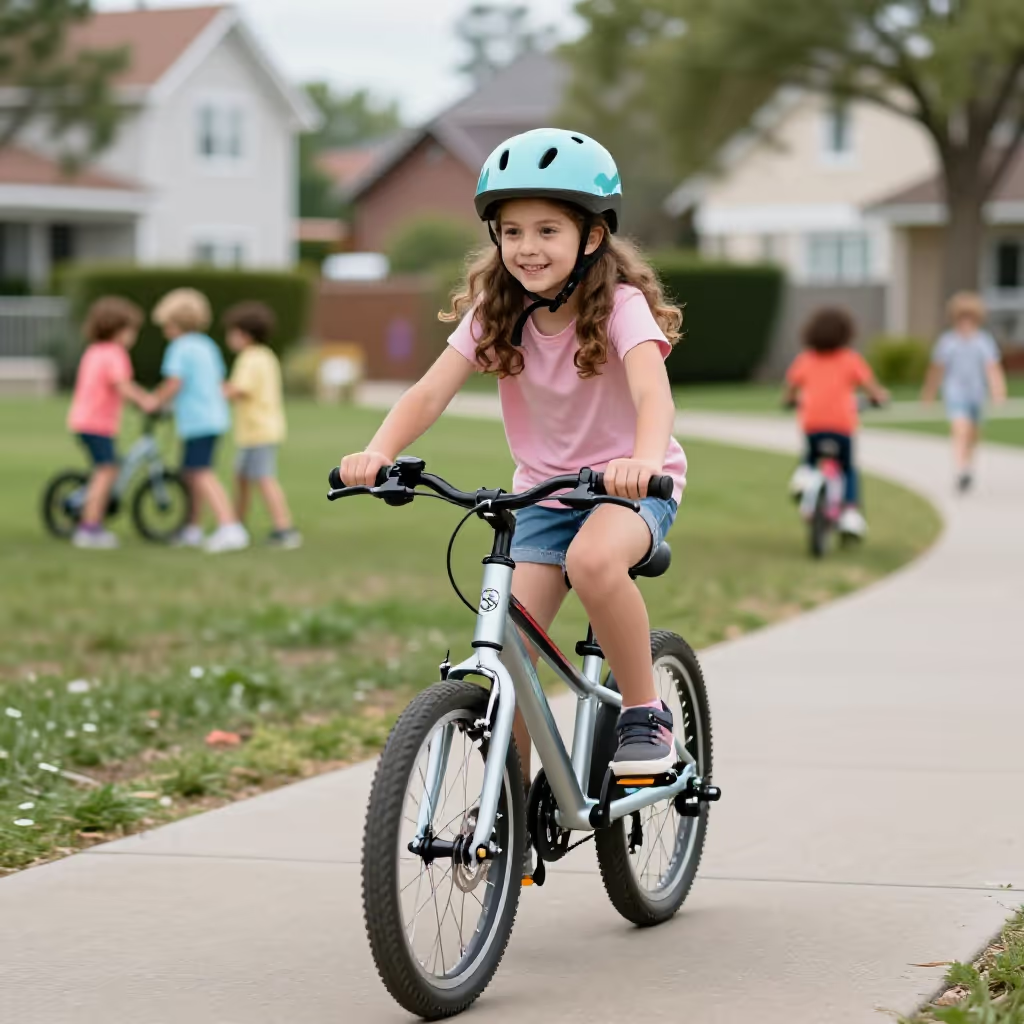
girl
Mädchen refers to a female child or adolescent, while Frau refers to an adult female person. Mädchen can be used for young adults, but it emphasizes their youth and can sound condescending. For an adult, Frau is therefore usually the more respectful choice.
Die erwachsene Frau meldete sich selbst für den Sprachkurs an.
The adult woman registered herself for the language course.
Das siebzehnjährige Mädchen wurde von seinen Eltern für den Sprachkurs angemeldet.
The seventeen-year-old girl was registered for the language course by her parents.