


einsammeln
to collect
To bring together or pick up things, money, or even people from different places and take them to one point.
Nach der Prüfung sammelte der Lehrer alle Klausuren ein.
After the exam, the teacher collected all the test papers.
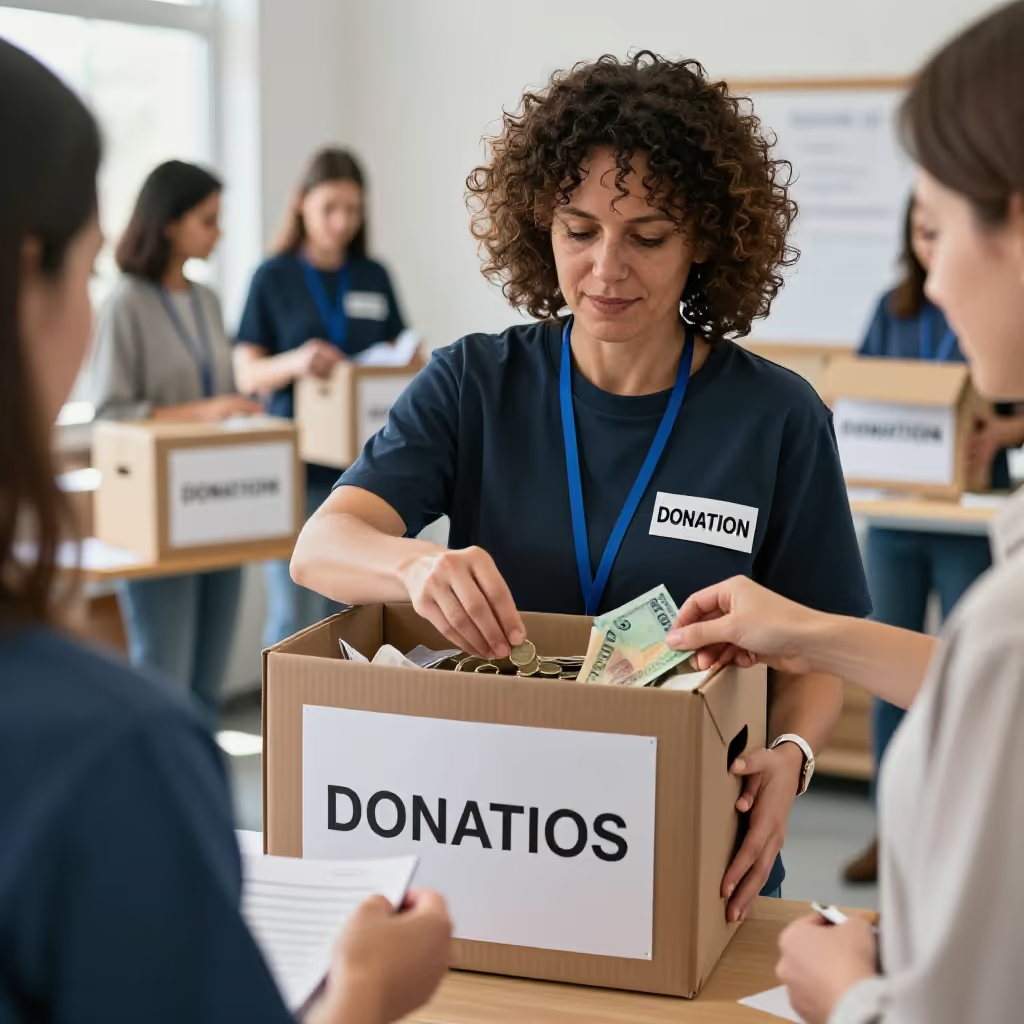
to collect
Loading your saved state.
to collect
To bring together or pick up things, money, or even people from different places and take them to one point.
Nach der Prüfung sammelte der Lehrer alle Klausuren ein.
After the exam, the teacher collected all the test papers.

'Einsammeln' (to collect) is a separable verb. In a main clause, the prefix 'ein-' comes at the end of the sentence. In subordinate clauses, the verb stays together.
Der Bus sammelt die Hotelgäste um 8 Uhr ein.
The bus picks up the hotel guests at 8 o'clock.
The verb consists of 'ein-' and 'sammeln' (to collect). The prefix 'ein-' emphasizes that things are brought from different places to one central point.
Die Kinder helfen, den Müll im Park einzusammeln.
The children help collect the trash in the park.
You can collect physical things such as 'Geld' (money), 'Spenden' (donations), 'Klausuren' (exams/test papers), or 'Müll' (trash). But it is also used for people, for example 'die Kinder von der Schule einsammeln' (to pick up the children from school).
Für das Projekt müssen wir noch Spenden einsammeln.
We still need to collect donations for the project.
to distribute / spread
'verteilen' and 'einsammeln' describe opposite movements. With 'verteilen', you give things to several people or bring them to different places. With 'einsammeln', you pick things up from several people or places and bring them together. This contrast works well in contexts like lessons, forms, or money: First something is distributed, and later it is collected again.

Der Lehrer sammelt die Tests ein, bevor die Pause beginnt.
The teacher collects the tests before the break begins.
Sie hat heute nach der Arbeit die Spendenzettel im Haus verteilt.
After work today, she distributed the donation forms around the building.