

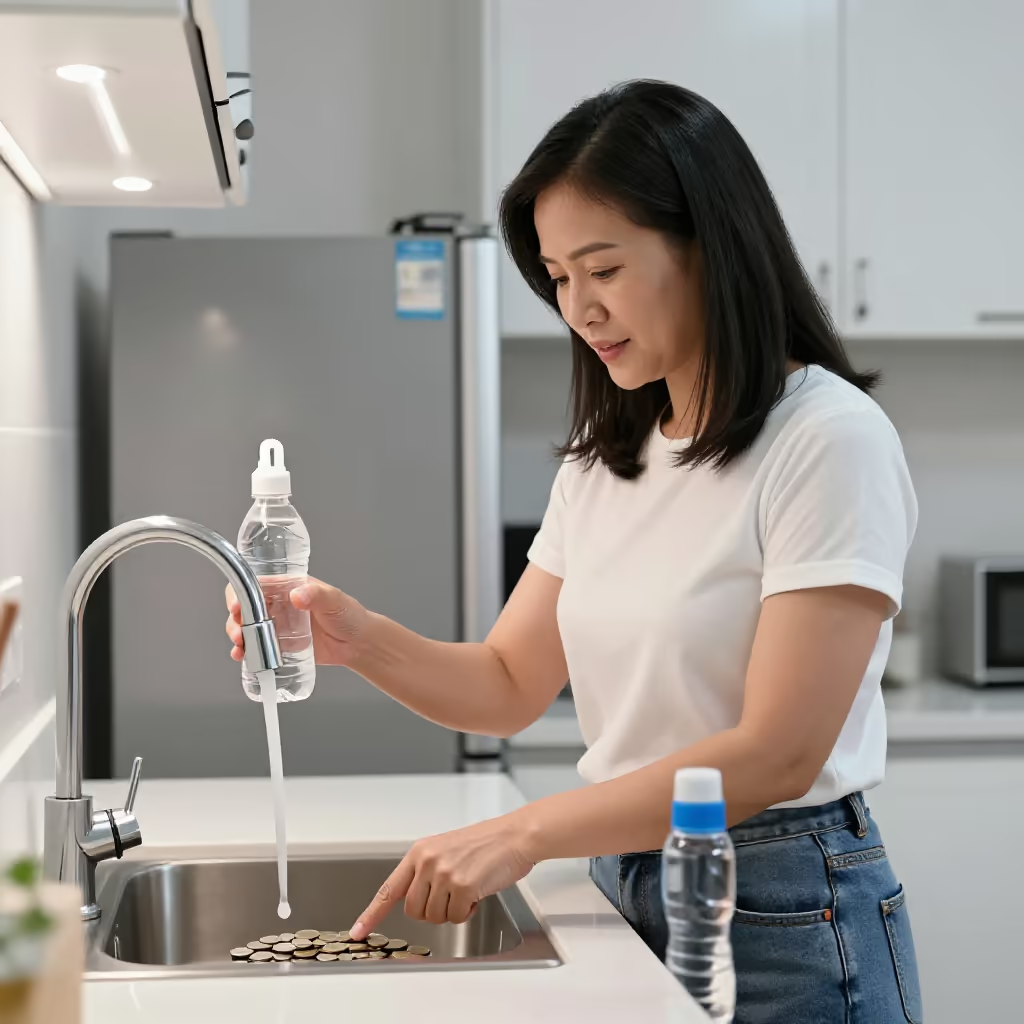
To consume or use less of something in order to save resources such as money, time, or energy.
example
Durch die Installation von LED-Lampen konnten wir erheblich Strom einsparen.
By installing LED lamps, we were able to save a considerable amount of electricity.

Usage tips
Separable verb
'Einsparen' (to save) is a separable verb. The prefix 'ein-' is placed at the end of the sentence in a main clause. It reinforces the idea of saving through reduction.
EXAMPLE
Die Firma spart durch die neuen Prozesse viel Geld ein.
The company saves a lot of money through the new processes.
Typical objects
'Einsparen' (to save) is typically combined with resources whose consumption you want to reduce. Common objects are costs, money, time, energy, or even personnel.
EXAMPLE
Mit einer besseren Planung können wir viel Zeit einsparen.
With better planning, we can save a lot of time.
Use with 'durch'
Very often, the method by which something is saved is expressed with the preposition 'durch' (through/by) or an 'indem' (by doing something) construction. This makes the sentence especially clear and informative.
EXAMPLE
Durch die Nutzung von Solarenergie sparen wir Stromkosten ein.
By using solar energy, we save on electricity costs.
Compare with
near_synonym · confusable
einsparen vs sparen
to save
'sparen' and 'einsparen' are closely related, especially with money, time, or energy. 'sparen' is broader: you can set money aside or use less of something. 'einsparen' is used when less is needed because of a measure and you save a specific amount. It often sounds a bit more factual and fits well with numbers or results. Learners may confuse the words because both have to do with lower consumption. In practical terms: you save money for later, but you save electricity costs through new lamps.
einsparen
Mit dem neuen Plan spart die Firma jeden Monat viel Zeit ein.
With the new plan, the company saves a lot of time every month.