


sparen
to save
To not spend money, but set it aside for a later purpose or deposit it into an account.
EXAMPLE
Wir sparen jeden Monat einen Teil unseres Gehalts für den Hauskauf.
We save part of our salary every month for buying a house.
to save
Loading your saved state.
to save
To not spend money, but set it aside for a later purpose or deposit it into an account.
Wir sparen jeden Monat einen Teil unseres Gehalts für den Hauskauf.
We save part of our salary every month for buying a house.
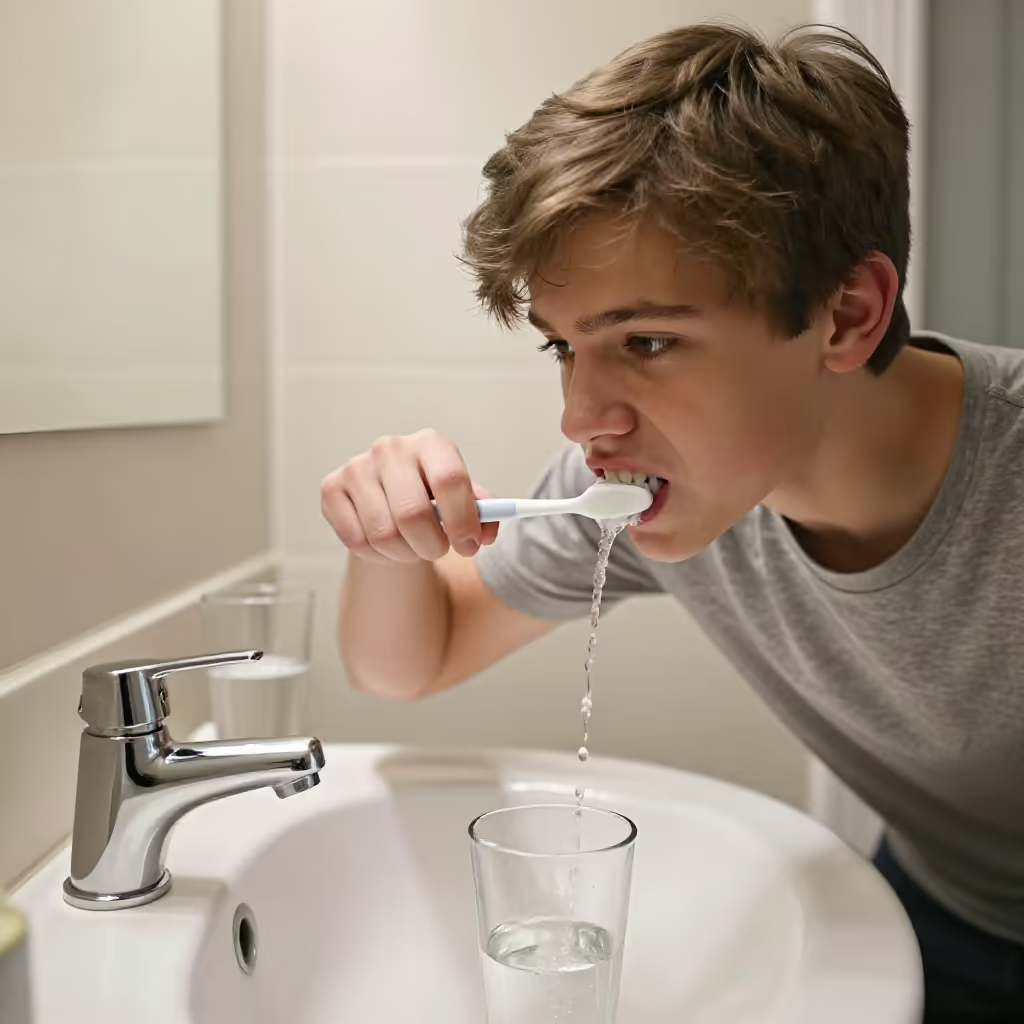
to save
To use less of a resource such as energy, water, or time in order not to waste it.
Wenn du das Licht ausschaltest, können wir Strom sparen.
If you turn off the light, we can save electricity.

to spare oneself
To refrain from an action or statement because it is considered unnecessary, redundant, or pointless.
Die lange Erklärung kannst du dir sparen, ich habe es schon verstanden.
You can spare yourself the long explanation; I've already understood it.
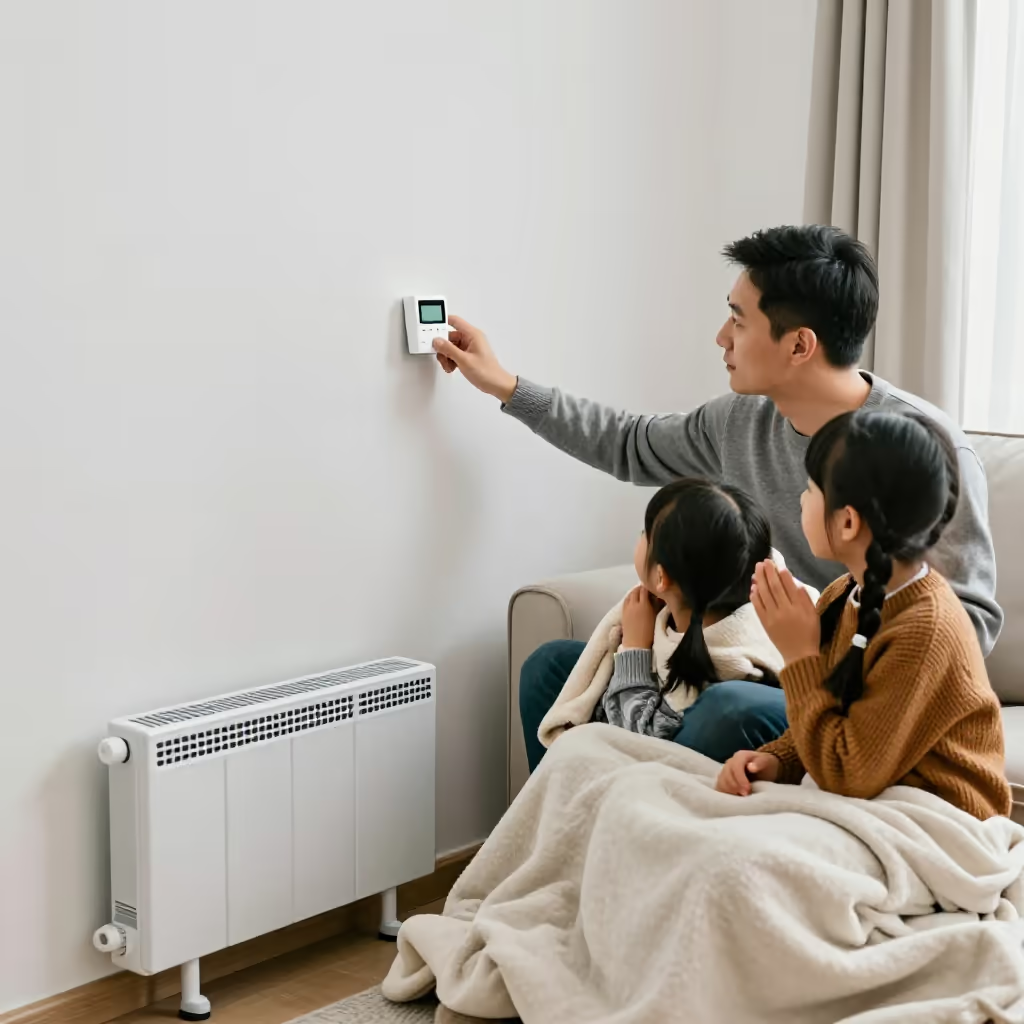
to cut back on
To deliberately reduce spending in a particular area, often with a negative connotation.
Man sollte nicht an der Qualität der Lebensmittel sparen.
You shouldn't cut back on the quality of food.
'Sparen' does not mean 'retten' like English 'to save someone'. It only refers to setting aside money or saving resources. To save a person, you use the verb 'retten' (to rescue/save).
Ich spare Geld für eine lange Reise.
I'm saving money for a long trip.
The verb 'sparen' (to save) forms a family with the adjective 'sparsam' (frugal, someone who spends little) and the noun 'die Ersparnisse' (savings, the money saved).
Sie ist sehr sparsam und hat schon hohe Ersparnisse.
She is very frugal and already has substantial savings.
The preposition after 'sparen' (to save) changes the meaning. With 'für' (+ accusative), you name the goal of saving; with 'an' (+ dative), the area in which expenses are being cut.
Er spart für ein neues Fahrrad.
He is saving for a new bicycle.
When it comes to resources, 'sparen' (to save) is very often combined with 'Energie' (energy), 'Strom' (electricity), 'Wasser' (water), or 'Zeit' (time).
Durch kürzere Duschzeiten kann man viel Wasser sparen.
By taking shorter showers, you can save a lot of water.
The expression 'sich etwas sparen' (to spare oneself something) is reflexive. The person is in the dative ('sich'), and the unnecessary thing is in the accusative. It is often used in colloquial speech and can sound slightly rude.
Den Kommentar hättest du dir sparen können.
You could have spared yourself that comment.
to spare / save
„Sich etwas sparen“ means consciously refraining from an unnecessary action or remark. „Sich etwas ersparen“ emphasizes not having to experience an effort or unpleasant situation. Use „sparen“ for choosing not to do something yourself and „ersparen“ for avoiding a burden.

Ich spare mir den Streit und verlasse ruhig den Raum.
I will spare myself the argument and calmly leave the room.
Mit der Online-Anmeldung erspare ich mir den Weg zum Amt.
By registering online, I spare myself the trip to the government office.