

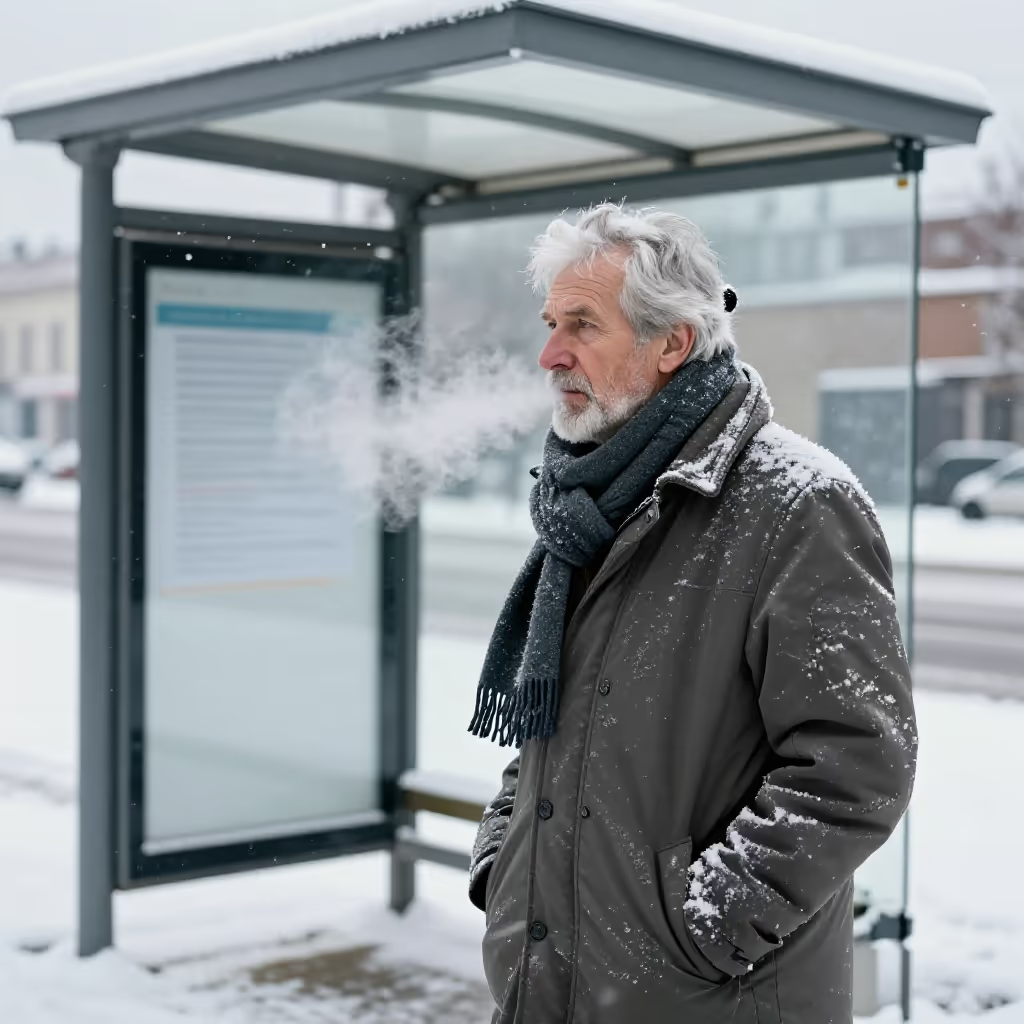
eisig
icy
Extremely cold, similar to ice. Refers to very low temperatures of air, wind, or water.
EXAMPLE
Trotz der dicken Jacke spürte sie den eisigen Wind im Gesicht.
Despite the thick jacket, she felt the icy wind on her face.
icy
Loading your saved state.
icy
Extremely cold, similar to ice. Refers to very low temperatures of air, wind, or water.
Trotz der dicken Jacke spürte sie den eisigen Wind im Gesicht.
Despite the thick jacket, she felt the icy wind on her face.

icy
In a figurative sense: emotionally very cold, dismissive, or unfriendly. Describes a person, atmosphere, or reaction that lacks any warmth.
Nach dem Streit herrschte ein eisiges Schweigen zwischen ihnen.
After the argument, there was an icy silence between them.
The adjective 'eisig' (icy) is derived directly from the noun 'das Eis' (ice). The ending '-ig' means 'like' or 'full of', so literally 'like ice'.
Das Wasser im Bergsee war eisig kalt.
The water in the mountain lake was icy cold.
You can recognize the meaning from the noun that 'eisig' (icy) describes. If it refers to weather or temperature (e.g., wind, cold), the literal meaning is intended. If it refers to human behavior (e.g., look, silence), the figurative, emotional meaning is intended.
Im Januar herrschten eisige Temperaturen.
In January, there were icy temperatures.
In the literal meaning, 'eisig' (icy) is often combined with weather phenomena. Common collocations are 'eisiger Wind' (icy wind), 'eisige Kälte' (icy cold), or 'eisige Temperaturen' (icy temperatures).
Ein eisiger Wind wehte über das offene Feld.
An icy wind blew across the open field.
In the figurative, emotional meaning, 'eisig' (icy) describes an unfriendly atmosphere. Typical phrases are 'eisiges Schweigen' (icy silence), 'ein eisiger Blick' (an icy look), or 'eine eisige Stimme' (an icy voice).
Nach seiner unhöflichen Bemerkung herrschte eisiges Schweigen am Tisch.
After his rude remark, there was icy silence at the table.
cold
Both words can describe very low temperatures or a lack of human warmth. “Kalt” is the more general term, while “eisig” usually emphasizes especially intense, biting cold or clear rejection. Use “kalt” for a neutral description and “eisig” for the intensified effect.

Der Wind war heute eisig, und der sonst freundliche Nachbar antwortete eisig.
The wind was icy today, and the usually friendly neighbor replied icily.
Der Wind war heute kalt, und der sonst freundliche Nachbar blieb ungewöhnlich kalt.
The wind was cold today, and the usually friendly neighbor remained unusually cold.