

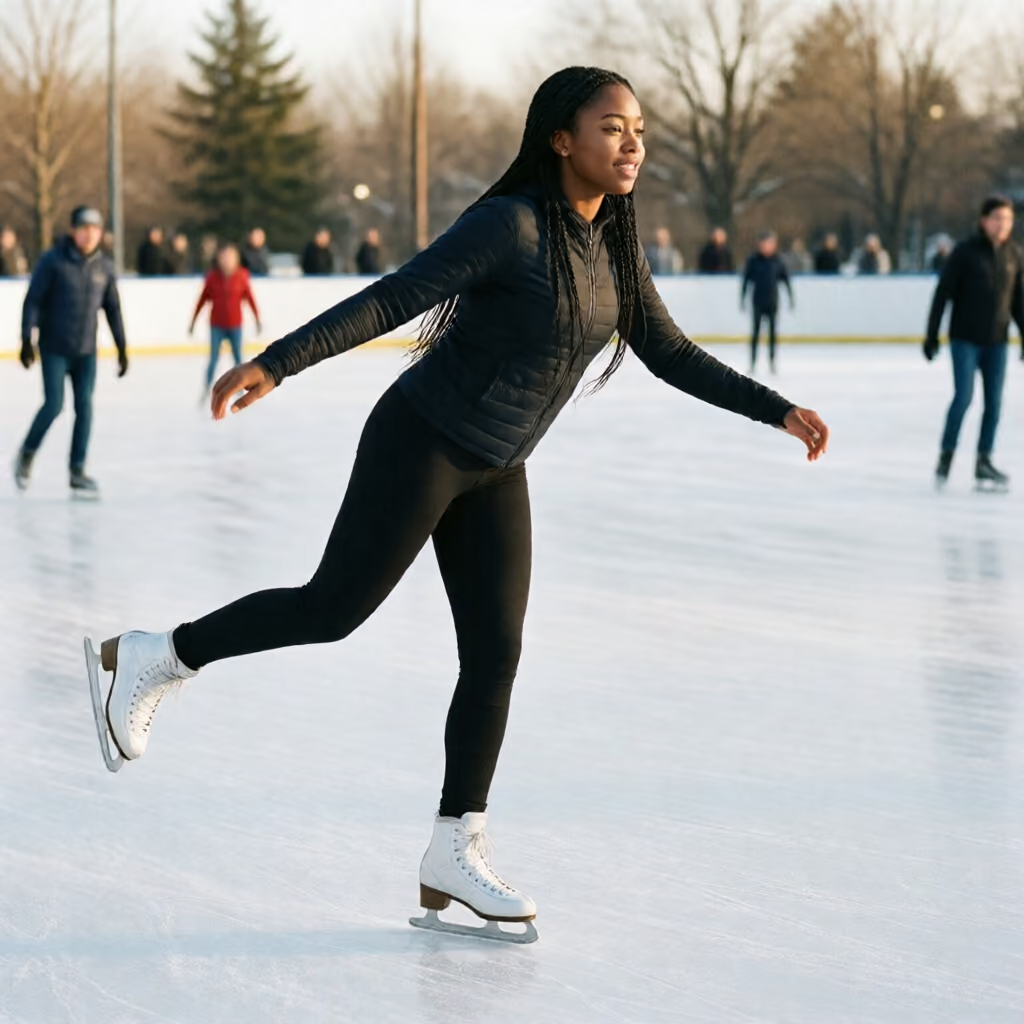
das Eislaufen
ice skating
Skating or gliding across an ice surface on ice skates, as a leisure activity or sport.
EXAMPLE
Das Eislaufen macht ihr jeden Winter großen Spaß.
She really enjoys ice skating every winter.
ice skating
das Eislaufen
Loading your saved state.
ice skating
Skating or gliding across an ice surface on ice skates, as a leisure activity or sport.
Das Eislaufen macht ihr jeden Winter großen Spaß.
She really enjoys ice skating every winter.
| gender | neuter das |
|---|---|
| genitive | des Eislaufens |
| singular | plural | |
|---|---|---|
| nominative | das Eislaufen | – |
| accusative | das Eislaufen | – |
| dative | dem Eislaufen | – |
| genitive | des Eislaufens | – |
The article changes with the case; it is shown in colour.
'Eislaufen' (ice skating) is made up of 'Eis' (ice) and 'laufen' (to walk/run) and is used as a nominalized activity. That is why the word is capitalized and takes the neuter article 'das'.
Im Winter gehen viele Familien zum Eislaufen.
Many families go ice skating in winter.
Common collocations include 'zum Eislaufen gehen' (to go ice skating), 'beim Eislaufen stürzen' (to fall while ice skating), and 'Spaß am Eislaufen haben' (to enjoy ice skating). The word refers to the activity as a whole.
Die Kinder haben beim Eislaufen viel Spaß.
The children have a lot of fun ice skating.
The prepositional phrases 'zum Eislaufen' (for ice skating) and 'beim Eislaufen' (while ice skating) are especially common. 'Zum' indicates the purpose or destination, while 'beim' indicates the time or situation during the activity.
Wir treffen uns am Nachmittag zum Eislaufen.
We're meeting in the afternoon to go ice skating.
Beim Eislaufen muss man vorsichtig sein.
You have to be careful while ice skating.