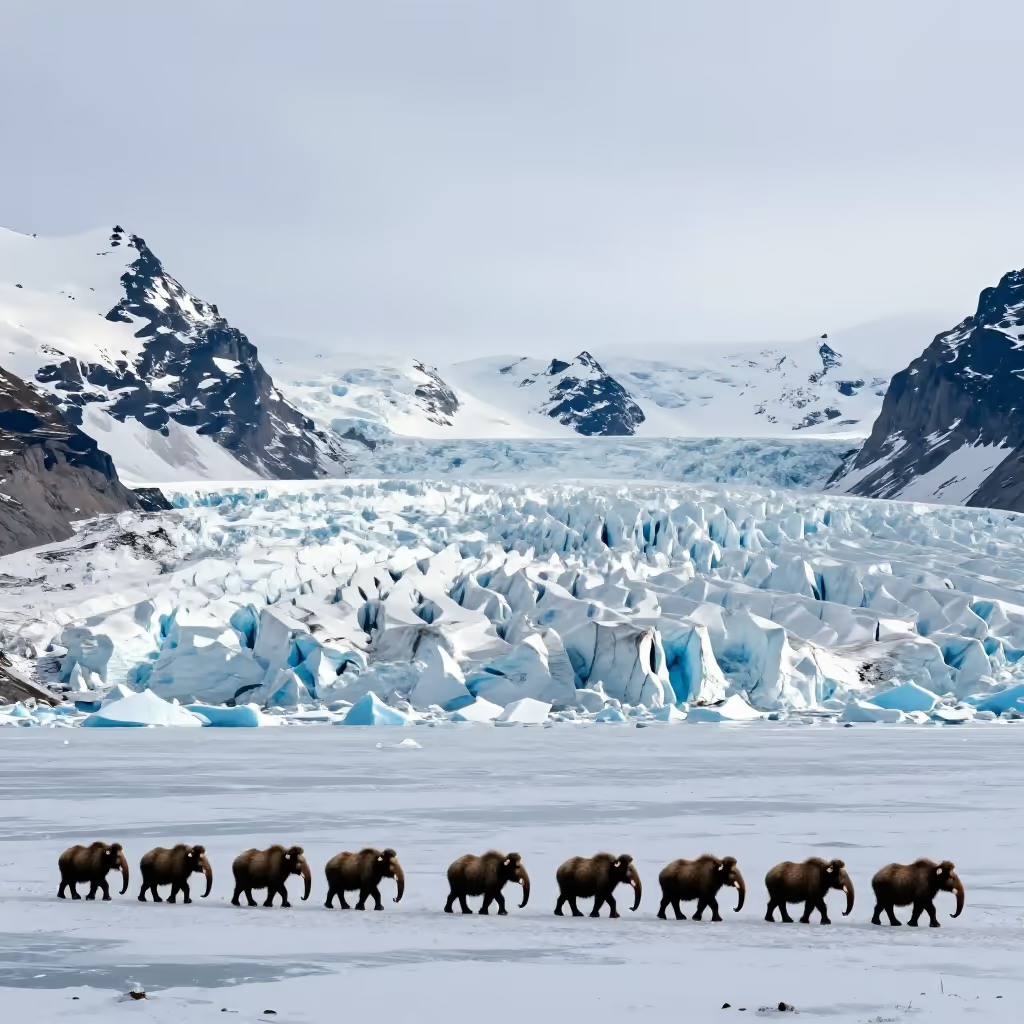
A geological epoch with a significantly colder climate, during which large parts of the Earth were covered by glaciers and ice sheets.
example
Mammuts lebten während der letzten Eiszeit in Europa und Asien.
Mammoths lived in Europe and Asia during the last ice age.

Usage tips
Word composition
The word is a clear compound of 'das Eis' (ice) and 'die Zeit' (time). The literal meaning 'time of ice' helps you understand both the geological and the figurative meaning.
EXAMPLE
Forscher untersuchen, wie sich das Klima seit der letzten Eiszeit verändert hat.
Researchers are studying how the climate has changed since the last ice age.
Context clue
You can tell from the context whether the geological epoch or a cold phase in a relationship is meant. Words like 'Gletscher' (glacier) or 'Mammut' (mammoth) point to Earth history, while 'Streit' (argument), 'Schweigen' (silence), or 'Beziehung' (relationship) point to the figurative meaning.
EXAMPLE
In der letzten Eiszeit war ein Großteil Nordeuropas von Gletschern bedeckt.
In the last ice age, a large part of northern Europe was covered by glaciers.
Typical expression
In the figurative meaning, the fixed expression 'es herrscht Eiszeit' (there is an icy atmosphere) is often used. With the preposition 'zwischen' (between), the affected people can be named.
EXAMPLE
Zwischen den beiden ehemaligen Freunden herrscht seit Monaten Eiszeit.
There has been an icy silence between the two former friends for months.
Compare with
near_synonym
Eiszeit vs Entfremdung
alienation
'die Eiszeit' and 'die Entfremdung' can both describe a difficult phase between people. In this relation, it is not about the real geological ice age, but about the figurative meaning. 'Eiszeit' sounds vivid and refers to a cold atmosphere: people speak little or not at all to each other. 'Entfremdung' is more general and describes people becoming emotionally distant from each other and no longer feeling close. 'Eiszeit' fits more for a noticeable phase of silence or coldness, while 'Entfremdung' fits more for a longer-term loss of closeness.
Eiszeit
Nach dem Streit herrschte zwischen den beiden Nachbarn wochenlang Eiszeit.
After the argument, there was a cold spell between the two neighbors for weeks.
Entfremdung
Durch die vielen Jahre ohne Kontakt wuchs die Entfremdung zwischen den Geschwistern.
Because of the many years without contact, the alienation between the siblings grew.