

der Winter
winter
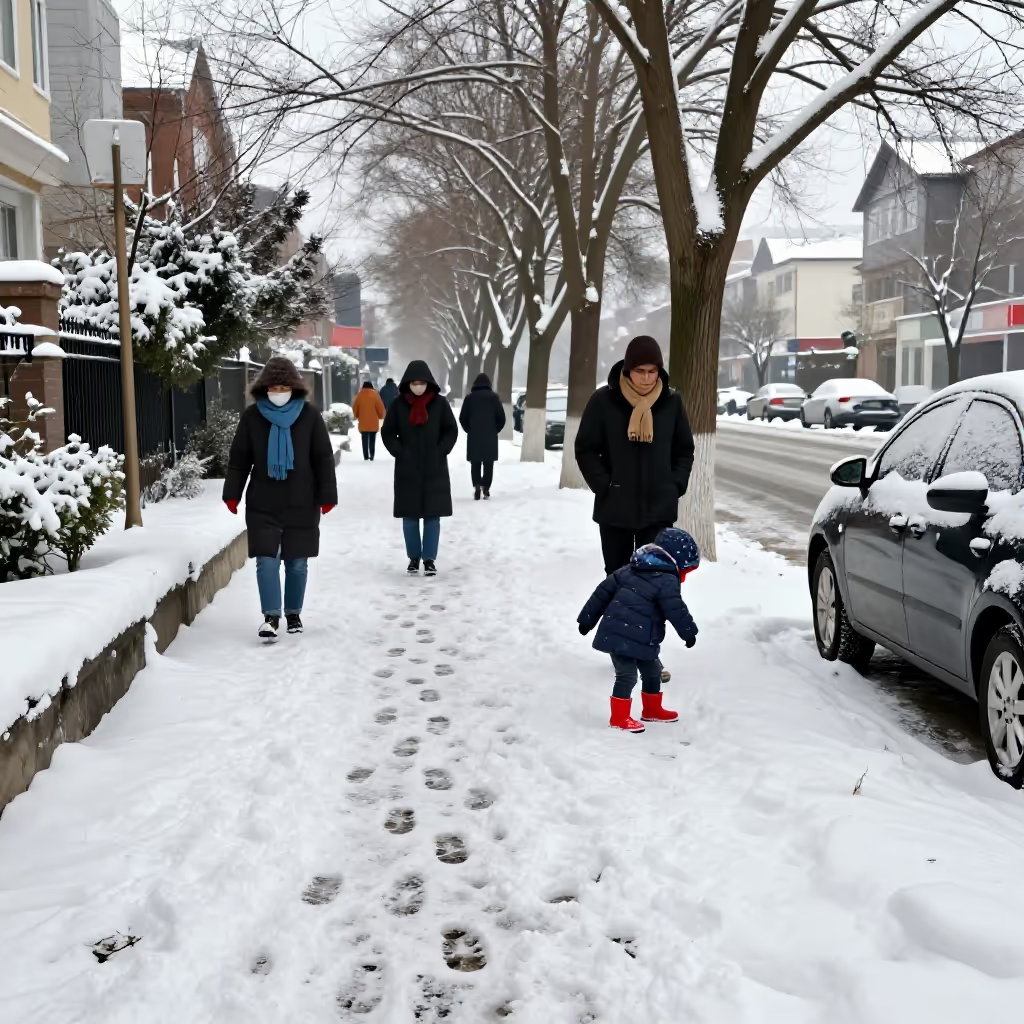
The coldest of the four seasons, which follows autumn and comes before spring.
EXAMPLE
In diesem Winter hat es außergewöhnlich viel geschneit.
This winter, it snowed an unusually large amount.
winter
Loading your saved state.
winter
The coldest of the four seasons, which follows autumn and comes before spring.
In diesem Winter hat es außergewöhnlich viel geschneit.
This winter, it snowed an unusually large amount.
winter
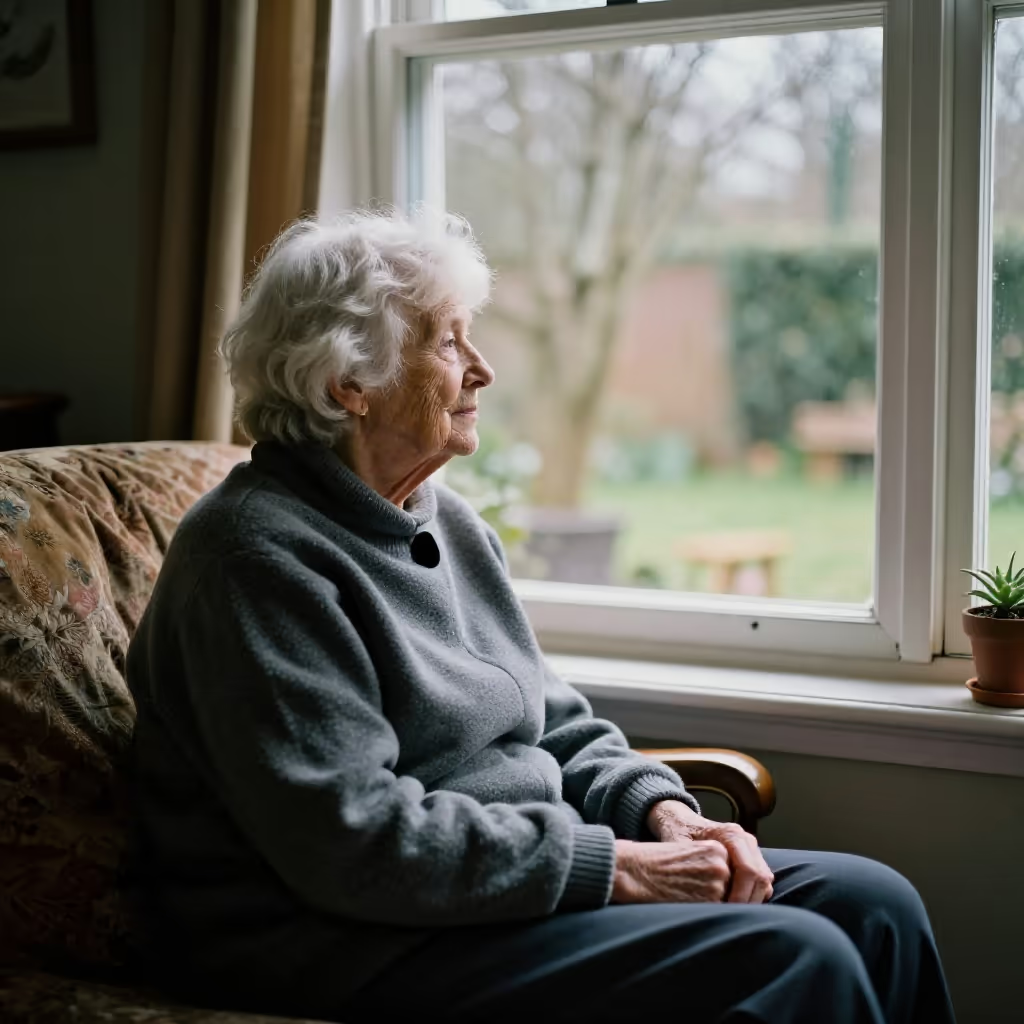
In a figurative sense, a time of stagnation, decline, or old age.
Nach dem Tod ihres Mannes durchlebte sie einen langen, emotionalen Winter.
After her husband’s death, she went through a long emotional winter.
To indicate a point in time within the season, you use 'im Winter' (in winter). To express a duration over the whole season, you can say 'über den Winter' (over the winter / through the winter).
Im Winter fahren wir oft Ski.
In winter, we often go skiing.
Other useful words are derived from the noun 'der Winter' (winter), such as the adjective 'winterlich' (wintry, e.g. winterliches Wetter — wintry weather) and the verb 'überwintern' (to spend the winter / overwinter).
Die Landschaft sah heute Morgen sehr winterlich aus.
The landscape looked very wintry this morning.
Common combinations are 'ein kalter/strenger Winter' (a cold/harsh winter) or 'ein milder Winter' (a mild winter). When the cold season begins, people often say 'der Winter kommt' (winter is coming) or 'der Winter bricht herein' (winter sets in).
Wir hatten dieses Jahr einen sehr milden Winter.
We had a very mild winter this year.
You can recognize the figurative meaning from the context. When 'Winter' (winter) is connected with emotional or abstract terms like 'politisch' (political), 'wirtschaftlich' (economic), or 'Winter des Lebens' (winter of life), it does not refer to the season.
Nach der Firmenpleite begann für die Mitarbeiter ein wirtschaftlicher Winter.
After the company went bankrupt, an economic winter began for the employees.
autumn / fall
Winter and Herbst can both be used figuratively to refer to old age. Herbst is more suited to the later stage of life when maturity and the onset of aging are the focus. Winter suggests more strongly a period of stagnation, decline, or very advanced age.
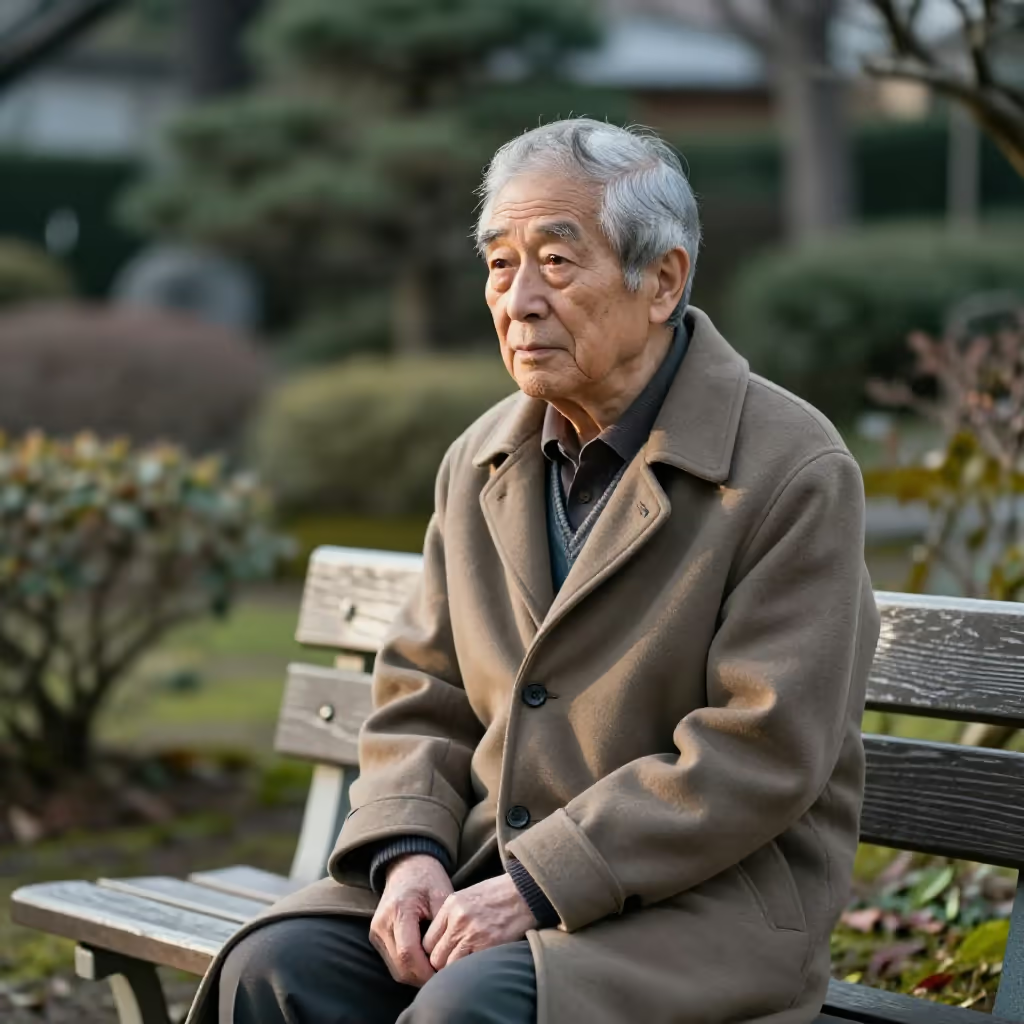
Im Winter seines Lebens zog er sich immer mehr aus dem öffentlichen Leben zurück.
In the winter of his life, he withdrew more and more from public life.
Im Herbst seines Lebens blickte sie zufrieden auf ihre Arbeit zurück.
In the autumn of her life, she looked back on her work with satisfaction.