

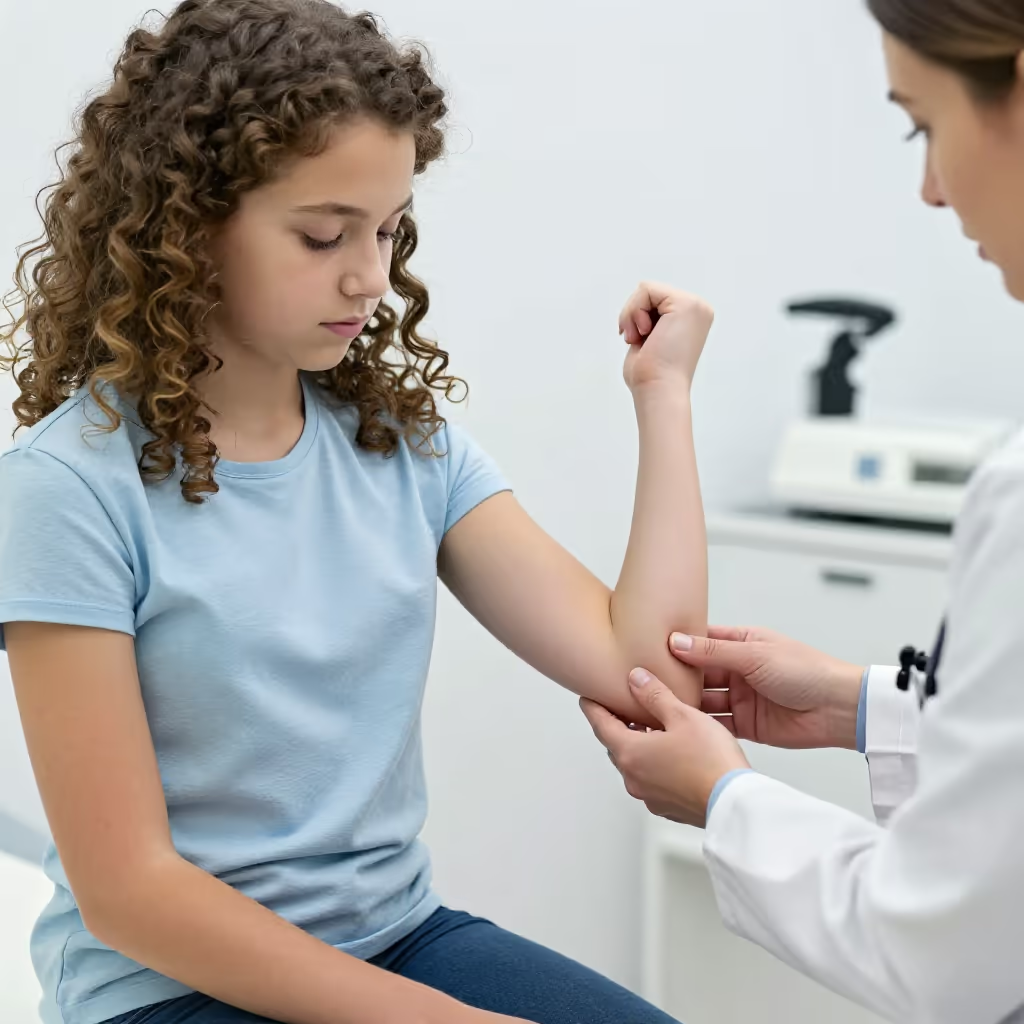
der Ellbogen
elbow
The joint that connects the upper arm with the forearm.
EXAMPLE
Ich habe mich am Ellbogen gestoßen und jetzt ist er blau.
I bumped my elbow, and now it is bruised.
elbow
Loading your saved state.
elbow
The joint that connects the upper arm with the forearm.
Ich habe mich am Ellbogen gestoßen und jetzt ist er blau.
I bumped my elbow, and now it is bruised.

to use one's elbows
To act ruthlessly and selfishly in order to achieve one's own goals, often at the expense of others.
In dieser Branche muss man seine Ellbogen benutzen, um erfolgreich zu sein.
In this industry, you have to use your elbows to be successful.
'Ellbogen' (elbow) is composed of 'Elle' (ulna), a bone in the forearm, and 'Bogen' (bow/arc). So the word figuratively describes the 'Bogen' (arc) or bend in the arm.
Beim Sturz hat er sich den Ellbogen verletzt.
He injured his elbow when he fell.
In connection with the body part, typical verbs are 'sich den Ellbogen stoßen' (to bump one's elbow), 'sich auf die Ellbogen stützen' (to lean on one's elbows), or 'den Ellbogen anwinkeln' (to bend one's elbow).
Er stützte sich nachdenklich auf die Ellbogen.
He leaned thoughtfully on his elbows.
The idiom 'die Ellbogen benutzen' (to use one's elbows) or 'die Ellbogen einsetzen' (to use one's elbows) means to ruthlessly pursue one's own goals. In this expression, the word is always used in the plural.
Wer in dieser Firma Karriere machen will, muss seine Ellbogen einsetzen.
Anyone who wants to make a career in this company has to use their elbows.